
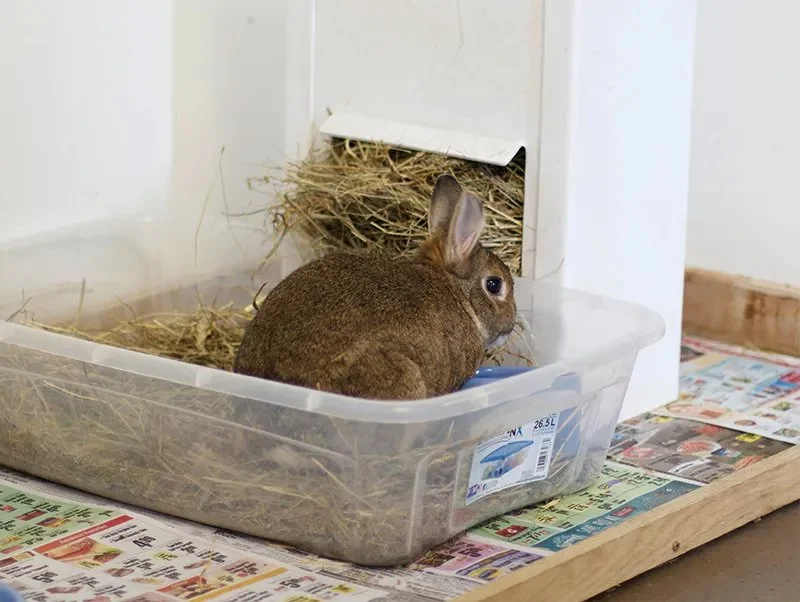
1- Understanding Rabbit Behavior
Rabbits are intelligent and clean animals that, with the right training, can learn to use a litter box just like cats. However, before you begin litter training, it’s essential to understand some key aspects of rabbit behavior. Rabbits are naturally inclined to designate a specific spot for their bathroom needs. In the wild, they tend to use certain areas of their territory as latrines, so this instinct can be harnessed when training them at home.
One important factor is that rabbits are creatures of habit, so consistency is crucial. Understanding their behavior patterns, like when they are most likely to use the litter box (typically after eating or waking up), can help you set them up for success. By using this instinct and creating a comfortable, familiar environment, you can train your pet rabbit to use a litter box effectively.

2- Choosing the Right Litter Box for Your Rabbit
Choosing the right litter box is crucial for successful litter training. There are a variety of options available, and the best one depends on your rabbit's size, personality, and living space. Here are some key considerations when selecting a litter box for your rabbit:

Modern Animal
Santa MonicaLos Angeles CountyCalifornia
2828 Santa Monica Blvd, Santa Monica, CA 90404, USA
2.1- Size and Shape
The litter box should be large enough for your rabbit to move around comfortably. Rabbits need space to turn around and dig in the litter, so a box with enough room will encourage them to use it regularly. Some rabbits prefer a corner-shaped litter box, while others may be happier with a larger rectangular box. Choose what seems most comfortable based on your rabbit’s habits and size.
2.2- Accessibility
Rabbits need easy access to their litter box. Make sure it’s low enough for them to hop in and out easily. You might also want to place the litter box in a quiet, low-traffic area where your rabbit feels safe and comfortable.
2.3- Litter Box with High Sides
Some rabbits like to dig and push their litter around, so having a litter box with high sides can help contain the mess. However, be cautious that the sides are not too high, as it may make it difficult for your rabbit to hop in.
3- Steps to Litter Train Your Rabbit
Litter training your pet rabbit is not difficult, but it does require patience and consistency. Here are the steps to follow to ensure success:
3.1- Set Up the Litter Box
Start by setting up a litter box in a corner of your rabbit’s living area. Place some hay or their favorite treats nearby to encourage them to explore the area. Ensure that the litter box is filled with a rabbit-safe litter, such as paper-based, wood pellets, or timothy hay. Avoid using clay-based litters as they are not safe for rabbits.
3.2- Observe Your Rabbit's Bathroom Habits
Watch your rabbit to determine where they prefer to go. Most rabbits will naturally gravitate towards a corner to relieve themselves. If you notice a specific spot, place the litter box there. If your rabbit is already using a corner as their bathroom, they will likely use the box placed there as well.
3.3- Positive Reinforcement
When your rabbit uses the litter box, reward them with a treat or a pet. Positive reinforcement helps your rabbit associate the litter box with good things. If they have an accident outside the box, gently place them in the box without punishment. Avoid scolding, as rabbits do not respond well to negative reinforcement.
4- Common Challenges and Solutions
While litter training a rabbit is generally easy, some challenges may arise. Here are a few common issues and how to handle them:
4.1- Refusal to Use the Litter Box
If your rabbit refuses to use the litter box, check the location and make sure it’s in a quiet, comfortable area. Sometimes, rabbits can be picky about where they do their business. Try moving the box to a different spot and observe if that helps.
4.2- Litter Box Escapism
If your rabbit is constantly hopping out of the litter box, consider getting a higher-sided box or placing the litter box in a corner where they feel secure. You can also add some hay to encourage them to stay inside the box while eating, which will make them more likely to use it as a bathroom spot as well.
4.3- Accidents Outside the Litter Box
Rabbits are generally clean animals, but accidents do happen, especially when they are getting used to the litter box. If your rabbit has an accident, don’t punish them. Simply clean up the mess and place the droppings in the litter box to help your rabbit associate the area with their bathroom needs. Over time, they will get the hang of it.
5- Tips for Maintaining Successful Litter Training
Once your rabbit is successfully litter trained, there are a few things you can do to maintain their good habits:
5.1- Clean the Litter Box Regularly
Rabbits are very particular about cleanliness, so it’s important to clean their litter box regularly. Change the litter at least once a week and clean the box with warm water to prevent odors and bacteria buildup.
5.2- Provide Multiple Litter Boxes
If your rabbit has access to more than one room, consider placing a litter box in each area. Rabbits prefer having easy access to a litter box at all times, especially if they are free-roaming in your home.
5.3- Continue Positive Reinforcement
Even after your rabbit is litter trained, continue rewarding them for using the litter box. This helps reinforce the behavior and ensures that they maintain good habits over time.
For the best supplies to make your litter training experience even easier, visit Omnia Pet, where you can find a variety of litter boxes, rabbit-safe litters, and other helpful products for your furry friend!






 K-BAM Exotic Pet Store4.0 (89 reviews)
 Happy Tails Barkery4.0 (67 reviews)
 Mosaic Animal Health Center Fair Haven4.0 (62 reviews)
 Cozy Care Mobile Veterinary Services5.0 (6 reviews)
 One Love Animal Hospital - Yorkville4.0 (104 reviews)
 Raritan Animal Hospital4.0 (454 reviews)
 The Best Grooming Glove for a Kitten's Sensitive Skin
 The Best Automatic Feeders and Water Fountains for Cats – Ultimate Guide
 How to Handle an Aggressive Dog on the Leash | Leash Training Tips
 How to Litter Train a Pet Rabbit Successfully – Tips and Techniques
 How to Cook Thanksgiving Dinner for Your Dog
 The Dangers of Outdoor Cats: Risks and How to Mitigate Them