
- 1. Why Keeping Your Cat’s Ears Clean is Important
- 2. Signs Your Cat May Have Ear Mites or Infections
- 3. How to Clean Your Cat’s Ears Safely
- 4. Preventing Ear Mites and Infections in Cats
- 5. Tips for Maintaining Your Cat's Ear Health
- 6. When to Consult a Vet About Your Cat's Ears
- 7. Where to Find the Best Products for Cat Ear Care
1. Why Keeping Your Cat’s Ears Clean is Important
Just like any part of your cat’s body, their ears need regular care to stay healthy. Dirty ears can lead to discomfort, ear infections, and infestations like ear mites. Keeping your cat's ears clean is essential for maintaining their overall health and preventing these problems from occurring. By taking proper care of your cat's ears, you can help ensure they remain comfortable and free from pain caused by infections or parasites.
In this article, we’ll explain why ear care is important for your cat, how to clean their ears safely, and offer tips for preventing ear mites and infections. Whether you're a seasoned cat owner or a new pet parent, these steps will guide you in providing the best care for your cat’s ears.

Emancipet
PhiladelphiaPhiladelphia CountyPennsylvania
575 Adams Ave Unit 2, Philadelphia, PA 19120, USA
2. Signs Your Cat May Have Ear Mites or Infections
Ear mites and infections are common issues in cats, and they can lead to serious health problems if left untreated. Here’s how to spot the signs that your cat may have ear mites or an ear infection:

North Penn Pet Sitter Services
LansdaleMontgomery CountyPennsylvania
503 S Cannon Ave, Lansdale, PA 19446, USA
1. Excessive Scratching
If your cat is scratching at their ears more than usual, it could be a sign of discomfort caused by ear mites or an infection. Cats often scratch or rub their ears when they’re irritated or itchy.
2. Head Shaking
Frequent head shaking is another indication that your cat’s ears may be causing them distress. This could be due to the discomfort of mites or an ear infection that makes them want to shake their head to relieve the irritation.
3. Unusual Odor or Discharge
Foul-smelling ears or dark, waxy discharge are signs that your cat might have an ear infection or mites. Ear mites often cause a dark, coffee-ground-like residue in the ear canal, while an infection can produce pus or a smelly discharge.
4. Redness or Swelling
If your cat’s ears appear red, swollen, or inflamed, they may be suffering from an infection. This can cause significant discomfort and should be addressed promptly.
3. How to Clean Your Cat’s Ears Safely
Cleaning your cat’s ears is an important part of regular grooming. It helps prevent infections, reduces ear wax buildup, and keeps your cat’s ears free from mites. Here’s how to clean your cat’s ears safely:
1. Gather the Right Supplies
Before cleaning your cat’s ears, make sure you have the following supplies:
- A cotton ball or soft gauze pad
- A gentle, vet-approved ear cleaning solution
- A towel to catch any mess and keep your cat calm
2. Gently Hold Your Cat
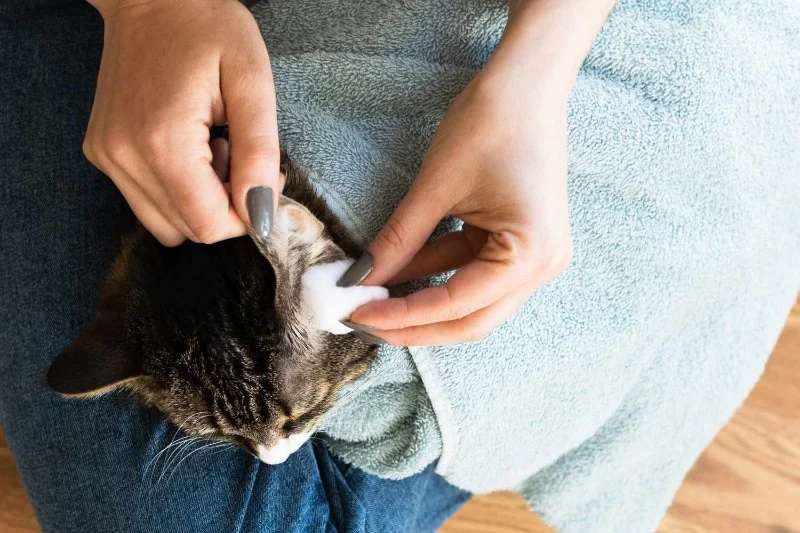
Start by calming your cat and gently holding them in a comfortable position. You may want to wrap them in a towel to prevent squirming. It’s best to clean their ears when they’re relaxed to avoid stress or injury.
3. Apply the Ear Cleaning Solution
Follow the instructions on the ear cleaning solution. Tilt your cat’s head slightly to one side and apply a few drops of the solution into the ear canal. Gently massage the base of the ear to help loosen any debris inside.
4. Wipe the Ear with a Cotton Ball
After massaging, use a cotton ball or gauze pad to gently wipe away any dirt, wax, or debris from the ear. Be careful not to insert anything into the ear canal, as this can cause injury.
5. Repeat on the Other Ear
Repeat the process on the other ear if necessary. Make sure to clean both ears regularly to prevent buildup of wax and dirt.
4. Preventing Ear Mites and Infections in Cats
Prevention is key when it comes to ear health. Here are a few tips for keeping your cat’s ears mite-free and preventing infections:
1. Regular Ear Inspections
Inspect your cat’s ears regularly for signs of mites, infection, or wax buildup. Checking their ears once a week can help you catch any potential problems early before they turn into bigger issues.
2. Keep Your Cat’s Environment Clean
Ear mites are often transmitted through contact with other animals. If you have multiple pets or if your cat spends time outdoors, make sure their environment is clean and free from pests. Regularly clean bedding, toys, and grooming tools.
3. Use Preventative Treatments
If your cat is prone to ear mites, talk to your vet about using preventative treatments. There are topical treatments and medications that can help reduce the risk of ear mites.
5. Tips for Maintaining Your Cat's Ear Health
Maintaining your cat’s ear health requires regular care and attention. Here are some additional tips to keep their ears in top condition:
1. Don’t Over-Clean
While regular cleaning is important, over-cleaning can irritate your cat’s ears and strip them of natural oils. Clean their ears only when necessary, especially if you notice excessive wax buildup or signs of irritation.
2. Avoid Using Q-Tips
Q-tips or cotton swabs should never be used inside your cat’s ears. They can push debris deeper into the ear canal and cause injury. Stick to cotton balls or gauze pads for external cleaning.
3. Keep Your Cat’s Coat Trimmed
If your cat has long fur, consider trimming the hair around their ears. Excess hair can trap moisture and debris, increasing the risk of infections and ear mites.
6. When to Consult a Vet About Your Cat's Ears
While regular cleaning and prevention can keep your cat’s ears healthy, there are times when a trip to the vet is necessary:
1. Persistent Symptoms
If your cat continues to scratch, shake their head, or show signs of discomfort despite cleaning, it may indicate a more serious infection or infestation. A vet can diagnose and treat the condition appropriately.
2. Severe Inflammation or Discharge
If your cat’s ears appear swollen, red, or have a significant amount of discharge, it’s time to seek veterinary care. These could be signs of an ear infection or an ear mite infestation that requires medical treatment.
7. Where to Find the Best Products for Cat Ear Care
For the best ear care products, including gentle cleaning solutions and preventative treatments, visit Omnia Pet. We offer a wide selection of trusted products to help you keep your cat’s ears clean and healthy. Whether you're looking for ear wipes, ear drops, or grooming tools, we’ve got everything you need to ensure your cat stays comfortable and mite-free.






 Louisiana Fish Store4.0 (294 reviews)
 Cambridge Veterinary Care3.0 (102 reviews)
 Animal Care Services3.0 (108 reviews)
 Discount Aquarium Fish and Reef4.0 (688 reviews)
 VIP Petcare Vaccination Clinic0.0 (0 reviews)
 PetVet Vaccination Clinic5.0 (1 reviews)
 The Best Interactive Apps for Entertaining Your Kitten>
 How to Start a Pet Sitting or Dog Walking Business
 The Top 10 Most Instagram-Famous Pets and Their Stories
 Best Wet Food for Kittens Needing Extra Calories – Top Brands & Tips
 The Best Ways to Play with Your Cat Using Wand Toys
 The Most Unusual Pets That Are Legal to Own in the US | Unique Pet Ideas