
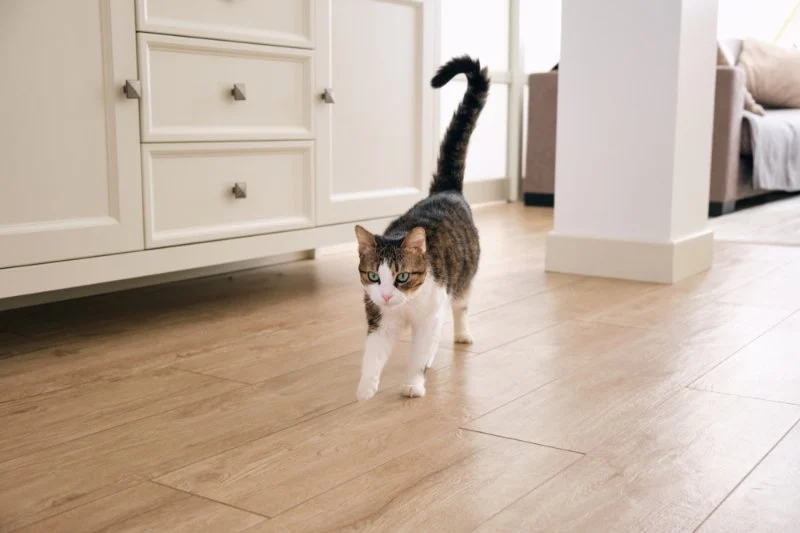
How to Train Your Kitten to Stay Out of a Room
Learning how to train your kitten to stay out of a room can feel frustrating at first, especially when curiosity seems to overpower every boundary you set. Kittens are naturally drawn to new spaces, interesting smells, and rooms that feel off-limits. From their perspective, a closed or restricted room is simply an invitation to explore.
The good news is that kittens are also highly adaptable. With patience, consistency, and an understanding of how kittens learn, it is possible to set boundaries without stress or punishment. The goal is not to control your kitten, but to guide them toward habits that work for both of you.

The Bridge Clinic - Bensalem
down the driveway, 1 Declaration Dr Unit D, Bensalem, PA 19020, USA
Understanding Why Kittens Ignore Boundaries
Kittens do not understand rules the way humans do. When a kitten repeatedly tries to enter a specific room, it is usually driven by curiosity, comfort, or attention rather than defiance. A bedroom might smell like you, a home office might contain dangling cords, or a storage room may simply feel mysterious.
Another common factor is routine. If a kitten has successfully entered the room before, they learn that it is accessible. Inconsistent enforcement can confuse them, making training harder over time. Understanding this helps owners shift from frustration to problem-solving.
Recognizing the motivation behind the behavior allows you to address the cause instead of just the symptom.

FROGDADDY LLC
Bessemer CityGaston CountyNorth Carolina
1420 Costner School Rd, Bessemer City, NC 28016, USA
Setting Clear and Consistent Room Rules
Consistency is the foundation of training. If a room is off-limits, it needs to stay that way all the time, not just occasionally. Opening the door “just this once” can undo progress because kittens learn through repetition.
Physical boundaries matter. Keeping doors closed or using barriers during early training stages helps prevent accidental reinforcement. Over time, your kitten begins to associate the room with a lack of access rather than a challenge to overcome.
Tone and reaction also matter. Calmly guiding your kitten away without yelling or chasing teaches that entering the room does not lead to excitement or reward.
Redirecting Behavior with Positive Alternatives
One of the most effective training methods is redirection. If your kitten wants to enter a specific room, provide something equally appealing elsewhere. This could be a cozy bed, a climbing area, or interactive playtime in an approved space.
Positive reinforcement works far better than punishment. When your kitten chooses to stay outside the restricted room or engages with alternative activities, rewarding that choice with attention or treats reinforces the behavior you want to see.
Many owners find success by creating a “yes space” filled with enrichment. Products and tools from Omnia Pet can help support this approach by making allowed areas more engaging and comfortable for kittens.
Real-Life Training Examples from Kitten Owners
One common story shared among kitten owners involves home offices. A kitten repeatedly tried to enter during work hours, attracted by moving screens and cables. By setting up a nearby perch with toys and scheduling short play sessions before work, the kitten gradually lost interest in the room.
Another example involves bedrooms. Some owners found that placing a soft blanket or bed outside the door, combined with a consistent nighttime routine, helped kittens settle without scratching or meowing to get inside.
These stories highlight an important truth. Training rarely happens overnight, but small adjustments often lead to steady improvement.
Long-Term Habits That Support Successful Training
Long-term success comes from maintaining structure. As kittens grow, their curiosity may return in waves, especially during developmental stages. Staying consistent prevents backsliding.
Regular play, mental stimulation, and predictable routines reduce the urge to seek stimulation in restricted rooms. A tired, engaged kitten is far less likely to test boundaries.
Ultimately, how to train your kitten to stay out of a room comes down to understanding, patience, and clear communication. When training is built on trust rather than force, both you and your kitten benefit from a calmer, happier home.






 Animal Care Clinic-Monadnock4.0 (214 reviews)
 Kirk5.0 (1 reviews)
 Petco4.0 (792 reviews)
 Avalon Animal Hospital & Bird Clinic3.0 (126 reviews)
 Weeth Nutrition Services2.0 (5 reviews)
 Critters Pet Shop4.0 (84 reviews)
 The Best Ways to Play with Your Cat Using Wand Toys
 How to Stop Your Kitten from Getting into Cabinets
 How to Stop Your Kitten from Eating Hair Ties
 Why Is My Cat's Whiskers Falling Out? Normal Shedding vs. Problems
 How to Find a Lost Cat: Effective Strategies That Work | Omnia Pet
 Best Pet Health Insurance for Cats: A Comprehensive Comparison