
- 1. Introduction to Kitten Behavior
- 2. Natural Instincts Behind the Love for Boxes
- 3. Mental Stimulation and Safety
- 4. Real-Life Stories of Kittens and Boxes
- 5. Why Omnia Pet Can Help with Your Kitten's Playtime Needs
1. Introduction to Kitten Behavior
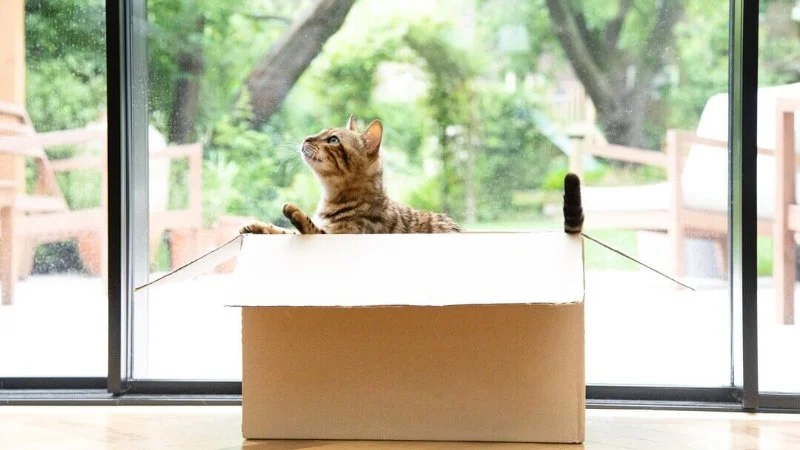
Kittens are often seen leaping into empty boxes with excitement, and it’s a behavior that brings both amusement and curiosity to their owners. But why do kittens seem so fascinated with these seemingly mundane objects? It turns out that this playful behavior is rooted in their instincts, development, and the mental stimulation they crave. In this article, we’ll explore the various reasons behind this adorable fascination with empty boxes and how it can benefit their growth and well-being.

Heart String Healthy Puppies
MillersburgLaGrange CountyIndiana
11985 W 400 S, Millersburg, IN 46543, USA
2. Natural Instincts Behind the Love for Boxes
At first glance, it might seem puzzling that kittens love to play in empty boxes, but there’s a deeper, evolutionary reason behind it. For cats, boxes offer a safe environment where they can engage in instinctual behaviors such as hunting and hiding. These natural instincts, which are inherited from their wild ancestors, drive kittens to seek out confined spaces where they can hide and observe their surroundings.
1. A Safe Place to Hide
One of the most fundamental reasons kittens are drawn to boxes is the sense of security they provide. In the wild, cats are both predators and prey, and having a space to hide in can make them feel protected. The enclosed walls of a box give kittens a sense of control over their environment, allowing them to observe the outside world while feeling safe.
2. Hunting and Stalking Practice
Another instinct that drives kittens to play in boxes is their natural predatory behavior. Kittens are born with a drive to hunt, and while they might not be chasing mice just yet, they practice their hunting skills through play. Empty boxes become perfect hideaways for them to "stalk" and "pounce" on objects, mimicking hunting behaviors in a safe and controlled space.
3. Mental Stimulation and Safety
Beyond the natural instincts, playing in empty boxes provides kittens with essential mental stimulation. The confined space encourages exploration, which helps develop their problem-solving skills and physical agility. Boxes also offer a tactile environment that kittens can interact with in various ways. Whether they are climbing in, out, or pushing the box around, the mental challenge keeps their minds sharp.
1. Curiosity and Exploration
Kittens are naturally curious creatures, and their play behavior is a direct result of this trait. Boxes provide them with a new and exciting environment to explore. They love to investigate hidden corners and leap in and out of boxes as part of their learning process. This exploration helps kittens become more confident and adaptable as they grow.
2. Safe Play and Stress Relief
For a young kitten, playing in a box is a fun and low-stress activity that helps them burn off excess energy. It’s an ideal way for kittens to release pent-up excitement without the risk of injury or anxiety. A box serves as a calming environment where they can retreat to when they feel overwhelmed or need a break from more chaotic surroundings.
4. Real-Life Stories of Kittens and Boxes
The phenomenon of kittens loving boxes is so widespread that it’s often shared by cat owners around the world. Many cat owners have shared videos of their kittens jumping into boxes or playing inside them. One viral video shows a kitten darting into a cardboard box, only to have it swiftly pushed by the kitten across the room. It’s not just cute—it’s a testament to how much fun kittens have in these simple spaces.
1. Story of a Playful Kitten
Take the story of Daisy, a kitten from Chicago. Daisy’s owner shared how Daisy would spend hours playing in a cardboard box placed near the living room window. What started as a fun way for Daisy to observe the outside world soon turned into a full-blown obsession. Daisy would toss toys into the box and dive in after them, engaging in hours of playful exploration. Her owner, noticing the joy Daisy derived from the box, even started placing different sized boxes around the house to see how Daisy would interact with each one.
2. Boxes as Educational Tools
In some cases, boxes are even used as educational tools for kittens. Shelters and breeders often use cardboard boxes in their environments to help kittens adjust to new spaces or to teach them the basics of play. It’s a simple yet effective tool for socialization and skill-building in young kittens.
5. Why Omnia Pet Can Help with Your Kitten's Playtime Needs
If you’re looking for ways to enhance your kitten’s playtime experience, Omnia Pet offers a range of products designed to provide the perfect environment for both fun and development. From interactive toys to safe play areas, Omnia Pet has everything you need to keep your kitten happy and mentally stimulated. Whether you're looking for the ideal box for your kitten to explore or need a variety of toys to keep them engaged, Omnia Pet has you covered.
Explore our collection today to discover the best options for your kitten's playtime needs. We’re here to help make your kitten’s environment safe, fun, and full of excitement!



 Unleashed by Petco4.0 (709 reviews)
 Cherry Hill Animal Hospital4.0 (331 reviews)
 Second Chance Community Veterinary Hospital4.0 (584 reviews)
 Petco4.0 (440 reviews)
 Petco4.0 (1389 reviews)
 Petco4.0 (155 reviews)
 The Best Diet for a Pet Parrot: Seeds, Pellets, and Fresh Foods
 Why Do Cats Like to Sit in Circles? The "If I Fits, I Sits" Mentality
 How to Stop Your Kitten from Digging in Potted Plants
 How to Train Your Kitten to Play Dead
 How to Stop Your Cat from Getting on the Kitchen Counter
 The Best Pet Insurance for Purebred Cats with Genetic Conditions