
- 1- Understanding Why Kittens Eat Too Fast
- 2- The Dangers of Eating Too Fast for Kittens
- 3- Effective Solutions to Slow Down Your Kitten’s Eating
- 4- Best Feeding Equipment to Help Slow Eating
- 5- Additional Tips to Encourage Healthy Eating Habits
1- Understanding Why Kittens Eat Too Fast
Many kitten owners notice that their pets seem to gobble down food at an alarmingly fast rate. This behavior is common in kittens and can be attributed to several factors, including their natural instincts, hunger, or simply being overly excited about mealtime.
Kittens, like many young animals, are instinctively driven to eat quickly. In the wild, fast eating helps ensure they get their share of food before others in the litter can take it. However, when this behavior persists in a domestic setting, it can lead to issues with digestion, choking, or even vomiting. Understanding why your kitten eats too fast is the first step in addressing the problem and ensuring their long-term health.
2- The Dangers of Eating Too Fast for Kittens
While it may seem harmless, eating too quickly can pose several risks to your kitten’s health. Here are some of the dangers associated with this behavior:
2.1. Digestive Problems
When kittens eat too fast, they often swallow air along with their food. This can lead to bloating, discomfort, and gas. Additionally, eating quickly can overwhelm their digestive system, leading to poor nutrient absorption and stomach upset.
2.2. Choking Hazards
Fast eating increases the risk of choking, especially if your kitten doesn’t chew its food properly. Kittens, in their excitement, may gulp down large pieces of food that could block their throat, potentially causing dangerous choking situations.
2.3. Vomiting
One of the most common issues with fast eating is vomiting. Kittens that eat too quickly often regurgitate their food shortly after mealtime because their stomachs can’t handle the rapid influx of food. Vomiting not only disrupts your kitten’s digestive health but can also lead to dehydration.
3- Effective Solutions to Slow Down Your Kitten’s Eating
If your kitten is eating too fast, there are several practical solutions you can implement to help them slow down and eat more healthily:
3.1. Use Smaller, More Frequent Meals
One effective way to prevent overeating is to offer smaller portions of food throughout the day instead of one large meal. Feeding your kitten more often helps prevent them from eating too quickly because they are less likely to feel the need to eat a large quantity at once. Aim for 3-4 meals a day, especially during their early development stages.
3.2. Offer a Slow Feeder Bowl
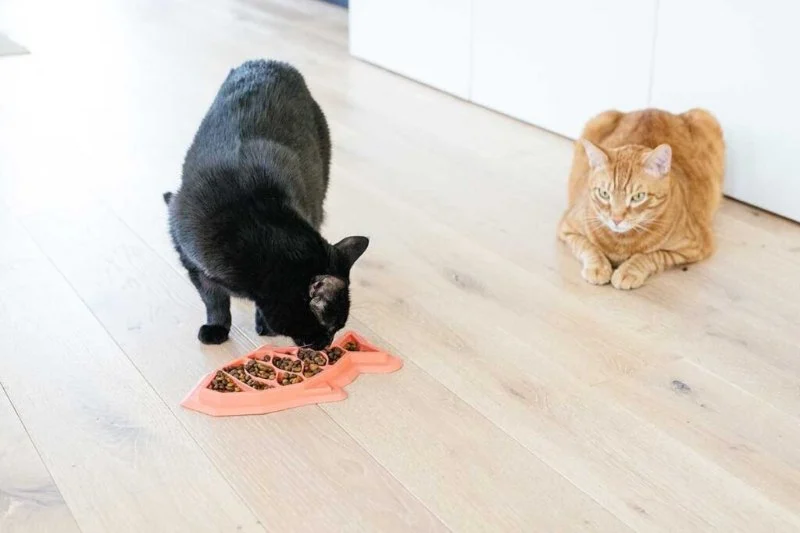
Slow feeder bowls are designed with ridges or obstacles that force your kitten to work harder for their food, slowing down the eating process. These bowls are a fantastic tool for kittens that tend to eat too quickly. They encourage your kitten to take smaller bites and chew their food more thoroughly.
3.3. Hand Feeding
If your kitten is eating too fast, consider hand feeding them. By offering small amounts of food from your hand, you can slow down their eating pace and monitor their intake more closely. This method also creates an opportunity for bonding with your kitten.
3.4. Spread Out the Food
Another simple technique is to spread your kitten’s food out across a larger surface, like a baking tray or large plate. By doing so, you make it harder for your kitten to consume everything in one gulp, encouraging them to take their time and eat more slowly.
4- Best Feeding Equipment to Help Slow Eating
There are a variety of feeding tools available that can help your kitten eat more slowly and reduce the risks associated with fast eating. Some of the most effective products include:
4.1. Puzzle Feeders
Puzzle feeders are interactive bowls that require your kitten to solve a small challenge, such as moving pieces or nudging food out of compartments. These feeders stimulate your kitten’s mind while also slowing down their eating, promoting both mental and physical health.
4.2. Elevated Feeding Stations
Elevated feeding stations can be particularly helpful for kittens who tend to eat too fast. The elevated position encourages your kitten to eat at a more controlled pace, which can improve digestion and reduce the chances of vomiting.
4.3. Food Dispensing Toys
Food dispensing toys are another great option. These toys release food slowly as your kitten plays with them, making mealtime more engaging. These toys are ideal for kittens with a lot of energy, as they combine play and food, slowing down the eating process in a fun way.
5- Additional Tips to Encourage Healthy Eating Habits
In addition to using the right feeding equipment, there are several other tips you can follow to encourage your kitten to eat slowly and maintain healthy eating habits:
5.1. Make Mealtime Calm and Relaxing
Ensure that mealtime is a calm and stress-free experience for your kitten. Avoid loud noises or distractions during feeding, as these can increase your kitten’s excitement and cause them to eat too quickly. Creating a peaceful environment can help them focus on eating more slowly and mindfully.
5.2. Monitor Weight and Health
Keep an eye on your kitten’s weight and overall health. If you notice any signs of obesity, digestive issues, or other health concerns, consult your vet. Maintaining a healthy weight and eating at a moderate pace is crucial for your kitten’s long-term well-being.
5.3. Gradual Changes in Diet
If you need to switch your kitten’s food, do so gradually. Sudden changes in diet can cause digestive upset and may encourage fast eating. Slowly mix the new food with the old food over a week or two to allow your kitten’s digestive system to adjust.
If you’re looking for the best feeding equipment or expert advice on kitten care, visit [Omnia Pet]. We offer a wide selection of products to help your kitten thrive and enjoy healthy mealtimes.

 VCA Shoreline Veterinary Referral and Emergency Center3.0 (411 reviews)
 VCM Bird Land, Bird Store4.0 (32 reviews)
 Crown UrgentVet4.0 (858 reviews)
 Rhonda's Reptiles4.0 (24 reviews)
 Pamper Ur Pets4.0 (101 reviews)
 Petco4.0 (751 reviews)
 Why Do Kittens Have Whiskers on Their Legs? | Omnia Pet
 The Best Litter Box Location for a Kitten's Needs
 Best Wet Food for Kittens Needing Extra Calories – Top Brands & Tips
 Why Does My Kitten Have a Crooked Tail? Understanding the Causes and Solutions
 How to Keep Your Pet Safe During Fourth of July Fireworks
 Why Is My Cat's Third Eyelid Showing? When to Worry