
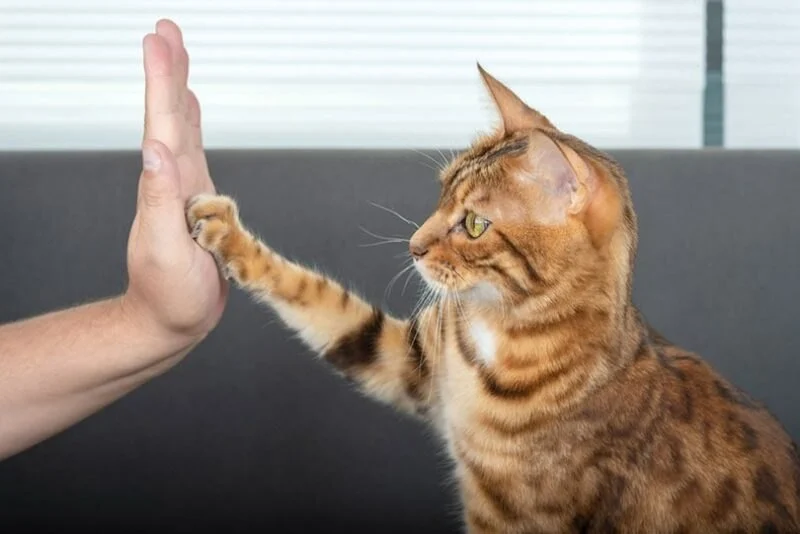
How to Teach Your Cat to High-Five and Other Tricks: A Fun Guide
- 1. Why Teach Your Cat Tricks?
- 2. Basics of Cat Training
- 3. Teaching Your Cat to High-Five
- 4. Other Fun Tricks to Teach Your Cat
- 5. Tips for Successful Cat Training
1. Why Teach Your Cat Tricks?
Training your cat to perform tricks like high-fiving not only strengthens the bond between you and your feline friend, but it also provides mental stimulation for your cat. Cats are intelligent animals that can learn behaviors and commands, just like dogs. Teaching tricks can improve their confidence, help with behavioral issues, and offer them a fun and rewarding activity. Plus, it’s an enjoyable and impressive way to show off your pet's talents!

Above & Beyond Pet Care Clinic
DowneyLos Angeles CountyCalifornia
9640 Firestone Blvd, Downey, CA 90241, USA
2. Basics of Cat Training
Before diving into specific tricks, it's important to understand the basics of cat training. Cats, unlike dogs, have a more independent nature, so patience and consistency are key. Here are some essential principles to keep in mind:
- Positive Reinforcement: Reward your cat with treats, praise, or affection immediately after the desired behavior. This encourages them to repeat the action.
- Short, Fun Sessions: Keep training sessions short—about 5-10 minutes. Cats have short attention spans, so frequent, short bursts of training are more effective.
- Consistency: Use the same words and gestures every time to avoid confusing your cat. Consistency in rewards and commands is crucial for success.
- Patience: Cats may take longer than dogs to pick up on new behaviors. Celebrate small progress and be patient with your furry friend!
3. Teaching Your Cat to High-Five
Now, let’s get into the fun part—teaching your cat to high-five! Here’s a simple, step-by-step guide:
- Step 1: Get Your Cat’s Attention - Use a treat to get your cat focused. Hold the treat in your hand, and let them see and smell it.
- Step 2: Encourage Paw Movement - Hold the treat just above your cat's paw. Most cats will naturally lift their paw to reach for the treat.
- Step 3: Reward the Attempt - As soon as your cat lifts their paw, even if it's a small movement, immediately reward them with the treat and praise.
- Step 4: Add the High-Five Cue - Once your cat consistently lifts their paw, start adding a verbal cue like "high-five" as you extend your hand. Pair the cue with the action, and continue rewarding.
- Step 5: Practice and Reinforce - Continue practicing, and soon your cat will start offering their paw at the cue. Gradually phase out the treat and focus more on praise as the primary reward.
Remember to be patient and keep the training sessions short. Over time, your cat will associate the “high-five” command with offering their paw, and you’ll have a trick to show off to your friends!

4. Other Fun Tricks to Teach Your Cat
If your cat masters the high-five, you can move on to other fun tricks. Here are some ideas for tricks that will keep your cat engaged:
- Come when Called: This is a great trick that can also serve as a practical behavior for keeping your cat close by. Use a treat to call them, and reward them when they come to you.
- Sit: This classic trick can be taught by holding a treat above your cat’s head. As they look up, their bottom will naturally lower to the ground, and you can reward them when they sit.
- Spin: Use a treat to lure your cat in a circle. As they turn, reward them and gradually add the cue “spin.”
- High-Five with Both Paws: Once your cat has mastered the basic high-five, you can teach them to offer both paws in turn. Start with one paw and then lure the second one with a treat.
5. Tips for Successful Cat Training
To help your cat become the ultimate trick performer, here are a few more tips for success:
- Use a clicker: Some cat owners find that using a clicker as a sound cue helps reinforce positive behavior and signals to the cat that they did something right.
- Start early: The earlier you begin training, the easier it will be to teach your cat new tricks. However, older cats can learn too, so don’t be discouraged if your cat is older!
- Keep it positive: Avoid using punishment or negative reinforcement, as this can damage the bond between you and your cat. Always focus on rewarding the behavior you want.
- Be patient: Cats don’t always learn as quickly as dogs, so be patient. Every cat is different, and some may take longer than others to catch on to new tricks.
With patience, consistency, and plenty of positive reinforcement, you’ll be amazed at how quickly your cat can learn tricks like high-fives and more!





 Pet Supermarket4.0 (361 reviews)
 Astoria Animal Society4.0 (68 reviews)
 VCA Animal Hospitals4.0 (49 reviews)
 Animal Surgical Center4.0 (852 reviews)
 Sage Veterinary Center4.0 (449 reviews)
 Bryan Animal Hospital4.0 (235 reviews)
 How to Tell if Your Kitten is a Boy or Girl Accurately
 The Complete Kitten Care Guide: From Birth to One Year
 Understanding Kitten Food Allergies: Symptoms and Solutions
 How to Stop Your Kitten from Eating Litter Crystals: Essential Tips for Pet Owners
 Why Do Cats Hate Water? The Evolutionary Reasons
 Why Do Cats Bring You Their Toys? The Hunting Gift | Omnia Pet