
Pet Microchip Check: Update Contacts Before an Emergency
Table of contents
Quick answer
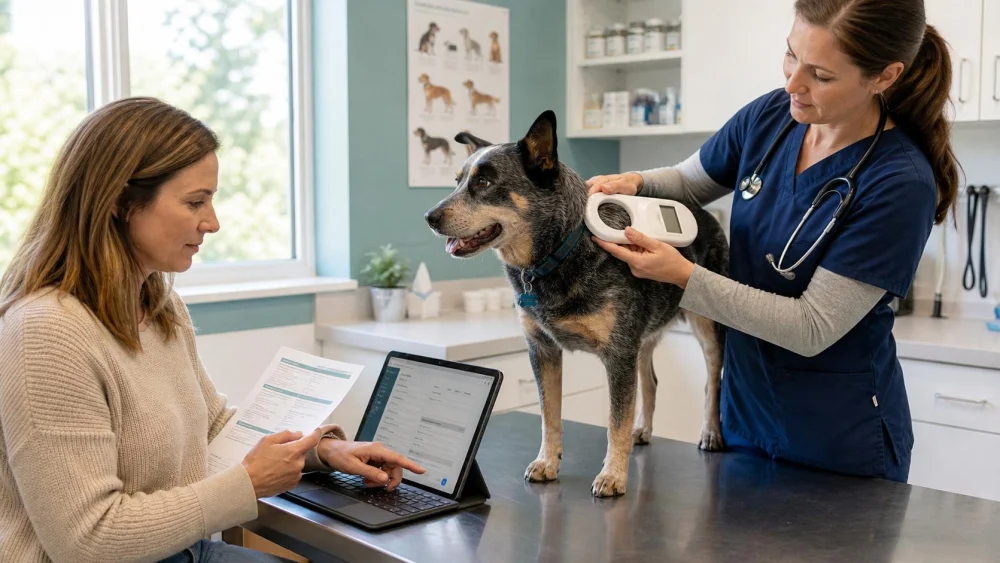
A pet microchip usually carries only a unique identification number; your phone, email, address, and alternate contact are maintained by a registry. Ask a veterinarian or shelter to scan the pet and confirm the full number, use a trusted lookup tool to identify the registry, then update the record directly with that company. Save confirmation and recheck after moving, changing phone numbers, adopting a pet, traveling, or learning that a registry has changed service.
Vetco Vaccination Clinic
Los AngelesLos Angeles CountyCalifornia
200 S La Brea Ave ste c, Los Angeles, CA 90036, USA
What a pet microchip does
A scanner reads the implanted chip’s identification number. A shelter, clinic, or recovery service then uses registry information to contact the owner. The chip is not normally a GPS tracker and does not continuously broadcast the pet’s location. Recovery depends on the chip being readable, the number being connected to an operating registry, and the contact record being current. A collar tag remains useful for immediate local contact.

Confirm the chip number
- Locate implantation, adoption, breeder, shelter, or veterinary paperwork.
- Ask a veterinary clinic or shelter to scan the pet and read the entire number.
- Compare every digit with the paperwork and registry account.
- Ask the clinic to record the number in the medical file.
- Do not publish the full number on social media or an open lost-pet post.
- Tell the veterinarian if scanning is difficult or records disagree.
Find the correct registry
If the registry is unknown, enter the full chip number into the American Animal Hospital Association’s Microchip Registry Lookup Tool. The tool identifies participating registries or possible companies to contact; it does not display owner data and is not itself a registry. Start with the most recent listed company and work through the results. A failed or ambiguous lookup may require the veterinarian, shelter, chip distributor, or adoption organization to help trace the record.
Update and test the contact record
Sign in through the registry’s verified website or contact its published support line. Confirm owner name, primary phone, backup phone, email, current address, alternate trusted contact, veterinarian, pet description, and relevant recovery notes the registry accepts. Review privacy choices and fees before submitting. Save the confirmation email or screenshot, then sign out and verify the public recovery process without exposing private details.
Recheck after life changes
Review the record after adoption, transfer of ownership, move, new phone or email, divorce or household change, change of veterinarian, extended travel, evacuation planning, or a lost-pet incident. Recheck when a registry announces a merger, closure, or service change. Before international travel, ask the veterinarian and destination authority about identification and documentation requirements; registration rules and chip standards can vary by country.
Microchip checklist
Record scan date, clinic or shelter, full number in a secure file, chip format, registry name, account access, update date, primary and alternate contacts, veterinarian, pet description, collar tag, adoption transfer, travel documents, and next review date. Keep a copy in the pet emergency kit and share access with a trusted caregiver without posting the number publicly.
Limits and veterinary notes
This general U.S. information does not confirm chip function, ownership, registry accuracy, international compliance, or legal custody. Do not attempt to implant, remove, or locate a chip yourself. A lookup tool does not update the record and may list multiple companies. Follow veterinarian instructions, registry procedures, adoption contracts, local licensing rules, travel authorities, and privacy guidance. Report a lost pet promptly to local shelters and appropriate recovery services.
Evidence notes
The American Animal Hospital Association explains that the chip carries an identification number linked to contact details stored by a registry and advises owners to keep those details current. AAHA’s registry lookup identifies companies associated with a number but does not reveal owner information or perform updates. A recent veterinary scan, exact digit match, registry confirmation, and dated contact review together provide stronger evidence than implantation paperwork alone.
Frequently asked questions
Can a microchip show my pet’s live location?
No. Standard pet microchips are identification devices read by a compatible scanner, not GPS trackers.
Does my veterinarian automatically update the registry?
Not necessarily. Confirm the registry account directly and keep the veterinary record aligned.
What if the lookup lists several registries?
Contact them in the suggested order and ask which maintains the active owner record.
Should I replace a chip when a registry closes?
Do not assume replacement is needed. Ask your veterinarian and an active registry about re-registration.
Is a collar tag still useful?
Yes. A readable tag can enable quick contact while a microchip provides permanent backup identification.
Next steps
Schedule or request a scan, verify every digit, identify the active registry, update all contacts, and save confirmation. Add the number to secure veterinary and emergency records, maintain a visible tag, and set a yearly review reminder plus event-based checks after moves, phone changes, adoption transfers, travel, or registry announcements.






 Hoboken Vets Animal Clinic4.0 (377 reviews)
 Aardvark Pet Supplies Inc.4.0 (42 reviews)
 Aqualinks4.0 (147 reviews)
 Sea Cardinal0.0 (0 reviews)
 Pasco County Reptiles & Exotics4.0 (46 reviews)
 Hound and Home5.0 (26 reviews)
 Why Does My Kitten Bite My Fingers? Play Aggression Explained
 The Best Cat Tree for Kitten's Agility Training | Top Options for Your Kitten's Development
 The Best Ways to Discipline a Kitten Without Fear or Stress
 The Best Deterrent Sprays for Furniture and Carpets" (no more than 70 characters).
 Why Do Kittens Have Blue Eyes? The Color Change Explained
 Understanding Kitten Weaning: How to Transition to Solids