
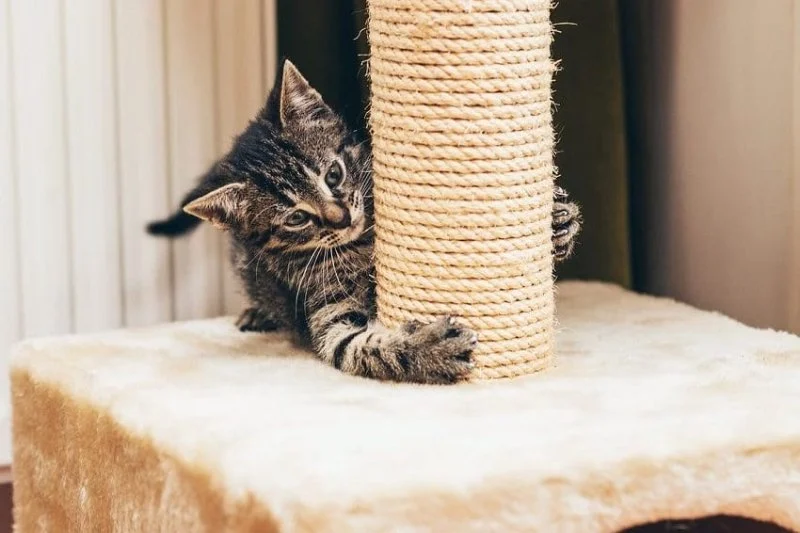
- why_kittens_scratch-understanding_natural_feline_behavior
- introducing_scratching_post-how_to_set_the_right_environment
- positive_reinforcement_training-building_consistent_habits
- redirecting_bad_behavior-preventing_furniture_damage_effectively
- real_life_kitten_story-training_success_case_example
- long_term_success-maintaining_good_scratching_habits
Understanding Why Kittens Scratch in the First Place
Before learning how to train your kitten to use a scratching post, it helps to understand that scratching is not bad behavior—it is natural behavior. Kittens scratch to stretch their muscles, mark territory, and maintain healthy claws.
In many homes, new cat owners mistakenly think scratching is a discipline issue. In reality, it is instinctual. This is why punishment rarely works. Instead, successful kitten scratching training focuses on redirection rather than correction.
A kitten that is allowed to scratch appropriately is usually calmer, more physically healthy, and less likely to develop destructive habits later in life.

Choosing and Introducing the Right Scratching Post
The first step in scratching post training is selecting the right equipment. Not all scratching posts are equal, and kittens can be surprisingly picky.

Height, Texture, and Stability Matter More Than Price
A good scratching post should be tall enough for your kitten to stretch fully, stable enough not to wobble, and covered in a texture they enjoy—often sisal rope or corrugated cardboard.
If the post moves or falls when scratched, kittens often reject it entirely and return to furniture instead. Stability builds trust in the object.
Placement Strategy for Faster Adoption
Where you place the scratching post matters just as much as the post itself. Kittens naturally scratch after waking up or near areas where they spend time.
Placing a scratching post near sleeping areas, couches, or favorite play zones increases the likelihood of early adoption.
How Positive Reinforcement Builds Lasting Habits
The most effective method in cat behavior training is positive reinforcement. This means rewarding your kitten immediately after they use the scratching post.
Rewards can include treats, gentle praise, or short play sessions. Timing is critical—the reward must happen within seconds of the behavior so the kitten connects action with outcome.
Over time, this creates a strong association: scratching the post equals positive experiences.
Pet training experts consistently emphasize that repetition and consistency matter more than intensity. Short, frequent reinforcement sessions work better than long training attempts.
Redirecting Unwanted Scratching Without Stress
If your kitten starts scratching furniture, the goal is not punishment but redirection. Gently guide them toward the scratching post without creating fear.
One effective technique is interrupt-and-redirect: when you catch scratching behavior, calmly move the kitten to the post and encourage a few scratching motions using toys or scent cues.
Avoid yelling or physical correction, as this can create anxiety and reduce trust.
Many pet behaviorists note that negative reactions often lead to hidden scratching behaviors, where kittens only scratch when the owner is not present.
A Real-Life Training Story From a First-Time Cat Owner
A first-time cat owner in Seattle shared their experience with a young rescue kitten that repeatedly scratched a new sofa. Initially, they tried covering the furniture and using deterrent sprays, but the behavior continued.
After switching strategies and introducing a tall sisal scratching post placed right next to the sofa, the kitten began using it within a few days.
The turning point came when the owner started rewarding every correct use with a small treat and enthusiastic praise. Within two weeks, the kitten completely stopped targeting the sofa.
This kind of case highlights a key principle in scratching post training: convenience and reward matter more than correction.
Common Mistakes That Slow Down Training Progress
Many owners unintentionally delay success by choosing the wrong scratching post or placing it in low-traffic areas. If the post is not visible or accessible, kittens simply ignore it.
Another mistake is inconsistent reinforcement. Rewarding behavior only sometimes makes the learning process slower and less reliable.
Some owners also rotate too many scratching surfaces too quickly, confusing the kitten about what is acceptable.
Building Long-Term Healthy Scratching Habits
Once your kitten consistently uses the scratching post, the focus shifts to maintaining the behavior. This involves keeping the post in good condition and occasionally introducing new textures or shapes.
Kittens grow, and their scratching needs evolve. A post that worked at three months may not be sufficient at one year.
It is also helpful to place additional scratching stations around the home to prevent boredom and encourage natural stretching behavior.
For owners looking for well-designed scratching solutions and training tools, Omnia Pet offers a variety of kitten-friendly products designed to support healthy scratching habits and prevent furniture damage.
Why Early Training Makes All the Difference
Training a kitten early is far easier than correcting habits in an adult cat. Young kittens are naturally more adaptable and responsive to environmental cues.
By introducing proper scratching habits early, owners can avoid long-term behavioral issues and create a more harmonious living environment.



 Just Add Chickens0.0 (0 reviews)
 Vetco Total Care Animal Hospital4.0 (197 reviews)
 Giant Radioactive Turtle, Reptiles and More!5.0 (57 reviews)
 Woodland Hills Pet Clinic4.0 (80 reviews)
 Duke's Delites4.0 (17 reviews)
 The Original Poop Bags®4.0 (195 reviews)
 The Truth About Heartworm Disease: Prevention is Cheaper Than Cure
 The Best Litter Box for a Kitten with a Hood | Comfortable & Clean
 The Top 10 Most Common Kitten Behavioral Issues
 Why Do Kittens Have a Strong Preference for Certain People? | Understanding Kitten Behavior
 Best Pet Insurance Providers of 2024: Comparing Plans and Coverage
 The Science of a Kitten's Sense of Smell