
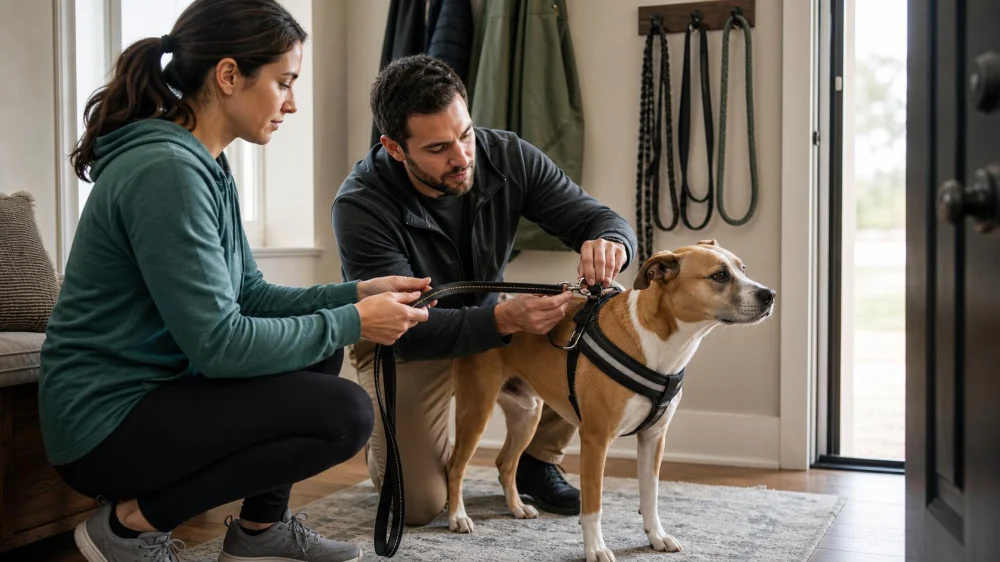
Pet Leash Check: Webbing, Clips, Length, Grip, and Storage
A leash is a small safety system connecting pet, handler, collar or harness, and environment. Frayed webbing, a gritty clip, an inappropriate length, or a loop wrapped around the hand can fail during one sudden movement. Inspecting the entire setup before each outing is quicker than discovering a weak point beside traffic or another animal.
Match the Pet and Activity
Choose material, width, hardware, and design appropriate for the pet’s species, body size, strength, behaviour, and planned walk. Training, hiking, veterinary visits, and crowded sidewalks may need different control. Ask a veterinarian or qualified trainer when mobility, pulling, fear, reactivity, or medical equipment affects the setup. Do not use a decorative leash as load-rated restraint without evidence.

VCA Animal Hospitals Urgent Care - Tustin
631 E 1st St, Tustin, CA 92780, USA
Inspect the Leash Body
Run the leash through your hands in good light and look for cuts, fraying, thinning, chew marks, stretched stitching, burns, mildew, stiff spots, and knots. Check both faces and every seam. A knot can hide damage and reduce function. Do not tape or sew a load-bearing repair unless the manufacturer provides an approved procedure.

Test the Clip
Open and close the clip several times before attaching it. The gate should move freely, return fully, and sit without a gap. Look for rust, grit, bent metal, cracks, looseness, or sharp edges. Check swivels under gentle hand movement. Lubricants and cleaners can attract dirt or harm pets, so use only manufacturer-approved care.
Check Collar or Harness
Attach to the designated ring, not a tag ring or decorative loop. Confirm collar or harness fit according to veterinary or manufacturer guidance and inspect buckles, straps, stitching, and adjustment points. Identification tags and microchip records support return but do not replace physical control. Use any backup connector only as designed, without creating tangles or restricting breathing.
Choose Useful Length
The leash should allow the planned movement while keeping the pet away from traffic, hazards, and unwanted contact. Long lines need open space, training, and active management. Retractable leashes can create high-speed extension, thin-cord injuries, and delayed control in some settings. Follow local rules and choose a fixed length when close control is needed.
Use a Safe Grip
Hold the handle securely without wrapping the leash around fingers, wrist, waist, or body unless using equipment specifically designed and fitted for that use. Gather slack in controlled folds rather than coils that tighten. Wear suitable footwear and keep both hands available in busy areas. Do not let children handle a pet whose movement they cannot safely control.
Plan Visibility
For low light, use reflective or illuminated products designed for pets and inspect their batteries, attachment, and visibility. Lighting does not make a team visible from every direction or replace a flashlight. Avoid flashing modes that distress the pet or others. Keep accessories lightweight and away from the clip gate, leash movement, and chewing reach.
Scan the Environment
Before leaving, check weather, pavement temperature, ice, crowds, traffic, wildlife, loose dogs, construction, and route exits. Shorten the leash before hazards rather than after the pet accelerates. Keep distance and do not force greetings. When another handler asks for space, respect it. Move to a safe side area instead of creating tension across a path.
Clean and Dry
Remove mud, salt, sand, and biological contamination according to product instructions. Rinse completely and air-dry away from pet chewing, direct heaters, and intense sun. Never store a wet leash in a sealed bag. Check metal hardware again after beach or winter use. Keep walking gear separate from food, medication, and clean grooming supplies.
Retire and Replace
Replace a leash with damaged webbing, failed stitching, unreliable clip, corrosion, sharp hardware, or uncertain strength. Cut or clearly mark it so nobody mistakes it for usable gear. Record purchase and first-use dates, product details, and any failure. If the leash breaks during an escape, secure the area and contact appropriate local help without chasing into traffic.
Prepare one backup leash that is already sized, inspected, and familiar to the handler. Store it near the primary gear but not where the pet can chew it. Share the clipping point, route rules, veterinary contacts, and behaviour notes with anyone who may walk the pet. A spare is useful only when the substitute handler understands the equipment and can safely manage the animal in the planned environment.
A dependable leash check covers every link: pet, fit, ring, clip, webbing, handle, handler, and route. Match the activity, test hardware, choose controlled length, avoid body wrapping, clean and dry the gear, and replace damage before the next walk.




 Atlas Pet Hospital4.0 (265 reviews)
 Beaumont Animal Hospital4.0 (639 reviews)
 5 Points Companion Animal Hospital4.0 (102 reviews)
 Petland Hoffman Estates4.0 (1499 reviews)
 Petco4.0 (1028 reviews)
 Collar City Animal Hospital4.0 (151 reviews)
 How to Tell if Your Kitten is Blind: Signs and Tips for Pet Owners
 The Best Pet Insurance for Purebred Cats with Genetic Conditions
 How to Stop Your Kitten from Chewing on Books: Proven Tips and Solutions
 How to Introduce a New Puppy to Your Resident Cat: A Step-by-Step Guide
 Best Pet Insurance Providers of 2024: Comparing Plans and Coverage
 How Dogs Understand Human Language: The Science of Canine Cognition