
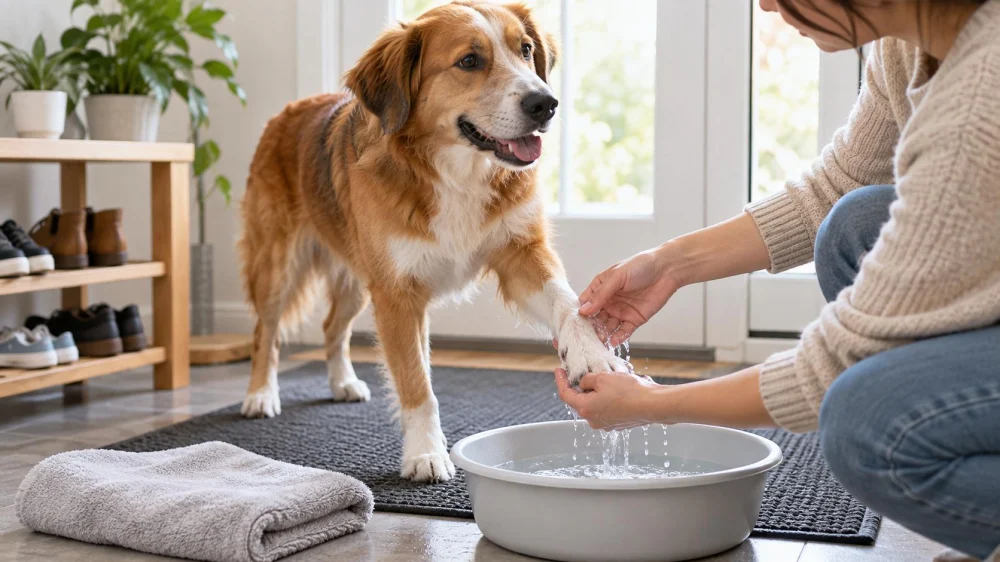
Pet Paw Cleaning After Walks: Rinse, Dry, and Inspect
On this page
Quick answer
After a walk through mud, road salt, lawn products, or unknown residue, stop licking, rinse the paws with comfortably lukewarm water, and dry between the toes. Check pads, nails, and skin for cuts, swelling, trapped material, or tenderness. Call a veterinarian promptly for chemical exposure, persistent limping, bleeding, burns, or significant pain.
When paws need attention
Routine paw cleaning removes material that could irritate skin, damage surfaces, or be swallowed during grooming. Mud may need only a rinse, while road deicer, fuel, paint, pesticides, or an unknown sticky substance deserves more caution.
Watch the pet's behavior. Repeated licking, holding up a paw, sudden reluctance to walk, or pulling away during handling can signal discomfort even when no object is obvious.

Healthy Paw Life
1820 N Glenville Dr Suite 108, Richardson, TX 75081, USA
Prepare a calm cleaning area
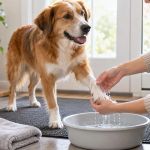
- Use a nonslip mat, clean towel, shallow basin, and lukewarm water.
- Keep the pet on a secure leash or have a familiar helper support calmly.
- Prevent licking until the paws are clean.
- Keep household cleaners, essential oils, alcohol, peroxide, and unapproved creams away.
- For a known chemical, save the product label and contact a veterinarian or animal poison resource.
Do not force a frightened or painful animal into restraint that risks a bite or further injury. A veterinary clinic can advise on safe transport and handling.
Clean one paw at a time
- Look before rinsing for bleeding, a torn nail, a deeply embedded object, or obvious burn.
- Use gentle running water or a clean damp cloth to loosen ordinary dirt.
- Wipe from the lower leg toward the pads without pulling on fur or toes.
- Rinse between pads and toes, then use a separate clean section of towel for each paw.
- Dry thoroughly, especially skin folds and long hair.
For minor dry debris, a brush recommended for the pet's coat may help after the material is loose. Do not dig out glass, deep thorns, or firmly embedded objects at home.
Inspect pads, nails, and between toes
Compare left and right paws. Look for redness, swelling, cracked pads, blisters, punctures, broken nails, mats, burrs, discharge, odor, or a temperature difference. Check the dewclaw where present.
Take a clear photo for the veterinarian if a change is visible. Note where the walk occurred, possible exposures, when licking or limping began, and what was used to clean the paw. Do not delay urgent care to create a perfect record.
Reduce future exposure
Choose cleaner routes, avoid freshly treated lawns, and keep the pet away from automotive fluids. In winter, follow local guidance about road products and consider properly fitted protective footwear if the pet tolerates it. Recheck boot fit and remove trapped grit after use.
Keep hair and nails maintained by an appropriate professional so debris is easier to see, but do not trim injured tissue. Place a washable mat and towel near the usual entrance to make the routine consistent.
Important limits
This is general care guidance, not diagnosis. Species, skin disease, allergies, injuries, and chemical exposures require different treatment. Contact a veterinarian for persistent licking, limping, swelling, discharge, spreading redness, bleeding, a damaged nail, suspected burn, or any toxic exposure.
Emergency care is appropriate for severe bleeding, inability to bear weight, collapse, breathing trouble, or rapidly worsening signs. Bring product information when a substance is involved.
Frequently asked questions
Can I use baby wipes on pet paws?
Only use a product your veterinarian considers suitable for that species and situation. Fragrance and other ingredients may irritate skin or be swallowed.
Should I soak muddy paws?
A short gentle rinse is often enough. Avoid prolonged soaking, and dry completely. Painful or injured paws need veterinary advice.
What if my pet keeps licking after cleaning?
Prevent further licking and contact a veterinarian. Residue, injury, allergy, or infection may still be present.
Can I remove a splinter myself?
Do not dig for a deep, painful, or uncertain object. Keep the pet from licking and seek veterinary help.
Sources and evidence notes
The routine reflects broad veterinary first-aid principles: remove ordinary surface contaminants with gentle rinsing, avoid unapproved chemicals, prevent licking, document exposure, and escalate pain, injury, or toxic substances. A veterinarian should tailor care to the animal.
Next steps
Set up a nonslip cleaning spot near the door, rinse and dry one paw at a time, then compare all four paws under good light. Record any change and call the veterinarian when discomfort, injury, or a concerning exposure is present.




 Petco4.0 (883 reviews)
 Healthy Paw Life0.0 (0 reviews)
 Aquatic Design Aquariums4.0 (372 reviews)
 Apawthecary Pet Products0.0 (0 reviews)
 JeTT Pets Club for Dogs - Plano4.0 (16 reviews)
 Hollywood Feed4.0 (390 reviews)
 Pet Water Bowl Routine: Clean, Refill, and Track Changes
 Pet Paw Cleaning After Walks: Rinse, Dry, and Inspect
 Pet Supply Delivery: Check Temperature, Seal, and Handoff
 Pet Sitter Meet-and-Greet: Observe Handling and Questions
 Pet Cough Video: Record Safely for Veterinary Review
 Pet Recovery Space: Set Up Rest After Vet Care