
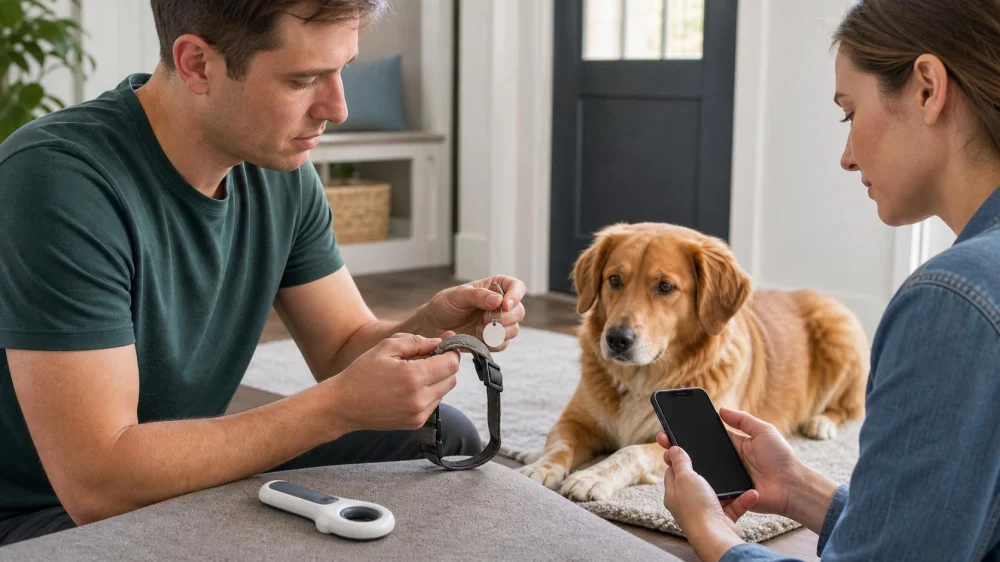
Pet ID Tag Check: Legibility, Fit, and Backup Contacts
An identification tag is a small piece of a larger return-home plan. It can help a neighbor or finder contact you quickly, but only if the tag is readable, attached to suitable gear, and backed by current microchip and veterinary records. A monthly hands-on check takes minutes and can reveal worn engraving, a weak ring, outdated phone numbers, or an uncomfortable setup.
Quick answer
Confirm that the tag shows a current phone number and any concise information a finder truly needs. Read it in normal light without guessing, check both sides for wear, and tug every ring and clasp over a soft surface. Make sure the tag cannot catch, reach the pet’s mouth, or interfere with eating, movement, crate use, or medical devices. Keep the microchip registration and a second contact current because tags and collars can be lost.

Choose useful contact information
Prioritize a phone number that you answer and monitor. A second household or trusted backup number can help when you are traveling or unavailable. Consider whether a city or neighborhood is useful, but weigh privacy and the limited surface.
A pet’s name is optional. Some owners prefer it because a finder can speak calmly; others use the space for another contact. Avoid crowding so much text onto the tag that it becomes tiny or unreadable.
Medical wording should be concise and accurate. A vague claim such as “needs medicine” may not help without veterinary context. Keep detailed medication and care instructions in current veterinary and emergency records rather than relying on a dangling tag.

Check readability
Remove the tag and clean it according to the manufacturer’s directions. Dirt can hide shallow engraving, while harsh chemicals or abrasive pads can damage some coatings. Dry it fully before inspection.
Read every character under ordinary indoor and outdoor light. Ask another adult to read the phone number without being told what it says. Look for worn digits, scratches, corrosion, cracks, sharp edges, fading, a lifting label, or a QR surface that no longer scans reliably.
Digital or QR tags can provide more information, but a finder may not have service, a compatible phone, or confidence scanning an unknown code. Keep plain visible contact information when practical and review the linked profile and privacy settings.
Inspect the attachment
Check the split ring, S-hook, rivet, slide, clip, or tag holder. Open hardware slightly only if the design requires it; repeated bending can weaken metal. Look for gaps, distortion, rust, looseness, thinning, or a clasp that opens too easily.
Attach the tag to the intended identification ring, not automatically to the leash ring. Leash load and tag attachment needs differ. Follow the collar or harness manufacturer’s design and do not add a heavy collection of charms and tags.
Test the completed setup with the pet off the ground and calm, never by pulling upward on the collar. The tag should hang or slide as designed without reaching the mouth or catching between buckles.
Review collar or harness fit
Identification gear must suit the species, size, behavior, coat, and setting. Cats may need an appropriately designed breakaway collar. Dogs may use a collar, harness tag, or another veterinarian- and trainer-approved setup. A tag does not make an unsuitable collar safe.
Check fit using the manufacturer’s and veterinary guidance, then observe the pet walking, resting, eating, and turning its head. Look for rubbing, hair loss, redness, coughing, pawing, freezing, or behavior change.
Growth, weight change, grooming, coat changes, and new equipment can alter fit. Puppies, kittens, and recently adopted animals need more frequent checks. Remove or modify gear only in accordance with the pet’s safety plan; indoor pets can also escape.
Manage noise and chewing
Multiple metal tags can strike each other, bowls, or crate hardware. If noise causes distress, ask a veterinarian or qualified behavior professional about quieter identification options. Silicone silencers, slide-on tags, and embroidered products have different durability and readability tradeoffs.
A pet that can chew its tag may swallow metal, plastic, a ring, or a battery-containing device. Remove access safely and have the setup reassessed. Do not attach a loose tracker or electronic tag without checking size, weight, closure, water resistance, and battery security.
Call a veterinarian promptly if a pet swallows a tag, ring, magnet, battery, or sharp piece. Do not induce vomiting unless a veterinary professional specifically directs it.
Build backup identification
A microchip is permanent identification under the skin, but it works only when a shelter or clinic scans it and the registration leads to current contacts. Verify the chip number, registry, phone numbers, email, address, alternate contact, and pet details after moving or changing service.
Keep recent clear photos showing the pet’s face, full body, markings, and current coat. Save vaccination and license information, veterinarian contacts, chip number, and ownership records somewhere accessible during travel.
Licensing and rabies-tag requirements vary by jurisdiction. Follow local law without assuming a license tag replaces a personal ID tag or microchip.
Act if a pet goes missing
Search the immediate safe area, notify the microchip registry, and contact local animal control, shelters, veterinary clinics, and relevant community resources promptly. Use current photos and a monitored contact number.
Be alert for scams. A legitimate finder should be able to describe or show the pet. Do not send money or verification codes to an unknown person, and arrange reunions in a safe location with support.
For a frightened or injured animal, avoid chasing or cornering. Ask animal control or experienced recovery professionals for guidance. Call emergency services when a person or animal faces immediate danger in traffic, water, fire, or another hazardous setting.
Frequently asked questions
Should the tag include my pet’s name?
It is optional. Prioritize clear current contact information and choose based on space and privacy preferences.
Can a QR tag replace engraving?
It can supplement visible details, but phones, service, scanning, and profile availability can fail. Use a practical backup.
How often should I check the tag?
Inspect it monthly and after rough play, travel, grooming, a gear change, or any event that could bend or lose hardware.
Is a tag enough without a microchip?
Tags can be lost with the collar. Discuss microchipping and registration with your veterinarian and follow local requirements.
Next steps
Remove the tag today, clean and read it, verify both contacts, inspect the hardware, and observe the fitted setup on the pet. Then check microchip registration and save current photos. Put a recurring monthly tag check on the household calendar.






 8888 Tropical Fish3.0 (28 reviews)
 Veterinary Cancer Group SFV, A Thrive Pet Healthcare Partner4.0 (123 reviews)
 Snuggles Snacks5.0 (3 reviews)
 Southgate Animal Hospital4.0 (236 reviews)
 Puppy Time3.0 (2 reviews)
 One Love Veterinary Clinic @ Chelwayne4.0 (304 reviews)
 How to Introduce a New Puppy to Your Resident Cat: A Step-by-Step Guide
 A Guide to Feline Nutrition: Reading Cat Food Labels
 The Best Puzzle Feeders for Cats to Slow Down Eating
 How to Make Your Own Pet First Aid Kit at Home for Emergencies
 The Top 10 Rare Cat Breeds You've Never Heard Of
 The Best Cat Tree for a Kitten's Agility Training | Omnia Pet