
Pet Heatstroke Warning Signs: Start Cooling and Go to a Vet Now
Quick answer: Heavy or rapid panting, excessive drooling, weakness, confusion, vomiting, diarrhea, abnormal gums, collapse, or seizures after heat exposure can signal heatstroke. Move the pet to shade or a comfortably cool area, call the nearest veterinary hospital, begin gentle cooling with room-temperature water and moving air as directed, and travel immediately. Do not use an ice bath or delay because the pet seems better.
1. Watch Breathing, Behavior, Gums, and Movement
AVMA lists rapid breathing or heavy panting, excessive drooling, weakness or drowsiness, confusion, vomiting or diarrhea, and abnormally colored, dry, or sticky gums among heatstroke signs. Collapse and seizures are severe emergencies.

Embrace Animal Hospital
MiddleburyNaugatuck Valley Planning RegionConnecticut
1556 Straits Turnpike, Middlebury, CT 06762, USA
2. Stop Activity and Move to a Cooler Place
Carry or guide the pet out of sun only if safe. Avoid forcing a weak animal to walk. Use shade, air conditioning, or a cool indoor area and remove unnecessary coverings or gear.

McGrath Veterinary Center
Los AngelesLos Angeles CountyCalifornia
4560 Sherman Oaks Ave, Sherman Oaks, CA 91403, USA
3. Contact the Closest Veterinary Hospital Immediately
Tell the clinic species, breed, age, weight, location, exposure, symptoms, cooling started, and travel time. Call ahead so staff can prepare. Heatstroke can injure organs even after visible improvement.
4. Use Room-Temperature Water and Moving Air
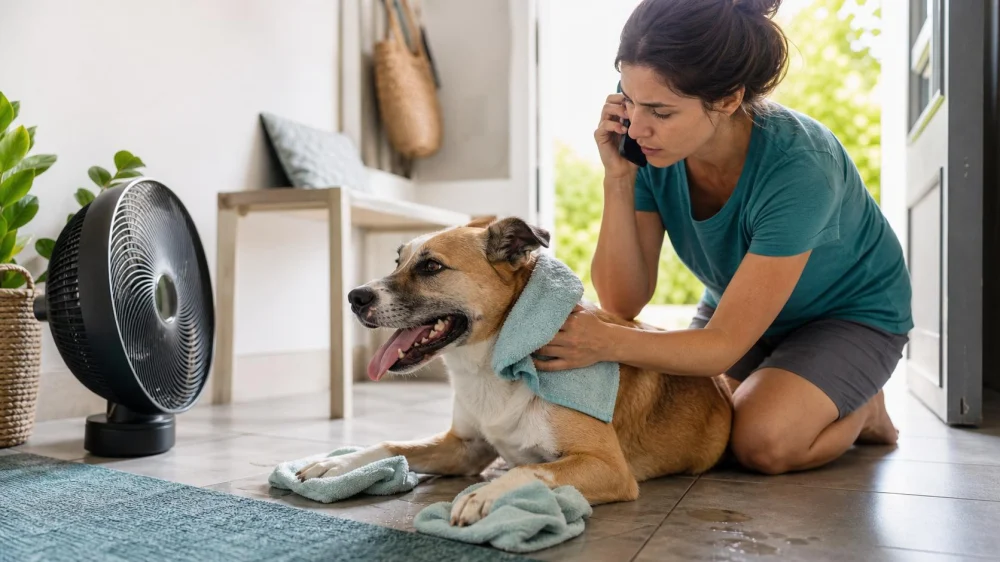
AVMA advises placing towels wetted with room-temperature water around the neck, armpits, and groin, refreshing them every few minutes, and using a fan when available. Follow the emergency clinic's instructions for your pet.
5. Do Not Use Ice Baths or Force Water
AVMA warns against placing the pet in a tub of cool or cold water because it can worsen the condition. Do not apply ice directly or force fluid into a confused, vomiting, seizing, or poorly swallowing animal.
6. Continue Safe Cooling on the Way
Use air conditioning and room-temperature wet towels without wrapping the pet so heavily that heat is trapped. Secure the pet while maintaining airflow. Have another person drive when possible.
7. Plan Extra Caution for Vulnerable Animals
Short-nosed breeds, older or very young pets, overweight animals, thick-coated pets, and those with heart, airway, or other health problems may tolerate heat poorly. Ask the veterinarian for individualized limits.
8. Never Leave a Pet in a Parked Vehicle
Vehicle temperatures can rise rapidly even with windows cracked. If you see a distressed animal in a vehicle, call local emergency or animal-control authorities and follow their legal instructions rather than improvising unsafe entry.
9. Accept Testing and Monitoring Recommendations
Veterinary care may include temperature control, fluids, oxygen, blood testing, and monitoring for organ or clotting problems. Attend rechecks and follow activity, food, water, and medication directions exactly.
10. Change Walk, Exercise, Shade, and Water Plans
Schedule activity for cooler hours, test pavement, shorten exertion, provide shade and fresh water, and avoid intense play in humidity. Know the nearest emergency clinic before trips. Review the AVMA pet first-aid guide with household caregivers.




 Eastfield Hospital For Animals4.0 (188 reviews)
 Chino Valley Equine Hospital4.0 (78 reviews)
 Eastvale Veterinary Hospital4.0 (303 reviews)
 PetVet Vaccination Clinic4.0 (1 reviews)
 Ridge Road Animal Hospital4.0 (221 reviews)
 Helping PAW4.0 (159 reviews)
 The Best Ways to Discipline a Kitten Without Fear or Stress
 The Best Dog Foods for Puppies with Sensitive Stomachs
 Why Do Cats Hate Water? The Evolutionary Reasons
 The Best Heated Water Bowls for Outdoor Cats in Winter
 Why Does My Kitten Have a Bald Spot?
 How to Stop a Kitten from Scratching the Walls - Tips & Solutions