Pet Toy Safety Check: Size, Damage, Cleaning, and Rotation
Pet toys change as they are chewed, scratched, washed, dragged outside, and shared. A toy that was appropriate when new can become small enough to swallow, sharp enough to cut, or dirty enough to retire. A regular toy check matches each item to the species, size, behaviour, and supervision available that day.
Match Species and Behaviour
Choose toys labeled or professionally recommended for the pet’s species, life stage, size, jaw strength, play style, and health needs. A gentle retriever and a determined chewer may need different materials. Cats, birds, rabbits, and other pets have species-specific risks. Ask a veterinarian when dental disease, mobility limits, recovery, or unusual ingestion behaviour affects selection.
South County Veterinary Hospital
South KingstownWashington CountyRhode Island
481 Main St, Wakefield, RI 02879, USA
Choose a Safe Size
A toy should not fit completely into the pet’s mouth or become lodged, but oversized heavy toys can also injure teeth or strain movement. Account for compression and wear. The ASPCA guidance on dog chews recommends matching products to size and chewing habits and avoiding objects that are excessively small or fragment.
My love Pets and Grooming
Wood-RidgeBergen CountyNew Jersey
253 Valley Blvd, Wood-Ridge, NJ 07075, USA
Supervise the First Sessions
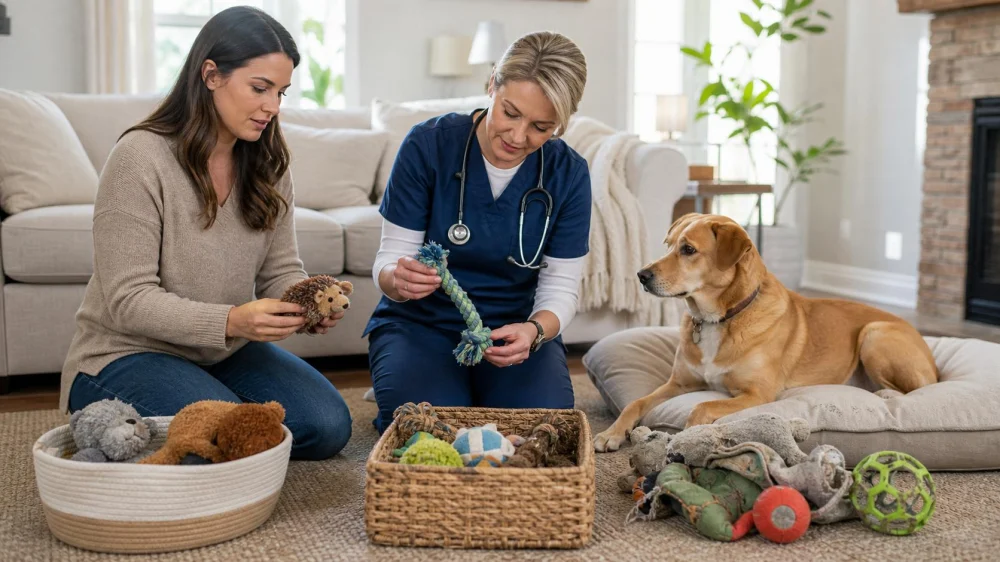
Watch how the pet grips, tears, paws, shakes, chases, or guards a new toy. Start in a clear area and interrupt calmly if the pet removes pieces, becomes overaroused, or uses it in an unsafe way. A label such as “durable” or “indestructible” does not replace supervision. Put the toy away when active observation is not possible.
Inspect Before Play
Look and feel for cracks, sharp edges, stretched seams, exposed stuffing, compressed sections, loose rope strands, punctures, odour, mould, battery damage, or changes in size. Compare with a photo from new. Do not squeeze a damaged electronic toy near the face. Wear gloves and isolate the item when a battery, chemical, or biological contamination is suspected.
Watch Small Parts
Eyes, bells, squeakers, strings, feathers, magnets, batteries, and caps can detach. Remove a toy from reach as soon as a component loosens. Do not glue it back unless the manufacturer provides an approved repair and material. Magnets and button batteries can be especially dangerous if swallowed; contact a veterinarian or pet poison resource promptly after possible exposure.
Clean as Directed
Separate washable from non-washable toys and follow manufacturer temperature, detergent, rinsing, and drying instructions. Rinse food puzzles completely and prevent residue in crevices. Do not mix household disinfectants or use fragrance oils. Dry items fully before returning them. The AVMA advises regular cleaning and replacement of toys that are damaged or cannot be cleaned.
Rotate Without Creating Scarcity
Keep a small set available and exchange items based on interest and condition. Rotation can make familiar toys engaging without constant buying. Introduce the replacement before taking a valued object when resource guarding is a concern, and seek qualified behavioural help rather than grabbing it. Record which toy materials and play patterns remain safe.
Manage Multi-Pet Play
Give each pet enough space and use separate toys when size, play style, or guarding differs. A toy safe for a large dog may not be safe for a smaller housemate, and cat toys can become dog ingestion hazards. Supervise interaction and separate calmly at early tension signs. Do not leave communal food toys unattended.
Retire Damaged Toys
Discard toys that split, fragment, expose stuffing or electronics, develop sharp areas, shrink below a safe size, or cannot be cleaned. Cut or bag them so another pet cannot retrieve them from an open bin. Do not donate worn unsafe toys. Save the package, lot information, and photos when reporting a product issue to the retailer or manufacturer.
Act After Suspected Ingestion
If a piece is missing or swallowing is witnessed, contact a veterinarian promptly and describe the material, size, time, pet, and symptoms. Do not induce vomiting or give home remedies unless a veterinary professional directs it. Trouble breathing, collapse, repeated unproductive retching, severe distress, or other emergency signs require immediate veterinary care.
Keep a simple toy inventory with a photo, purchase date, intended pet, cleaning method, and last inspection. Photograph damage before disposal if a repeated failure may need reporting. For food-dispensing toys, count their contents as part of the pet’s feeding plan and ask the veterinarian about appropriate portions. Remove unfinished moist food promptly and clean the item before residue hardens inside channels that are difficult to inspect.
Safe pet play depends on the toy’s current condition, not its original promise. Match size and behaviour, supervise first use, inspect every session, clean correctly, rotate thoughtfully, and retire damage early. When a piece may have been swallowed, fast veterinary guidance is more useful than waiting for the toy to reappear.




 Atlas Pet Hospital4.0 (265 reviews)
 Beaumont Animal Hospital4.0 (639 reviews)
 5 Points Companion Animal Hospital4.0 (102 reviews)
 Petland Hoffman Estates4.0 (1499 reviews)
 Petco4.0 (1028 reviews)
 Collar City Animal Hospital4.0 (151 reviews)
 How to Tell if Your Kitten is Blind: Signs and Tips for Pet Owners
 The Best Pet Insurance for Purebred Cats with Genetic Conditions
 How to Stop Your Kitten from Chewing on Books: Proven Tips and Solutions
 How to Introduce a New Puppy to Your Resident Cat: A Step-by-Step Guide
 Best Pet Insurance Providers of 2024: Comparing Plans and Coverage
 How Dogs Understand Human Language: The Science of Canine Cognition