
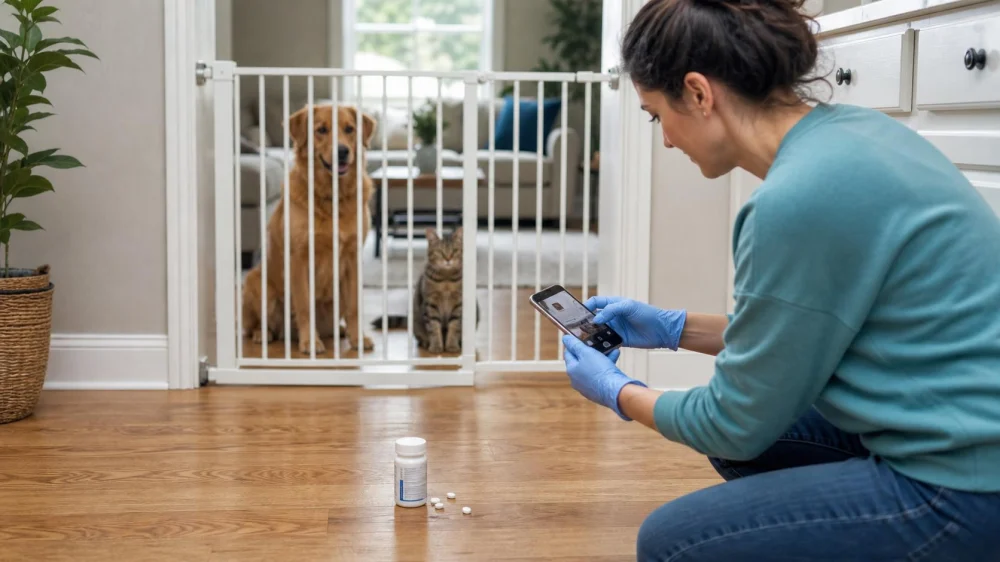
Spilled Pet Medication: Secure Animals, Count Doses, and Call
On this page
Quick answer
If pet medication spills, immediately move every animal and child away, close the area, photograph the bottle and spill, and count or estimate missing tablets, liquid, or topical product. Do not induce vomiting, give food, or wait for symptoms unless a veterinarian or animal poison service directs you. Call the prescribing veterinarian or emergency clinic with the product, strength, amount, time, pet species, weight, and symptoms.

Why it matters
A medication prescribed safely for one animal can overdose that pet, poison another species, or expose people. Chewed bottles, topical products, flavored tablets, and combination drugs add uncertainty.
This United States guide is general emergency preparation. Toxicity depends on the exact active ingredient, strength, formulation, amount, route, species, weight, health, and time. Professional poison assessment is case-specific.

Practical checklist
- Gate or close all pets and children out of the spill area.
- Keep the original bottle, box, insert, applicator, and receipt.
- Photograph the label and remaining product without delaying the call.
- Count intact doses and record what may be missing.
- Identify every animal that had access and its approximate weight.
- Use gloves and avoid skin or eye contact with topical or liquid products.
- Call the veterinarian, emergency clinic, or recognized animal poison service now.
Step-by-step plan
- Separate animals so symptoms and possible exposure are not confused.
- Collect intact pills only if safe, without vacuuming or spreading residue before documentation.
- For skin or eye contact, follow professional or label decontamination guidance rather than improvising solvents.
- Tell the responder product name, active ingredients, strength, formulation, quantity, time, route, and each pet's details.
- Follow transport and decontamination instructions exactly; do not induce vomiting unless directed.
- Bring packaging and remaining product to the clinic in a sealed secondary container.
- After clearance, clean the area as directed and correct storage, cap, counter, or dispensing practices.
Keep photos, lot and expiration, prescription directions, missing amount, exposed pets, weights, timeline, symptoms, poison-case number, clinic advice, transport, treatment, and cleanup instructions.
Limits and warning signs
No symptoms yet does not mean no risk. Online dose calculators and human poison advice cannot replace veterinary assessment, and cats, dogs, birds, and other species metabolize drugs differently.
Use emergency veterinary care immediately for collapse, seizures, severe agitation, breathing difficulty, repeated vomiting, extreme sleepiness, tremors, abnormal heart rate, or known high-risk exposure. Call human poison control for a person's exposure.
Frequently asked questions
Should I make my pet vomit?
Not unless a veterinarian or animal poison expert specifically directs it; vomiting can worsen some exposures.
Can I wait to see symptoms?
No. Early treatment may matter, and some effects are delayed.
What if I do not know which pet ate it?
Separate all animals and give the responder access, weights, counts, and timelines for each.
Can I throw the bottle away after a photo?
No. Keep all packaging and remaining product for identification and treatment decisions.
Sources and evidence
The guide follows common veterinary toxicology response: separate animals, preserve product identification, estimate dose, avoid home-induced vomiting, contact veterinary or animal poison experts promptly, and bring packaging to care.
Conclusion and next steps
Secure the area, count what remains, photograph and retain the package, and call veterinary help immediately. Provide one clear timeline for every animal with possible access.




 Mobile Equine Diagnostics, Inc.3.0 (5 reviews)
 Connecticut Puppies and Kittens4.0 (104 reviews)
 Petco4.0 (741 reviews)
 Coast to Coast Cardiology4.0 (29 reviews)
 Petco4.0 (412 reviews)
 Petco4.0 (792 reviews)
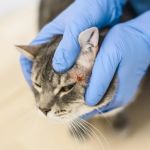 Why Does My Kitten Have a Bald Spot?
 Why Does My Kitten Have a Notched Ear? Understanding TNR Programs
 Why Does My Dog Sleep on My Clothes? The Scent Explanation
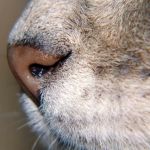 Why Does My Kitten Have a Black Nose? Causes and What to Know
 Why Do Kittens Have Blue Eyes at First?
 Understanding Why Your Cat Is Hiding: Behavioral and Medical Causes