
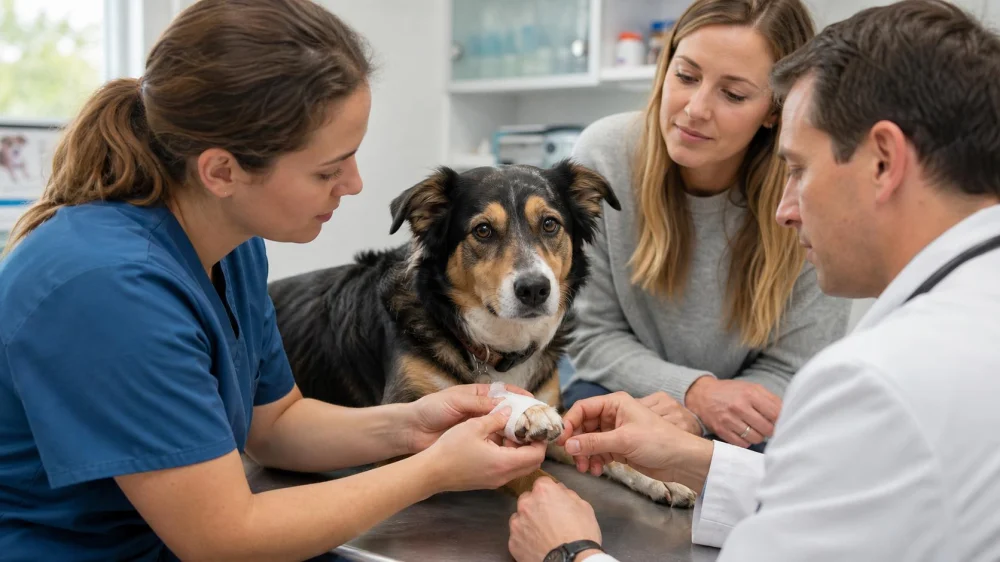
Torn Pet Nail: Control Bleeding and Call Your Veterinarian
On this page
Quick answer
A torn nail can be painful and bleed heavily. Keep the pet still, prevent licking, and apply gentle direct pressure with clean gauze. Use only a veterinarian-approved styptic product if you already know how. Do not pull, twist, glue, or cut a partly attached nail. Call the veterinary clinic for guidance, especially when the nail is split near the base, bleeding continues, the toe swells, or the pet will not bear weight.

Islandia Animal Hospital
IslandiaSuffolk CountyNew York
1930 Veterans Memorial Hwy #1, Islandia, NY 11749, USA
Why it matters
The nail contains sensitive tissue and blood supply. A break can expose the quick, leave a sharp unstable fragment, become contaminated, or involve the toe itself.
This United States guide is general first aid, not diagnosis. Species, nail anatomy, injury, medication, clotting disorders, stress, and clinic access vary. Pain can make even gentle pets bite.

Practical checklist
- Move to a quiet non-slip area and use calm restraint without force.
- Keep your face and hands away from a painful pet's mouth.
- Apply clean gauze pressure without repeatedly lifting it to check.
- Prevent running, jumping, and licking.
- Save any detached nail piece and photograph the injury if safe.
- Note bleeding time, contamination, trauma, limping, and medications.
- Call the veterinarian before trimming or bandaging.
Step-by-step plan
- Assess breathing, major trauma, and bleeding before focusing on the nail.
- Apply continuous gentle pressure with clean absorbent material.
- Use approved styptic only as directed and never pack household chemicals into the wound.
- Do not remove a hanging segment; protect it from snagging during transport.
- Keep the paw clean and dry without wrapping tightly or leaving an unmonitored bandage.
- Transport in a carrier or controlled leash setup and warn the clinic about pain and handling risk.
- Follow professional instructions for cleaning, pain relief, bandage care, activity, and recheck.
Keep the injury time, photos, bleeding duration, cause, contamination, affected toe, gait, medications, first aid used, clinic advice, treatment, and recheck plan.
Limits and warning signs
Stopping visible bleeding does not prove the nail bed or toe is intact. Human pain medicines can be toxic to pets, and a tight bandage can damage circulation.
Seek urgent veterinary care for uncontrolled bleeding, pale gums, weakness, severe pain, crushed toe, deep split, major trauma, or suspected clotting problem. Use emergency care if the pet collapses or has breathing trouble.
Frequently asked questions
Can I pull off the loose nail?
No. It may be attached to sensitive tissue and needs professional assessment.
Can I give human pain medicine?
No unless a veterinarian specifically directs the exact product and dose for that pet.
Should I wrap the paw?
Only under veterinary guidance; tight, wet, or forgotten bandages can cause harm.
What if bleeding stops?
Still call when the nail is unstable, split near the base, painful, contaminated, or causing limping.
Sources and evidence
The guide reflects common veterinary first aid: calm restraint, direct pressure, bite prevention, no human medication or forced nail removal, prompt professional advice, and monitoring for pain, infection, or circulation problems.
Conclusion and next steps
Apply steady clean pressure, stop the pet from licking or running, and call the veterinary clinic. Transport safely without trimming the damaged nail or giving human medication.





 Mobile Equine Diagnostics, Inc.3.0 (5 reviews)
 Connecticut Puppies and Kittens4.0 (104 reviews)
 Petco4.0 (741 reviews)
 Coast to Coast Cardiology4.0 (29 reviews)
 Petco4.0 (412 reviews)
 Petco4.0 (792 reviews)
 Why Does My Kitten Have a Bald Spot?
 Why Does My Kitten Have a Notched Ear? Understanding TNR Programs
 Why Does My Dog Sleep on My Clothes? The Scent Explanation
 Why Does My Kitten Have a Black Nose? Causes and What to Know
 Why Do Kittens Have Blue Eyes at First?
 Understanding Why Your Cat Is Hiding: Behavioral and Medical Causes