
What Belongs in a Pet First Aid Kit—and What Does Not
On this page
Quick answer
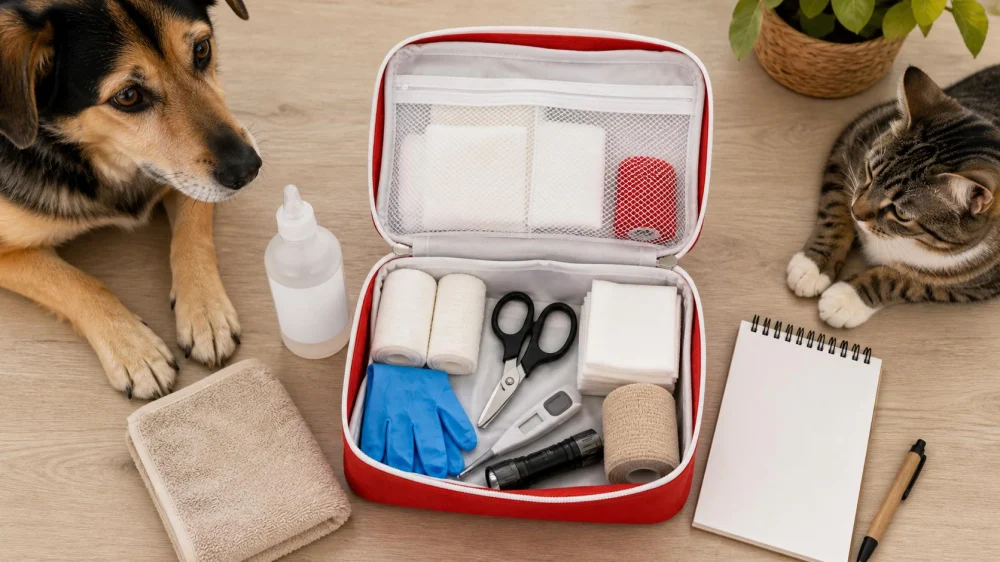
A useful pet first aid kit contains simple supplies that help you protect yourself, control minor bleeding, cover a wound, and transport a dog or cat safely while you contact a veterinarian. Stock gloves, gauze, non-stick pads, bandage material, saline, blunt-tip scissors, a towel, and current emergency details. Leave out unapproved medicines and anything you do not know how to use.
This guide is for United States pet households preparing for everyday incidents at home or on the road. It supports veterinary care; it does not replace an examination, diagnosis, poison consultation, or emergency treatment.

Clifton Ave Animal Hospital
CliftonPassaic CountyNew Jersey
851 Van Houten Ave Suite # 3, Clifton, NJ 07013, USA
Core supplies to keep
A pet first aid kit is a compact set of protective, wound-care, and transport supplies for temporary help before professional care. Choose items that are easy to identify and simple to use under stress.
- Nitrile or vinyl gloves: Keep several pairs in different sizes. Gloves reduce contact with blood, saliva, vomit, or contaminated material.
- Sterile gauze pads: Use them to apply steady pressure or cover a small wound. Pack several sizes.
- Non-stick sterile pads: These can protect a wound surface without adhering as readily as ordinary gauze.
- Rolled gauze: It can hold a pad in place during transport. A wrap must remain loose enough to protect circulation.
- Self-adhering cohesive bandage: This sticks to itself rather than fur. It can tighten after application, so it should never be stretched firmly or left unchecked.
- Adhesive medical tape: Use it to secure bandage layers, not directly around fur or as a tight tourniquet.
- Sterile saline wound wash: A plain saline product can gently rinse surface debris. Check that it contains no added medication.
- Blunt-tip scissors: Rounded tips make cutting gauze or tape safer near an animal that may move suddenly.
- Tweezers: Reserve them for visible, easy-to-grasp surface debris. Do not probe a wound or pull out an embedded object.
- Small flashlight: This helps you look at paws, skin, the mouth, or a dark carrier without relying on a phone battery.
- Clean towel or lightweight blanket: It can provide gentle restraint, warmth, padding, or a surface for moving a small pet.
- Instant cold pack: Wrap it in cloth before brief use. Never place it directly on skin, and do not let a pet chew it.
Keep supplies in sealed inner bags so a leaking bottle or damp environment does not contaminate the whole kit. A bright, easy-to-open pouch is usually more practical than a deep container with loose items.

Items to tailor to your pet
A good kit reflects the animal, the trip, and the instructions already discussed with your veterinary team. A cat-only apartment household will need a different setup from a large dog that hikes far from the car.
- Emergency contact card: List your regular veterinarian, a nearby 24-hour emergency hospital, and a US animal poison-control service. Include clinic addresses and phone numbers so another caregiver can act.
- Pet information sheet: Record species, age, weight, allergies, ongoing conditions, current medicines, microchip number, and an emergency contact. Date the sheet when you update it.
- Recent photo: Store a printed copy and a phone copy that clearly show the pet and distinguishing markings.
- Spare leash, slip lead, or carrier plan: Frightened animals can bolt. Choose restraint that fits the pet and can be used without delaying urgent transport.
- Basket muzzle for a dog, if appropriate: A properly fitted basket muzzle may reduce bite risk, but it is not appropriate for vomiting, breathing trouble, facial injury, or pets that cannot tolerate it. Practice fit when the dog is calm.
- Veterinarian-approved items: Include only medicines, dosing instructions, or specialized supplies that your veterinarian has selected for this individual animal.
If your pet has diabetes, seizures, severe allergies, mobility limitations, or another ongoing condition, ask the treating veterinarian for a written emergency plan. Keep condition-specific supplies together and label their expiration dates.
What to leave out
More equipment does not always make a kit safer. Leave out products that invite guesswork or could delay professional help.
- Human pain relievers and cold medicines: Common household drugs can be dangerous to dogs or cats. Do not give a human medicine unless a veterinarian specifically directs it for that pet and situation.
- Hydrogen peroxide, alcohol, or harsh disinfectants for wounds: These can damage tissue or cause irritation. Follow veterinary advice about wound cleaning.
- Antibiotic creams, numbing products, and essential oils: Ingredients may be unsafe if swallowed or unsuitable for a particular wound. Do not add them by default.
- Tourniquets: Incorrect use can cause serious harm. Carry one only when a qualified veterinary professional has taught you when and how to use it.
- Suture kits, skin staples, or needles: Closing a wound can trap contamination and requires clinical judgment, pain control, and sterile technique.
- Expired or unidentified products: If the label, concentration, seal, or expiration date cannot be verified, replace the item.
- Loose blades or sharp instruments: Movement and stress make them hazardous to both the pet and the helper.
Do not induce vomiting or give food, water, milk, oil, charcoal, or salt after a possible poisoning unless a veterinarian or animal poison specialist tells you to do so. The correct response depends on the substance, amount, timing, and pet.
How to build and store the kit
- Choose the container. Use a water-resistant pouch that opens flat, closes securely, and fits beside the pet carrier or travel gear.
- Group by purpose. Put gloves together, wound-covering items together, and contact documents in a separate waterproof sleeve.
- Label simply. Mark the outside “Pet First Aid” and identify items by purpose. Avoid decanting liquids or pills into unmarked containers.
- Add a one-page action card. Write: protect yourself, prevent escape, call for veterinary guidance, control serious bleeding with direct pressure, and transport when advised.
- Save contacts in two places. Keep phone numbers in the kit and in every caregiver’s phone. Confirm the emergency hospital’s location and current intake process before an incident.
- Store for quick access. Keep the home kit away from heat, moisture, children, and pets, but where adults can reach it quickly. Do not bury it under luggage in a vehicle.
- Review on a schedule. Check the kit every three months and before travel. Replace opened, wet, damaged, depleted, or expired items.
For travel, create a smaller duplicate rather than repeatedly moving the home kit. Confirm that any liquid or temperature-sensitive item has been stored according to its label. Pack a copy of vaccination and medical records when your destination or boarding plan may require them.
When first aid should stop
First aid should buy time, reduce immediate risk, and support safe transport. It should not become a prolonged home treatment when a pet needs veterinary assessment.
Seek urgent veterinary help now for trouble breathing, collapse, uncontrolled bleeding, repeated seizures, severe pain, major trauma, a swollen abdomen with distress, inability to urinate, suspected heat illness, eye injury, deep burns, paralysis, or possible poisoning. Call while arranging transport when possible.
Any injured or frightened animal may bite or scratch, including a familiar pet. Move slowly, keep your face away from the mouth, reduce noise, and use the least restraint necessary. Do not risk personal injury to reach a pet in traffic, water, fire, or another unsafe area; contact emergency services when the scene itself is dangerous.
A tight wrap can damage tissue. If you apply a temporary bandage, watch the toes or tissue beyond it for swelling, coldness, discoloration, or increasing pain. If these appear, loosen or remove the wrap if it is safe to do so and contact a veterinarian immediately.
Evidence and practical notes
This checklist follows broad veterinary first aid principles: protect the helper, prevent escape, use simple barriers and direct pressure, avoid unapproved medication, and obtain professional guidance early. Product directions and advice from the veterinarian who knows your pet take priority over a general checklist.
First aid recommendations can differ by species, body size, medical history, type of injury, and distance from care. A hands-on pet first aid course can improve preparation, but course completion does not qualify a person to diagnose, prescribe, close wounds, or delay emergency care.
When reviewing any online checklist, look for clear limits, species-specific cautions, and instructions to contact a veterinary professional. Be cautious with advice that promises a home cure, gives one dose for every pet, or recommends a product without identifying its ingredients.
Frequently asked questions
Can I use a human first aid kit for my pet?
Some basic supplies overlap, including gloves, sterile gauze, non-stick pads, tape, and blunt-tip scissors. Remove medicines and products that have not been approved for your pet, then add veterinary contacts, a pet information sheet, suitable restraint, and species-specific instructions.
Should a pet first aid kit contain a thermometer?
A digital thermometer may be useful only if your veterinarian has shown you a safe method and explained how the result should guide action. Taking a temperature can injure a struggling animal or the handler, and a single reading does not replace an examination. Keep lubricant and cleaning supplies only with veterinary guidance.
How often should I replace the supplies?
Review the kit every three months and before each trip. Replace anything expired, opened, damaged, wet, missing a label, or used. Also update phone numbers, clinic details, medicine lists, weight, and caregiver instructions.
Where should I keep the kit?
Keep the main kit in a dry, temperature-stable place near the carrier or leash, out of reach of children and animals. A second compact kit can remain with travel gear if its contents tolerate the storage conditions. Avoid leaving medicines or temperature-sensitive products in a hot or freezing vehicle.
Is a first aid kit enough for hiking or disaster planning?
No. First aid supplies address immediate care, while an outing or evacuation plan also needs water, food, identification, transport equipment, waste supplies, weather protection, records, and a route to veterinary care. Match the plan to the location, forecast, trip length, and your pet’s health.
Next steps
Build the basic kit, place the emergency contact card on top, and schedule a quarterly reminder. Then ask your veterinarian which items should be added or removed for your pet’s species, size, health conditions, and normal activities. The most useful kit is not the largest one; it is the one caregivers can find, understand, and use while arranging appropriate veterinary care.





 Pet Supermarket4.0 (1555 reviews)
 Danny Deez Corals LLC5.0 (18 reviews)
 Aqua Star Pet4.0 (106 reviews)
 Four Paws Hotel and Spa4.0 (23 reviews)
 Mikes Cichlids4.0 (60 reviews)
 PetVet Vaccination Clinic3.0 (3 reviews)
 The Science Behind Why Cats Love Boxes and Small Spaces
 How to Stop a Kitten from Overeating Dry Food: Tips and Solutions
 Why Do Cats Like to Sit in Circles? The "If I Fits, I Sits" Mentality
 How to Pet-Proof Your Christmas Tree from Climbing Cats Safely
 The Best Diet for a Tonkinese Kitten's Energy
 Pet Evacuation Go-Bag: Build, Label, and Rotate It