
Pet Evacuation Go-Bag: Build, Label, and Rotate It
On this page
Quick answer
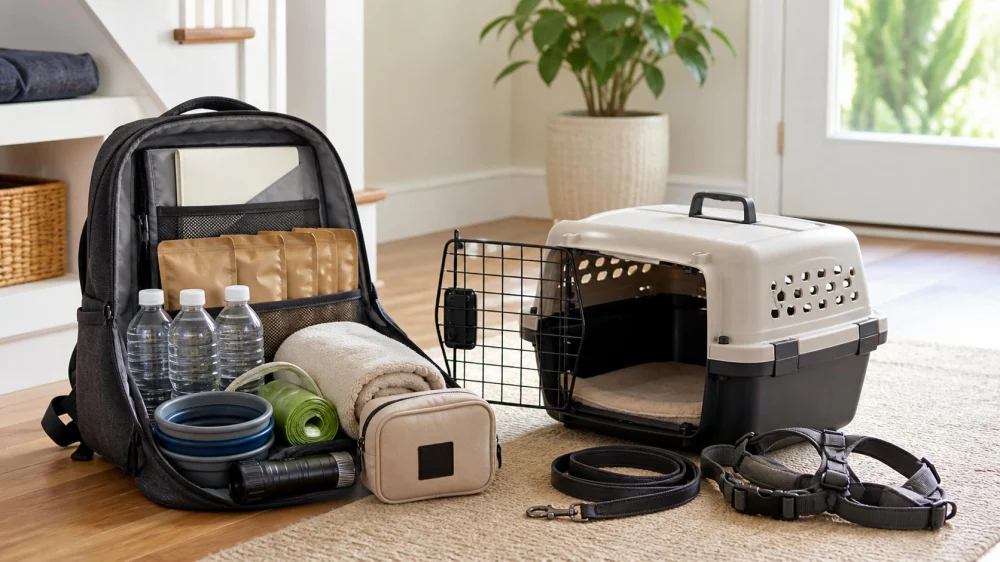
Build a separate evacuation go-bag for each pet or clearly divide shared supplies. Include identification photos, microchip and veterinary contacts, medication and feeding instructions, a few days of appropriate food and water as space and official guidance allow, bowls, waste supplies, bedding, a first-aid kit recommended by your veterinarian, and familiar comfort items. Keep a suitable carrier or restraint beside the bag.
Review the bag on a recurring schedule and whenever the pet's weight, diet, medicine, household, or evacuation destination changes. A go-bag supports evacuation; it does not replace emergency veterinary care or official instructions.

CAMP Clinic - Los Angeles
Los AngelesLos Angeles CountyCalifornia
3612 11th Ave, Los Angeles, CA 90018, USA
Pack identity and care records
- Recent clear photos of the pet alone and with household members.
- Microchip number and registry contact.
- Veterinarian, emergency clinic, poison resource, and backup caregiver contacts.
- Vaccination, licence, prescription, allergy, diet, and medical summaries.
- Temporary contact card and an out-of-area contact.
Use waterproof copies and encrypted or securely accessible digital backups. Do not expose full personal details on the outside of the bag.

Oak Glen Animal Hospital
YucaipaSan Bernardino CountyCalifornia
33523 Oak Glen Rd, Yucaipa, CA 92399, USA
Choose practical supplies
Pack food the pet already tolerates, sealed water, lightweight bowls, a manual can opener when needed, cleanup bags, litter and tray supplies for cats, towels, gloves, wipes, and bedding. Include medications in original containers with current instructions and appropriate temperature control.
Ask the veterinarian what first-aid supplies and emergency documents fit the pet. Do not include expired medicine or give any product without professional direction.
Prepare carriers and restraints
Each pet needs a secure transport method appropriate to species, size, mobility, and behaviour. Inspect carriers for doors, latches, ventilation, sharp edges, and fasteners. Keep leashes or harnesses available, but do not rely on a leash alone for an animal that may panic.
- Label the carrier with protected contact information.
- Add a removable absorbent liner.
- Keep a light cover available if the pet benefits from reduced visual stimulation.
- Attach nothing that blocks ventilation or doors.
- Confirm the carrier fits the planned vehicle and shelter route.
Store and rotate the bag
Keep it near an exit that remains accessible, away from heat, pests, moisture, and children. Use a visible inventory card with expiration and replacement dates. Rotate food and water into normal use before they expire, then replace them.
Store temperature-sensitive medication as the veterinarian directs rather than leaving it in the bag. Place a reminder card in its place so it is not forgotten.
Practice the household plan
Teach each responsible person which pet, carrier, bag, and exit they handle. Practice calm carrier entry and a short loading routine without creating fear. Identify pet-friendly destinations in more than one direction and confirm current policies before an emergency.
Plan for pets that hide, multiple animals that must be separated, power outages, elevators, mobility limitations, and a household member who is away. Never delay your own safe evacuation to retrieve supplies from a hazardous area.
Important limitations
This is general U.S. preparedness information. Hazards, official recommendations, shelters, climates, species, health needs, and transport rules vary. Follow emergency authorities, veterinarians, local animal services, and destination requirements.
Evidence notes
The plan organizes continuity needs into identity, care information, consumables, transport, storage, and assigned roles. Regular rotation keeps the kit aligned with the actual pet rather than preserving an outdated checklist.
FAQ
How much food and water should I pack?
Follow current local emergency guidance and your veterinarian for the pet, hazard, and carrying capacity.
Can pets share one bag?
Yes if supplies are clearly separated and one bag remains practical to carry.
Should medication stay in the bag?
Only if storage requirements allow. Otherwise keep a prominent reminder and fast retrieval plan.
Do I need a carrier for a dog?
Some dogs use approved restraints, but a carrier may be safer for certain sizes, health needs, or shelters.
How often should I update it?
Use a recurring review date and update after any change in care, supplies, or household plan.
Next steps
Ask the veterinarian for pet-specific records and first-aid guidance, assemble the bag and carrier, add rotation dates, assign each pet to a person, and practice one calm loading drill.






 Andrews Square Pet Clinic4.0 (22 reviews)
 Tropical Showcase4.0 (275 reviews)
 Pet Wants - South Hills4.0 (39 reviews)
 Boujee Pets0.0 (0 reviews)
 Upstate Veterinary Specialties4.0 (1026 reviews)
 Tri-State Veterinary Hospital4.0 (145 reviews)
 How to Create a Safe Outdoor Enclosure for Your Cat
 How to Train Your Dog to Ignore Distractions on a Walk
 How to Train Your Kitten to Play Dead
 A Guide to Canine Cognitive Dysfunction (Doggy Dementia)
 The Best Diet for a Cornish Rex Kitten's Curly Coat
 The Benefits of Adopting a Senior Pet vs. a Puppy or Kitten