
- understanding-why-dogs-get-distracted-on-walks
- building-focus-through-basic-leash-training
- desensitization-and-outdoor-exposure-strategies
- positive-reinforcement-for-calm-dog-walking
- handling-real-world-distractions-during-walks
- real-owner-stories-and-training-progress-examples
Understanding Why Dogs Get Distracted on Walks
Training a dog to ignore distractions on a walk starts with understanding why those distractions exist in the first place. Dogs experience the world primarily through scent, movement, and sound, which makes outdoor environments extremely stimulating compared to indoor spaces.
A passing squirrel, another dog, or even rustling leaves can trigger instinctive reactions. For many dogs, especially younger ones, walks feel less like exercise and more like sensory overload. This is completely normal behavior rather than disobedience.
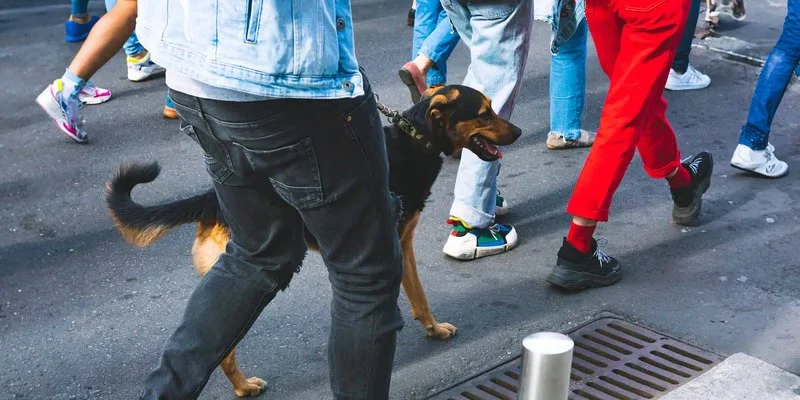
In many U.S. neighborhoods, sidewalks are filled with unpredictable triggers—bicycles, joggers, delivery trucks, and other pets. Without proper leash training dog techniques, these distractions can easily lead to pulling, barking, or sudden direction changes.
Understanding this foundation helps owners shift from frustration to strategy. Instead of trying to “stop” distraction, the goal becomes teaching focus and emotional control.

Line Lexington Veterinary Hospital
Line LexingtonMontgomery CountyPennsylvania
1030 Old Bethlehem Pike, Colmar, PA 18915, USA
Building Focus Through Basic Leash Training Fundamentals
Before tackling distractions, dogs must first learn the basics of structured walking. Loose leash walking is the foundation of calm outdoor behavior. Without it, advanced training becomes significantly more difficult.
Start in a low-distraction environment such as a quiet yard or empty street. The goal is to reward the dog for walking beside you with a relaxed leash rather than pulling forward.
Consistency is more important than duration. Short, focused training sessions of 10–15 minutes are often more effective than long, tiring walks where the dog loses attention.
Many professional trainers emphasize that leash pressure should be minimal. When a dog feels constant tension, it learns to ignore signals and continue pulling, which reinforces unwanted behavior.

Desensitization and Outdoor Exposure Strategies
Once basic control is established, gradual exposure to distractions becomes the next step. This method is known as desensitization, and it helps dogs learn that external stimuli are not threats or commands.
Begin by introducing mild distractions at a distance—such as a parked bicycle or a calm dog across the street. Reward your dog for maintaining attention on you rather than reacting to the stimulus.
Over time, reduce the distance between your dog and distractions while maintaining calm behavior. This step-by-step progression is essential in outdoor dog behavior training.
A real-world example comes from a dog owner in Chicago who struggled with a rescue dog that barked at every passing cyclist. After six weeks of structured desensitization walks, the dog began to calmly observe cyclists without reacting.
Positive Reinforcement for Calm and Focused Walking
One of the most effective tools in dog training distraction control is positive reinforcement. Instead of punishing unwanted behavior, rewarding calm behavior builds long-term emotional stability.
Treats, praise, and short play breaks can all be used to reinforce moments when the dog successfully ignores distractions. Timing is critical—the reward must happen immediately after the desired behavior.
For example, if a dog notices another animal but looks back at the owner instead of reacting, that moment should be rewarded instantly. This teaches the dog that focus on the owner is more rewarding than reacting to the environment.
Over time, rewards can be gradually reduced as the behavior becomes more natural. This transition is important for building independent discipline during walks.
Handling Real-World Distractions During Walks
Even well-trained dogs will encounter unexpected distractions. The goal is not perfection but controlled response. Techniques such as “redirect and reset” are commonly used in calm dog walking techniques.
If a dog becomes overly excited or reactive, calmly increase distance from the trigger and regain focus using commands the dog already understands, such as “sit” or “look at me.”
Avoid pulling or shouting, as this often increases excitement levels. Instead, calm consistency helps the dog reset its emotional state.
In busy suburban areas, some owners find it helpful to vary walking routes. Predictability can sometimes reduce engagement, while controlled variety helps reinforce training in different environments.
Real Owner Experiences and Training Progress Examples
Many pet owners struggle initially with distraction-heavy walks, but progress often becomes noticeable within a few weeks of consistent training.
One dog owner in Seattle shared how their high-energy Labrador constantly pulled toward other dogs in the park. By combining leash training dog techniques with structured reward timing, the dog gradually learned to walk calmly past other animals.
Another case involved a small terrier in Austin that reacted strongly to street noise. Through gradual exposure and consistent reinforcement, the dog eventually became comfortable walking near traffic-heavy areas.
These examples highlight an important truth: training is not about eliminating instincts, but guiding them into controlled behavior patterns.
For owners seeking additional guidance, resources from Omnia Pet can help support structured training routines with tools designed for comfort, control, and positive behavior development.






 Holmdel Veterinary Clinic4.0 (119 reviews)
 Carson Tropical Fish4.0 (127 reviews)
 LLLReptile and Supply Escondido4.0 (581 reviews)
 Pittsfield Veterinary Hospital4.0 (695 reviews)
 Banfield Pet Hospital4.0 (152 reviews)
 Premier Pet Supply4.0 (199 reviews)
 The Dangers of Outdoor Cats: Risks and How to Mitigate Them
 The Best Robot Vacuums for Pet Hair: Tested and Reviewed for 2026
 How to Stop Your Cat from Chewing on Electrical Cords | Omnia Pet
 The Best Diet for a Cornish Rex Kitten's Curly Coat
 How to Help a Grieving Cat After Another Pet Dies
 How to Introduce Your Kitten to a New Home Slowly