
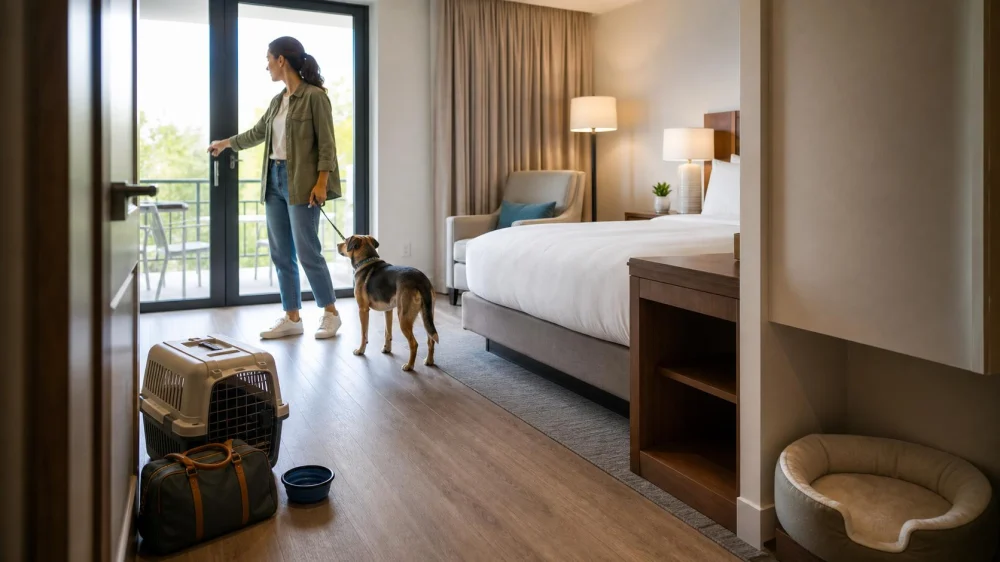
Pet-Friendly Hotel Room Check Before You Unpack
Table of contents
Quick answer
Keep your pet secured in a carrier or on a leash while you inspect a hotel room. Confirm doors, windows, balcony access, hiding spaces, temperature, cleaners, food, cords, pest controls, and prior pet damage before unpacking. Photograph concerns, ask staff to remove hazards, set up familiar bedding and water, and save the nearest emergency veterinary contact and exit route.

Confirm the policy before arrival
- Species, breed, size, number, and age restrictions
- Pet fees, deposits, cleaning charges, and damage terms
- Required vaccination, health, license, or identification records
- Where pets may enter, walk, relieve themselves, and dispose of waste
- Whether pets may remain unattended and, if so, under what conditions
- Carrier, crate, leash, housekeeping, and noise rules
- Room location options away from elevators or busy corridors
- Emergency evacuation procedures for guests with animals
Get important terms in the reservation confirmation. “Pet-friendly” is not a standard promise, and policies can differ within a hotel brand or change by property. Distinguish pet rules from legal requirements for trained service animals.

Use a controlled entry routine
- Keep the pet restrained. Use a secured carrier or correctly fitted leash and harness from vehicle to room.
- Have one person enter first. Check that no staff member, previous guest, or animal remains inside and that connecting doors are closed.
- Close the hallway door. Verify it latches before opening the carrier or relaxing leash control.
- Inspect before unloading. Keep luggage and food closed while you check low surfaces and hiding places.
- Document pre-existing issues. Photograph stains, chewing, torn fabric, broken fixtures, odors, or pet hair and report them promptly.
Do not let a pet roam the hallway or enter a housekeeping cart. New smells, voices, elevators, and doors can create an escape opportunity even for a normally calm animal.
Room-by-room safety check
Doors, windows, and balcony
- Confirm the main door, connecting door, patio door, and windows latch securely.
- Check for a wide gap beneath the door or a pet-accessible emergency-release handle.
- Do not rely on an insect screen to prevent a fall or escape.
- Keep balconies off-limits unless fully supervised; rail gaps and climbable furniture can be hazardous.
Floors and furniture
- Look under beds, chairs, curtains, and radiators for food, pills, bones, sharp objects, trash, nicotine products, or small toys.
- Block inaccessible spaces where a frightened cat or small dog could become trapped, using hotel-approved items.
- Check recliners and sofa beds before operation; pets can hide inside mechanisms.
- Secure loose cords, blind loops, luggage straps, and plastic bags.
Bathroom and refreshment area
- Close the toilet lid and keep cleaners, soaps, cosmetics, razors, and medicines out of reach.
- Remove accessible coffee pods, chocolate, alcohol, sugar-free products, and unknown snacks.
- Ask staff about pest-control products or recent treatments if bait, powder, or unusual odor is present.
- Use your pet's own food and bowl rather than allowing access to standing water or leftovers.
Set up a familiar pet zone
Choose a quiet area away from the hallway door, HVAC outlet, balcony, and housekeeping traffic. Place the carrier or crate, familiar bedding, water, and one safe toy there. Keep food in a sealed container and follow the pet's ordinary schedule as closely as travel allows.
Attach current identification and confirm the microchip registry contact details before the trip. The CDC recommends keeping pets leashed or in a carrier while traveling and bringing food, water, medicines, first-aid supplies, and documents. Never leave a pet in a parked vehicle, even during check-in.
If you must leave the room
First confirm that the hotel allows unattended pets. Some prohibit it; others require a crate, a phone number, a door hanger, or a maximum time. Consider whether the pet has separation anxiety, noise sensitivity, medical needs, or a history of escaping or destructive behavior.
- Use a secure, familiar carrier or crate only if the pet is already trained and comfortable in it.
- Keep the room at a safe temperature and leave water accessible.
- Tell the desk how to contact you and whether housekeeping should enter.
- Return promptly if the pet vocalizes, damages the room, or disturbs other guests.
- Do not leave a pet on a balcony, tethered to furniture, or loose with a door hanger as the only warning.
When the pet cannot remain safely alone, use a qualified sitter, boarding service, or pet-inclusive plan rather than testing the limit in an unfamiliar room.
Build a local emergency plan
- Save the primary veterinarian and a 24-hour clinic near the hotel.
- Know the hotel street address, room number, stairwell, and outdoor meeting point.
- Keep the carrier, leash, shoes, phone, and a small grab bag together.
- Ask how fire alarms and evacuation are handled with pets.
- Perform a daily health and behavior check while away, as CDC travel guidance recommends.
- Seek veterinary advice for vomiting, diarrhea, breathing trouble, collapse, suspected poisoning, injury, or marked behavior change.
First aid is not a substitute for veterinary care. For suspected poison exposure in the United States, contact a veterinarian or an established animal poison-control service and follow its instructions; do not induce vomiting unless directed.
Frequently asked questions
Should I let my cat explore immediately?
Inspect and secure the room first. Then open the carrier in a quiet controlled area, leaving it available as a familiar retreat. Watch doors and hiding spaces closely.
Can I use the hotel ice bucket as a pet bowl?
Use your own clean bowl. It supports hygiene, reduces unfamiliar smells, and avoids damage or misuse of hotel items.
What if I find pest bait?
Keep the pet away, photograph the location, and contact the front desk. Ask for removal or a different room and seek veterinary help immediately if exposure is suspected.
Should staff know a pet is inside?
Yes, follow the property's notification and housekeeping procedure. A door hanger alone may fall or be missed, so use the official communication method.
Sources and evidence
- Centers for Disease Control and Prevention: Pet Travel Safety — identification, restraint, supplies, daily checks, and emergency contacts.
- Centers for Disease Control and Prevention: Pet Safety in Emergencies — pet-friendly lodging and emergency-kit planning.
- American Veterinary Medical Association: Traveling With Your Pet — lodging, transport, and veterinary preparation.
Conclusion and next steps
Before unpacking, keep your pet secured and inspect the room from floor level to balcony height. Report hazards and existing damage, then create a familiar quiet zone and save emergency contacts. Confirm unattended-pet and housekeeping rules instead of improvising. A five-minute controlled check can prevent an escape, exposure, injury, or avoidable hotel dispute.





 Petco4.0 (754 reviews)
 Backyard Birding Co.5.0 (5 reviews)
 Animal Care Clinic4.0 (355 reviews)
 Apollo Animal Hospital4.0 (965 reviews)
 Petco4.0 (714 reviews)
 VIP Petcare Vaccination Clinic0.0 (0 reviews)
 The History and Origins of the Domestic Dog – Understanding the Evolution and Significance
 Pet Door Safety: Locking, Weather, and Escape Checks
 Why Is My Kitten's Fur Changing Texture? Understanding the Causes
 The Best Ways to Discipline a Kitten Without Fear | Omnia Pet
 The Best Litter for Kittens Who Track It Everywhere – Keep Your Home Clean
 How to Keep Your Indoor Cat from Getting Bored