Pet Feeding Station: Choose a Safe, Clean Location
On this page
- Start with your pet's needs
- Choose a calm, accessible location
- Separate pets when needed
- Select stable, food-safe bowls
- Place water for easy access
- Protect floors without creating a hazard
- Build a cleaning routine
- Store food and tools safely
- Monitor eating without crowding
- Adapt the station over time
- Feeding station checklist
A well-planned pet feeding station makes meals easier to serve, observe, and clean. It keeps food away from household hazards, gives each animal appropriate space, and helps caregivers notice a change in appetite or drinking. The best setup depends on the species, size, health, mobility, behavior, and number of pets in the home.
A feeding station is an organization tool, not a treatment. Ask a veterinarian about the right food, amount, schedule, bowl style, or posture for an individual pet, especially when swallowing, dental, digestive, mobility, or weight concerns are present. Sudden refusal to eat, repeated vomiting, breathing difficulty, collapse, or suspected poisoning needs prompt veterinary guidance.

Animal Health & Wellness Veterinary Office
Setauket- East SetauketSuffolk CountyNew York
150 Main St, Setauket- East Setauket, NY 11733, USA
Start with your pet's needs
Observe how the pet approaches, stands or sits, reaches, eats, drinks, and leaves the area. Note slipping, hesitation, guarding, scattered food, gulping, coughing, or difficulty lowering the head. Record changes and share concerns with a veterinarian rather than changing equipment repeatedly without understanding the cause.
Consider body size, muzzle shape, whisker sensitivity, vision, hearing, age, and physical ability. A shallow dish may suit one animal while another needs a deeper spill-resistant bowl. Raised feeders are not automatically better for every pet; use them when a veterinarian recommends or approves the height for that animal.

Choose a calm, accessible location
Select a spot the pet can reach without stairs, jumping, sharp turns, or crossing a busy doorway. Keep it away from hot appliances, cleaning chemicals, electrical cords, fragile objects, litter boxes, and areas where food could be contaminated. Maintain a clear escape route so the animal never feels trapped.
Avoid placing bowls directly beside a washing machine, loud speaker, slamming cabinet, or frequently moving chair. A quiet corner can reduce distraction, but it should remain visible enough for routine monitoring. Make sure people can pass without stepping over the pet or bowl.
Separate pets when needed
Multiple animals may need distinct stations to prevent food stealing, stress, guarding, and confusion about portions or medicine. Separation can mean different rooms, gates appropriate to the species, supervised schedules, or secure microchip-activated equipment. It should not depend on a timid pet defending its meal.
Feed animals separately whenever they have different diets, allergies, calorie needs, or prescribed food. Pick up leftovers before reopening shared spaces. Children and visitors should not approach, touch, photograph closely, or remove food while a pet is eating.
Select stable, food-safe bowls
Choose a bowl made for food use, sized for the portion, and free from cracks, sharp edges, peeling coatings, and damaged seams. Stainless steel and suitable ceramic products are common choices because they can be cleaned thoroughly; inspect ceramic for chips and confirm any material is intended for pet food.
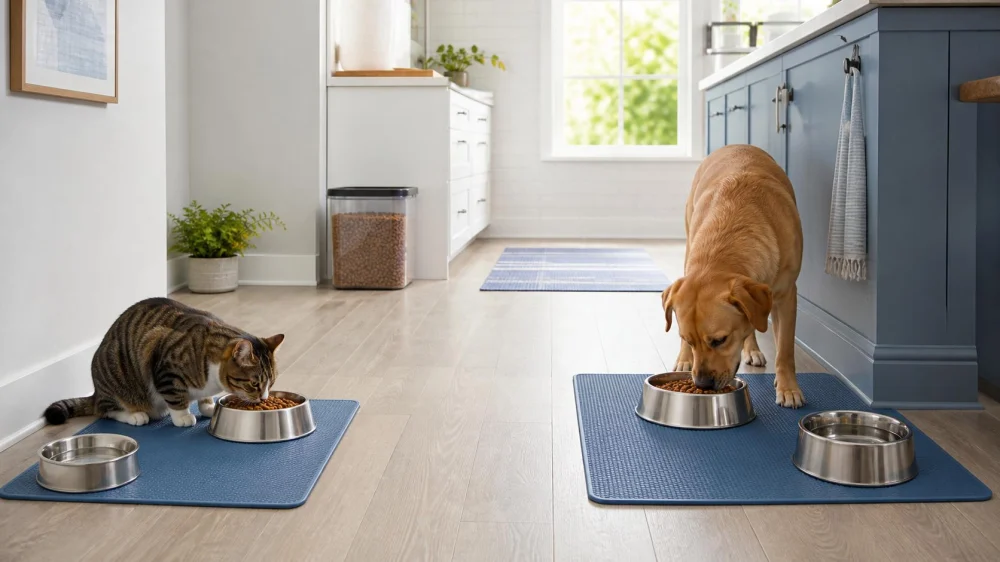
A wide stable base or appropriate nonslip feature can reduce movement. Puzzle, slow-feed, and automatic feeders require supervision during introduction and must match the pet's size and behavior. Stop using equipment that traps a jaw, tooth, collar, paw, or tag, or that causes frustration or injury.
Place water for easy access
Provide fresh water according to veterinary advice and species needs. Place bowls where the pet can drink without competing, squeezing behind furniture, or standing on a slippery surface. Some households benefit from more than one water point, particularly with multiple floors or pets.
Keep water away from electrical outlets and cords that could become wet. For a fountain, follow the manufacturer's cleaning and filter instructions and check the pump, cable, and water level. A fountain does not eliminate the need to inspect and refresh the water.
Protect floors without creating a hazard
A washable mat or shallow tray can catch crumbs and splashes, but it should lie flat and resist sliding. Its edge must not create a trip for people or a barrier for a pet with limited mobility. Avoid absorbent materials that stay damp and develop odor.
Wipe spills promptly to prevent falls, damaged flooring, insects, and microbial growth. Check beneath the mat because moisture can remain hidden. Do not apply strong fragrance, pest treatment, or harsh cleaner near bowls unless the product is appropriate and fully used according to its label.
Build a cleaning routine
Wash food bowls after use and clean water bowls frequently with a method suitable for their material. Rinse away detergent completely and dry items as recommended. Automatic feeders, fountains, mats, scoops, and storage lids have crevices that need disassembly and cleaning under the manufacturer's directions.
Use separate cleaning tools if required for hygiene and household risk. Discard cracked plastic, deeply scratched surfaces, rusted parts, swollen batteries, damaged cords, and components that cannot be cleaned. Wash hands before and after handling pet food, bowls, waste, or medicine.
Store food and tools safely
Keep food in its original labeled bag when practical, then place the bag inside a clean sealed container. The label, ingredient information, best-by date, and lot number may be important during a recall or health concern. Store food cool and dry, away from pests, sunlight, and chemicals.
Use a clean measured scoop rather than a household cup that changes portions. Keep medicine, supplements, treats, and human food secured and clearly separated. Never leave opened canned or fresh food at room temperature beyond safe guidance; refrigerate or discard it as directed by the label and veterinarian.
Monitor eating without crowding
Watch from a comfortable distance and learn the pet's normal pace, posture, appetite, and water use. Measure portions and note leftovers when intake matters. A camera may help in some homes, but it should protect privacy and cannot replace an in-person check when illness is possible.
Contact a veterinarian about a meaningful change in appetite, thirst, chewing, swallowing, weight, elimination, energy, or behavior. Urgency depends on the species, age, health, duration, and other symptoms. Small mammals, birds, young animals, and pets with chronic conditions may need especially prompt advice.
Adapt the station over time
Reassess the setup after a move, new pet, new baby, diet change, surgery, injury, or mobility decline. A route that was easy may become slippery or crowded. Introduce changes gradually when possible, and maintain familiar bowl positions for pets with reduced vision or cognitive changes.
For an older or disabled pet, ask the veterinary team about posture, surface grip, bowl access, and safe feeding support. Do not improvise unstable platforms. Occupational or rehabilitation guidance may help when the pet has a diagnosed mobility limitation.
Feeding station checklist
Confirm that the station is calm, accessible, well lit, easy to clean, and away from hazards. Provide appropriate bowls, stable footing, fresh water, measured food, secure storage, and enough separation between pets. Keep cords, chemicals, litter, waste, and human food out of reach.
Clean and inspect the full setup on a regular schedule, not only the visible bowl surface. Monitor normal eating and drinking without disturbing the pet. A simple, consistent station gives the household better control of portions and hygiene while making changes easier to notice and report.





 Marlboro Village Veterinary Hospital of Marlboro and Aberdeen, "The Bark Park" Daycare4.0 (92 reviews)
 Four Paws Annex4.0 (14 reviews)
 Banfield Pet Hospital4.0 (147 reviews)
 TLC Animal Hospital Rehoboth4.0 (11 reviews)
 Banfield Pet Hospital3.0 (94 reviews)
 Paws Calls4.0 (19 reviews)
 The Best Litter Box for a Kitten with High Sides
 Why Is My Cat Afraid of Strangers? How to Socialize Them
 How to Tell if Your Kitten is Bonding with You
 How to Create a Safe Outdoor Enclosure for Your Cat – Tips and Ideas
 How to Tell if Your Kitten is a Mixed Breed (Complete Guide)
 How to Create a Safe Outdoor Enclosure for Your Cat