Pet Food Storage Bin: Keep the Bag, Lot, and Freshness
On this page
Quick answer
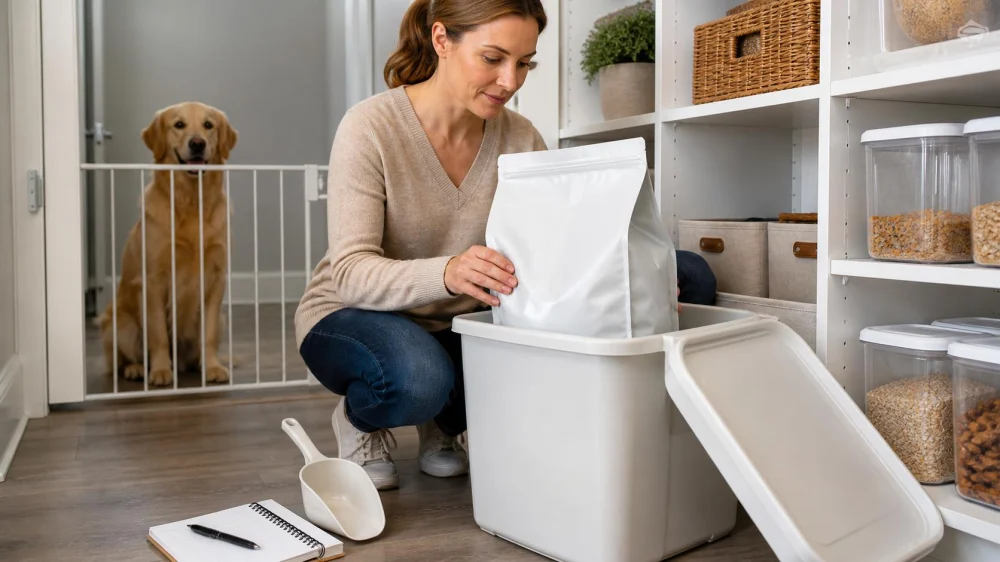
Keep dry pet food in its original bag and place the whole bag inside a clean, dry, tightly lidded bin. This preserves the product name, UPC, lot number, manufacturer, and best-by date for recalls or complaints. Store it below 80°F in a cool dry place, wash the bin between bags, and never top off old food with a new batch.

Keep the original bag
The original package is designed for the food and carries traceability information. The lot number can identify when and where a product was made. Keep the bag until the food is consumed, even if a separate bin is more convenient.
Fold or seal the bag top, then close the outer bin. If you must pour food out of the bag, save the full label, UPC, lot number, product name, manufacturer, and best-by date and attach them to the clean container.

Ocean State Equine Associates
ScituateProvidence CountyRhode Island
11 Winsor Ave, North Scituate, RI 02857, USA
Choose a suitable bin
- Use a food-storage container with a snug lid.
- Choose a size that holds the whole bag without crushing or leaving it open.
- Use smooth surfaces that can be washed and fully dried.
- Avoid damaged bins, cracked lids, or containers that held chemicals.
- Secure the bin against pets, children, pests, and moisture.
A bin limits access and environmental exposure, but it does not make stale food fresh or extend the labeled shelf life.
Fill it without mixing batches
- Finish or safely discard the previous food.
- Wash the empty bin with soap and hot water.
- Rinse and dry every surface completely.
- Insert the sealed or folded new original bag.
- Record the opening date.
- Close the bin after every serving.
Do not pour a new bag over old crumbs. Residual fat can become rancid, and mixed lots make recall identification difficult.
Choose a cool dry location
The FDA recommends storing dry pet food and unopened canned food in a cool dry place below 80°F. Avoid direct sun, damp basements, hot garages, laundry-room humidity, and areas near cleaning chemicals.
Place the bin where the pet cannot knock it over or operate the lid. Large dogs and climbing cats may reach locations that appear secure.
Handle food and scoops cleanly
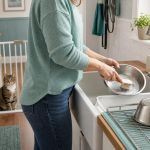
Wash hands before and after handling pet food. Use a dedicated clean scoop instead of the pet's bowl. Wash and dry scoops and food bowls after each use, and wash water bowls daily.
Measure according to veterinary and label guidance. A large bin can make accidental overfeeding easier when multiple people feed the same pet, so use a feeding log.
Store wet food separately
Promptly refrigerate or discard leftover canned or pouched food. Cover refrigerated portions tightly and keep the refrigerator at 40°F or below. Follow the product label and veterinarian for how long an opened product may be held.
Do not put opened wet food into a dry-food bin or leave it at room temperature between meals.
If food seems wrong
Stop feeding food with a foul odor, mould, insects, foreign objects, unusual color, swollen or leaking package, or another defect. Save the product and original packaging securely away from pets. Contact the veterinarian if the pet is ill.
Record symptoms, feeding time, product, lot, best-by date, purchase location, and photos. Report concerns to the manufacturer and FDA as appropriate.
Storage checklist
- Original bag and lot information remain available.
- Outer bin is clean, dry, food-safe, and closed.
- Old and new batches are not mixed.
- Location is cool, dry, secure, and below 80°F.
- Scoop is dedicated, washed, and dried.
- Opening date and feeding plan are visible.
- Wet leftovers are refrigerated or discarded promptly.
Important limitations
This is general pet-food handling information, not veterinary nutrition advice. Diets, medical conditions, packaging, shelf life, and storage directions vary. Follow the product label and veterinarian, especially for prescription, raw, frozen, or fresh diets.
Sources and evidence notes
- U.S. Food and Drug Administration Center for Veterinary Medicine: official pet-food storage, handling, lot-number, and complaint guidance.
- Pet-food manufacturer: product-specific opening, storage, and discard instructions.
- Your veterinarian: feeding amount, diet suitability, and response to illness.
- FDA recall notices: current product, lot, and distribution information when a recall occurs.
Frequently asked questions
Can I pour kibble directly into a plastic bin?
The FDA recommends keeping it in the original bag inside the bin. If you pour it, use a clean dry food-safe container and preserve all label and lot information.
Should I wash the bin between bags?
Yes. Wash and fully dry it to remove old fats and crumbs before adding the next bag.
Can I store pet food in the garage?
Only if it remains cool, dry, secure, and within label guidance. Many garages become too hot or humid.
What if my pet becomes sick after eating?
Stop the suspect food, call a veterinarian, preserve packaging and a sample safely, and report the issue with lot details.
Conclusion
A good pet-food bin supports the original package rather than replacing its information. Keep the bag, prevent heat and moisture, clean between batches, and use dedicated utensils. Preserved lot details and prompt veterinary contact make a product concern much easier to investigate.



 Scales 'N Tails North Las Vegas4.0 (475 reviews)
 Petco4.0 (1116 reviews)
 Somis Veterinary Hospital4.0 (206 reviews)
 Mountainview Small Animal Hospital4.0 (337 reviews)
 City Island Aquarium Tropical Fish Sales5.0 (20 reviews)
 Pet Shop3.0 (234 reviews)
 Pet Bowl Cleaning: A Daily Routine for Food and Water
 The Top 10 Most Independent Kitten Breeds: Find the Perfect Feline Companion
 Best Dog Breeds for Seniors Seeking Loyal Companionship
 The Best Diet for a Persian Kitten's Flat Face: Expert Tips for Optimal Health
 The Best Diet for a Cornish Rex Kitten's Curly Coat
 How to Stop Your Kitten from Eating Too Fast