Pet Store Return Policy: Check Before Opening the Package
On this page
Quick answer
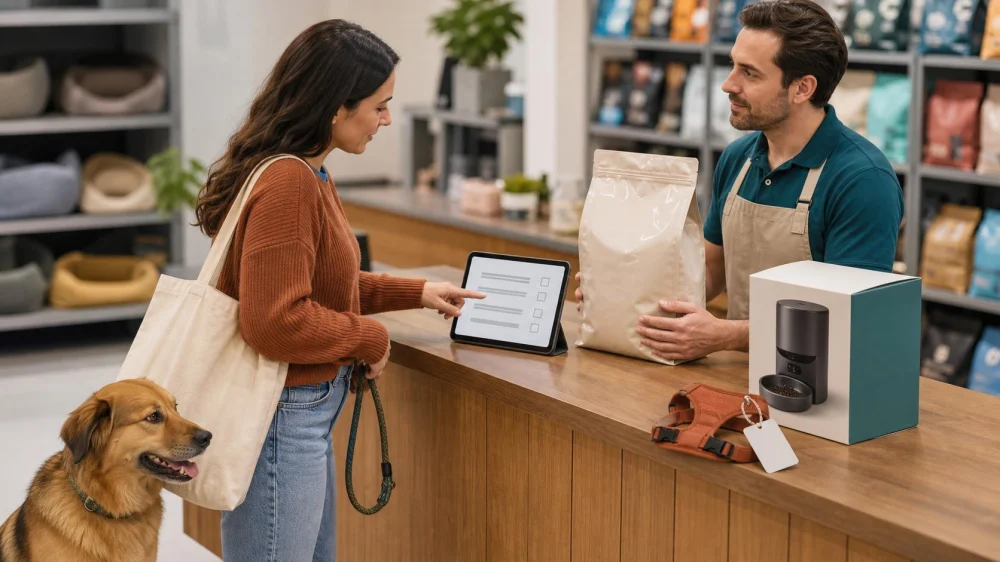
Before buying from a pet store, check the return window, receipt requirement, refund method, and rules for opened food, used gear, hygiene items, medication, live products, and online orders. Keep packaging, labels, lot or serial details, and the receipt until the item is tested safely. If a product may have harmed a pet, stop using it and contact a veterinarian as well as the seller or manufacturer.

Petland Columbus Upper Arlington
3124 Kingsdale Center, Columbus, OH 43221, USA
Understand why return rules differ
A pet store return policy explains whether and how a retailer accepts an item after purchase. Policies can vary by seller, location, purchase channel, membership status, product type, condition, reason, and time elapsed.
A refund, exchange, replacement, store credit, manufacturer claim, and safety recall are different processes. Do not assume that a generous rule for an unopened toy also applies to opened food, fitted equipment, grooming tools, prescription items, or products exposed to an animal.

Guilford Veterinary Hospital
GuilfordSouth Central Connecticut Planning RegionConnecticut
81 Saw Mill Rd, Guilford, CT 06437, USA
Check the policy before buying
- How many calendar days are allowed, and when does the clock start?
- Is the original receipt required, or can the store find the purchase another way?
- Must the item be unopened, unused, clean, or in original packaging?
- Are tags, manuals, accessories, promotional items, or serial numbers required?
- Is the refund returned to the original payment method or issued as store credit?
- Do shipping, pickup, restocking, or return-postage charges apply?
- Can an online order be returned to a local location?
- Are clearance, personalized, seasonal, live, perishable, or health-related products excluded?
- What happens when the item is defective, recalled, or different from what was ordered?
Save the policy shown at checkout. A general website page may differ from a final-sale notice, marketplace seller term, or subscription order.
Ask about rules by product type
Food and treats: ask whether opened bags are accepted and how much product must remain. Preserve the original bag, ingredient panel, best-by information, and lot code. Do not move all food into an unmarked bin before confirming that the pet tolerates it.
Fitted gear: measure the pet and use a clean indoor fitting when appropriate. Ask whether hair, odor, chewing, outdoor wear, or removed tags affect eligibility.
Electronics and equipment: keep inserts, cords, adapters, filters, manuals, and serial information. Test according to instructions without modifying the item.
Hygiene and grooming products: opened blades, oral-care items, litter tools, bedding, and products that contact skin or waste may face added restrictions.
Medication and regulated products: rules can be strict because storage, prescription, safety, and resale concerns apply. Never give a returned medication to another animal. Contact the prescribing veterinarian or pharmacist about safe disposal and next steps.
Handle a return safely and clearly
- Stop using the item. Separate it from pets and children if it is damaged, contaminated, or potentially unsafe.
- Preserve evidence. Photograph the product, packaging, defect, order label, and relevant lot or serial details.
- Clean only as directed. Do not erase evidence or expose yourself to waste, chemicals, sharp edges, or electricity.
- Contact the correct seller. Marketplace and franchise purchases may be handled by a specific merchant or location.
- State the requested outcome. Ask for the refund, exchange, replacement, or manufacturer process that fits the policy.
- Transport safely. Seal leaking or soiled material and ask how the store wants it handled before bringing it inside.
- Keep the return record. Save tracking, receipt, credit confirmation, and staff or case reference.
Protect records and account privacy
Use verified store contact details rather than links in an unexpected message. Do not email complete card details, account passwords, or unnecessary veterinary records. If proof of a condition is requested, ask why it is needed, which fields can be redacted, and how it will be protected.
Check the refund against the original payment method and amount. If a credit does not appear in the stated timeframe, contact the seller with the return reference before asking the payment issuer about its process and deadlines.
Limitations and important notes
- Store policies and consumer rights vary across the United States; this article is general guidance, not legal advice.
- A return policy does not replace a safety recall or adverse-event reporting process.
- If a pet has trouble breathing, collapses, has repeated vomiting, severe weakness, uncontrolled bleeding, seizures, or another urgent symptom, seek emergency veterinary help.
- Do not continue feeding or applying a product merely to create more proof of a problem.
- Follow local guidance for disposal of medication, batteries, chemicals, sharps, and contaminated items.
Frequently asked questions
Can I return opened pet food?
Some stores accept it within stated conditions, while others do not. Keep the original bag and ask about the required amount, receipt, and reason.
What if my pet refuses to use the item?
Eligibility depends on the policy and item condition. Stop before chewing, heavy hair, odor, outdoor wear, or modification makes the product harder to accept.
Who handles a defective electronic pet product?
The store may exchange it or direct you to a manufacturer warranty. Keep all components and ask which process is faster and what shipping or diagnostic steps apply.
Should I bring a leaking or contaminated item into the store?
Call first. Describe the condition and follow safe packaging and drop-off instructions. Do not expose staff, customers, or animals.
What if the posted policy and receipt conflict?
Preserve both versions and ask a manager to explain which term applied at purchase. For an unresolved significant dispute, consult the appropriate consumer authority or local legal advisor.
Conclusion and next steps
Before opening a pet product, save the receipt and policy and confirm any category-specific exception. Test only as directed, keep identifying details, and act promptly when the item is unsuitable. When health or safety may be involved, protect the pet first and handle the retail process second.
Evidence note: These recommendations reflect common retail-return, product-safety, payment-record, and veterinary-triage principles. The applicable policy, product instructions, recall notices, professional advice, and local law control a specific case.





 Ontario Pets & Supplies5.0 (39 reviews)
 Vetco Total Care Animal Hospital4.0 (111 reviews)
 Tracy Feed & Pet Store, Inc.4.0 (40 reviews)
 Carmel Animal Hospital4.0 (92 reviews)
 The Pawtastic Pet Shop5.0 (80 reviews)
 Squeaky Bea’s5.0 (52 reviews)
 The Best Interactive Apps for Entertaining Your Kitten>
 The Best Diet for a Himalayan Kitten’s Long Fur and Healthy Growth
 How Dogs Understand Human Language: The Science of Canine Cognition
 How to Tell if Your Kitten is Too Skinny: Signs and Solutions
 The Best Pet-Safe Antifreeze for Winter: Protect Your Pets and Vehicles
 The Truth About Probiotics for Dogs: Do They Really Work?