
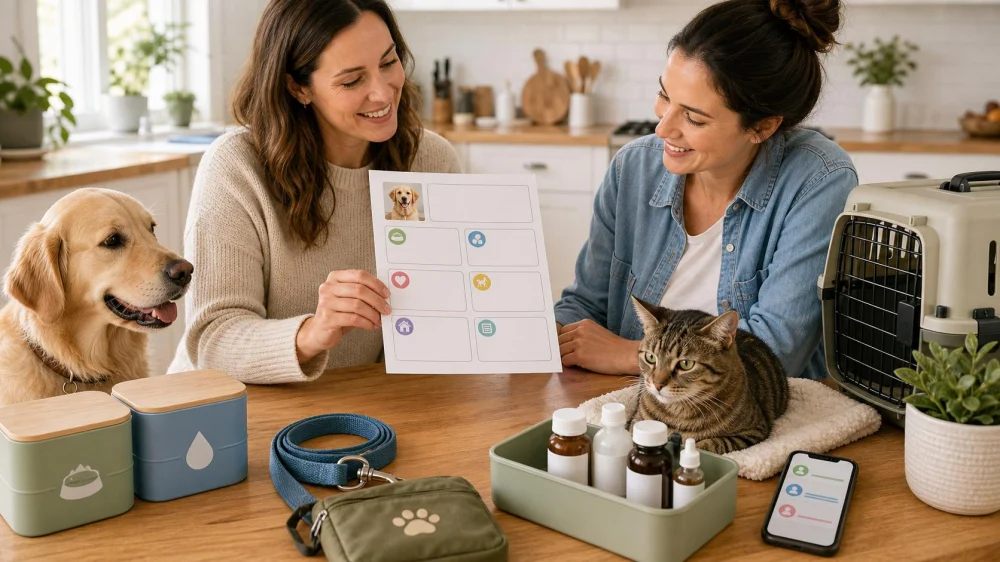
How to Create a Pet-Sitter Information Sheet That Gets Used
On this page
- Quick answer
- Start with pet identity and routine
- Record health and veterinary details
- Explain home access and safety
- Make instructions easy to follow
- Test the handoff before leaving
- Pet-sitter sheet checklist
- Limitations and urgent notes
- Frequently asked questions
- Sources and evidence notes
- Create the one-page summary
Quick answer
Create a one-page summary for each pet with a recent photo, name, species, age, identifying details, feeding schedule, toileting or walk routine, behavior cues, approved handling, veterinarian, emergency clinic, owner contacts, and authorized decision process. Put detailed medicine and care instructions on separate clearly labeled pages. Review everything with the sitter in person, demonstrate supplies and access, and leave both a paper copy and a secure digital backup.
The sheet should tell a sitter what to do during a normal visit and whom to contact when something is not normal.

Start with pet identity and routine
List the pet's everyday name and registered name if different, species, breed or type, color, markings, sex, age, approximate weight, microchip status, collar or harness description, and a current full-body photo. In a multi-pet home, use a separate page and color code for each animal.
Write the normal sequence for morning, daytime, and evening: food, fresh water, walks, litter, enclosure care, play, rest, and bedtime. Describe usual appetite, elimination, energy, and hiding behavior so a meaningful change is easier to recognize.

St. Pete Saltwater Aquarium Store
St. PetersburgPinellas CountyFlorida
341 Southeast Blvd N, St. Petersburg, FL 33703, USA
Record health and veterinary details
Include the primary veterinarian and preferred emergency clinic with current phone numbers, addresses, hours, transport plan, insurance information, and the owner's authorization process. Leave the sitter's own emergency contact and a nearby backup person.
For medicines, use the original labeled container and copy the veterinarian's exact instructions: correct pet, medicine, amount, route, time, storage, and what to do after a missed or refused dose. Do not ask a sitter to improvise or hide medicine in food without approved instructions.
Explain home access and safety
Show the sitter keys, alarm process, doors, gates, safe rooms, carriers, leashes, cleaning supplies, waste disposal, food storage, water shutoff, breaker location, smoke and carbon-monoxide alarms, and fire exit. Identify rooms and outdoor areas that are off-limits.
List household risks: another animal, toxic plants, accessible food, medications, pools, balconies, wildlife, escape routes, contractors, or temperature concerns. Keep private account passwords separate and grant only the access needed.
Make instructions easy to follow
Use short action lines, exact locations, and checkboxes. Replace “feed normally” with the product, approved measuring tool, amount from the current plan, time window, and bowl location. Keep the original food packaging and lot information available.
Describe fear and stress signals, safe approach, known triggers, commands, handling limits, and approved rewards. State whether visitors, dog parks, off-leash activity, bathing, social media posts, or introductions to other animals are permitted.
Test the handoff before leaving
Have the sitter complete one practice visit while you are available. Ask them to locate each pet, prepare a normal meal, secure doors, find the carrier, and explain the emergency call sequence in their own words.
Agree on check-in frequency, photo expectations, what requires an immediate call, and how schedule changes are approved. Update the sheet after any food, medicine, health, behavior, address, or contact change.
Pet-sitter sheet checklist
- Use one photo and page per pet.
- Write the normal daily routine.
- List veterinarian, emergency clinic, and backups.
- Keep medicines labeled and instructions exact.
- Map food, carriers, supplies, exits, and shutoffs.
- Describe behavior, triggers, and handling limits.
- Define check-ins and emergency calls.
- Practice the routine and update before travel.
Limitations and urgent notes
- A written sheet does not replace a qualified sitter, veterinary advice, or emergency care.
- Do not leave unlabelled or pre-mixed medicines that can be confused between pets.
- Breathing difficulty, collapse, seizure, serious injury, possible poisoning, uncontrolled bleeding, or rapid deterioration needs urgent veterinary guidance.
- Legal authority for veterinary decisions and payment varies; confirm it with the clinic.
- Protect home-security, identity, payment, and medical information.
Frequently asked questions
Should all information fit on one page?
Keep normal routine and emergency contacts on one page; use clearly attached pages for medicines, detailed care, and household instructions.
Can I pre-portion food?
Ask whether that fits storage and diet needs. Preserve the original package and label information, especially for recalls or problems.
How often should the sheet be updated?
Review it before every absence and immediately after changes to health, food, medicine, behavior, contacts, or home access.
Should the sitter have a key to the carrier?
The carrier should be accessible and usable. Demonstrate assembly and safe loading before leaving.
Can the sheet be digital only?
A secure digital copy is useful, but a visible paper copy can remain available during power, phone, or internet failure.
Sources and evidence notes
The American Veterinary Medical Association's pet first-aid materials include space for pet identity, veterinarian, and emergency information. FDA guidance emphasizes keeping medicines in original labeled containers and preserving pet-food package information. These principles support clear identification and accurate handoff.
Create the one-page summary
Choose one pet and make a one-page card with photo, routine, food, behavior, veterinarian, emergency clinic, owner, and backup contact. Walk a sitter through it and revise every instruction that required a verbal explanation.






 Pet Care Inc.4.0 (109 reviews)
 Vets Pets4.0 (251 reviews)
 PetVet Vaccination Clinic0.0 (0 reviews)
 Oasis Pet Clinic4.0 (42 reviews)
 Celtic Balls LLC (Appointment Required)5.0 (7 reviews)
 Freaziecomics2.0 (3 reviews)
 How to Create a Peaceful Multi-Cat Household: Tips for Harmony
 The Best Ways to Keep a Kitten Cool in Summer: Essential Tips
 Best Dog Breeds for Seniors Seeking Loyal Companionship
 Best Foods for Diabetic Cats: Wet vs Dry Guide
 How to Introduce a New Kitten to an Older Cat Without Stress
 The Top 10 Most Talkative Kitten Breeds That Keep Owners Entertained