
How to Prevent Double-Feeding Pets in a Busy Household
On this page
- Quick answer
- Use one current feeding plan
- Create separate feeding stations
- Use a visible feed-and-confirm signal
- Track treats and extras too
- Review mistakes without guessing
- Double-feeding prevention checklist
- Limitations and urgent notes
- Frequently asked questions
- Sources and evidence notes
- Assign the next meal now
Quick answer
Post one veterinarian- or label-based feeding plan for each pet, assign one person to each meal, pre-measure only when safe for the food, and require an immediate visible confirmation after feeding. Use separate bowls and storage tools, secure food between meals, and record treats, medicine hidden in food, and meals given by sitters or children. If no one can confirm whether a pet was fed, do not guess—contact the responsible person and ask the veterinarian what to do when health or medication makes the decision important.
A reliable system records completion, not intention.
Use one current feeding plan
For each pet, list the exact food, approved measuring tool, amount, time window, preparation, bowl location, and any veterinary instructions. Date the plan and replace outdated copies after a diet change.
Do not use the same scoop for products with different calorie density or directions. Keep the original packaging, label, lot number, and best-by information available. Ask the veterinarian about amounts for growth, pregnancy, disease, weight change, or prescription diets.

Four Legged Friends Animal Hospital
3131 E Thunderbird Rd STE 59, Phoenix, AZ 85032, USA
Create separate feeding stations
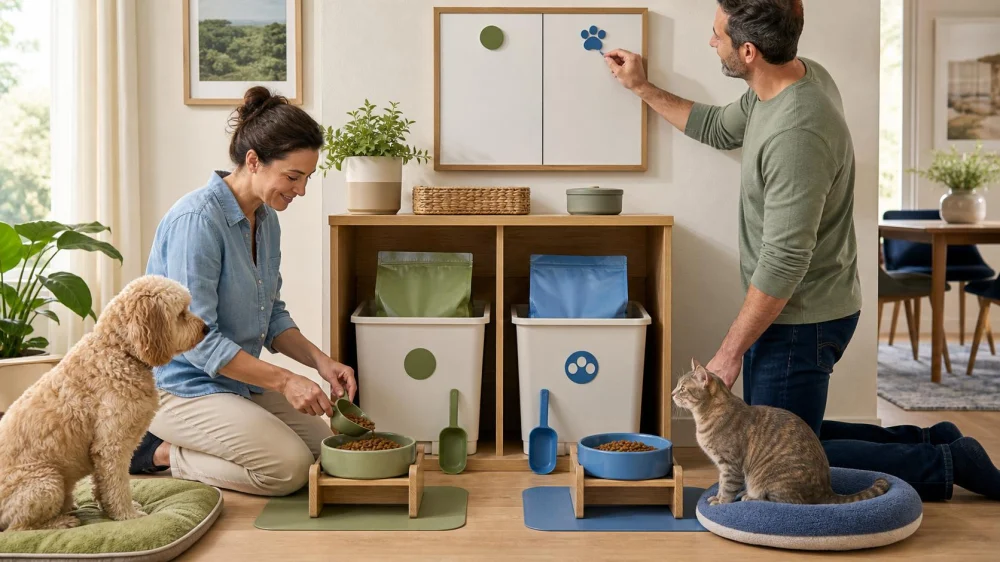
Feed pets in clearly assigned locations, using color-coded or distinct bowls that are still cleaned appropriately. Separate animals when one steals food, eats too quickly, guards bowls, or needs a therapeutic diet. Remove bowls after the planned period if that matches the care plan.
Store food securely where pets and children cannot access it. The FDA recommends retaining original pet-food package information and using clean, dry, secure storage.
Use a visible feed-and-confirm signal
Choose one shared method: a dry-erase board, magnetic token moved from “due” to a blank completed column, paper log, or household app. Include pet, meal, time, and feeder initials. Update it immediately after the bowl is served, not before.
Designate a backup for each meal and require a direct handoff. Messages such as “I think someone got it” are not confirmation. If connectivity is unreliable, keep a physical log at the feeding station.
Track treats and extras too
Set a daily treat allowance approved for the pet and place it in a named container or log each piece. Record table food, training rewards, dental chews, food-filled toys, supplements, and medicine delivered with food.
Visitors and children should offer food only with responsible-adult approval. Keep one pet from accessing another pet's bowl, food package, treat jar, or discarded preparation materials.
Review mistakes without guessing
If a duplicate meal occurs, record what food, estimated amount, time, pet, and any relevant medicines were involved. Secure remaining food and monitor only as directed by a veterinarian. Do not induce vomiting or withhold prescribed food or medicine without professional advice.
Contact a veterinarian promptly for possible overeating, the wrong pet's therapeutic diet, toxic ingredients, concerning symptoms, or uncertainty involving a medical condition. Fix the system cause—unclear ownership, hidden log, similar bowls, or late confirmation.
Double-feeding prevention checklist
- Post one dated plan per pet.
- Use the correct food and measuring tool.
- Assign one feeder and one backup.
- Separate feeding locations and bowls.
- Confirm completion immediately.
- Track treats, supplements, and food-based medicine.
- Secure food and preserve package information.
- Record errors and call the veterinarian when needed.
Limitations and urgent notes
- This guide cannot set food amounts or replace veterinary nutrition advice.
- Free-feeding, timed feeders, multi-pet access, and medical diets require individualized planning.
- Repeated vomiting, severe abdominal swelling, collapse, breathing trouble, marked lethargy, tremors, or suspected toxin exposure needs urgent veterinary guidance.
- Automatic feeders can jam, lose power, dispense incorrectly, or be accessed by the wrong pet.
- Never change insulin, seizure medicine, or other treatment timing because of a feeding error without veterinary direction.
Frequently asked questions
Should meals be pre-portioned?
They can reduce measuring errors when storage remains safe and the food and veterinarian's plan permit it. Preserve the original package information.
Can a smart feeder solve the problem?
It may help but needs testing, cleaning, power and network planning, and confirmation that only the intended pet can access it.
What if my pet always acts hungry?
Do not use behavior alone as proof a meal was missed. Check the log and discuss persistent appetite changes with a veterinarian.
How should treats be divided?
Set one daily allowance and subtract every person's rewards from it rather than giving each person a separate allowance.
What if I cannot tell whether feeding occurred?
Contact the assigned feeder. When uncertainty matters medically, call the veterinarian rather than choosing based on guesswork.
Sources and evidence notes
FDA guidance explains that overeating or eating another pet's special food can cause health problems and recommends secure storage, retained package information, and clean dedicated measuring utensils. This supports separated supplies, one current plan, and immediate household confirmation.
Assign the next meal now
Place a simple feeding log beside the food today. Write each pet, the next meal window, and one responsible person. Put the correct scoop with the original package and agree that the feeder marks completion only after serving.





 Pet Care Inc.4.0 (109 reviews)
 Vets Pets4.0 (251 reviews)
 PetVet Vaccination Clinic0.0 (0 reviews)
 Oasis Pet Clinic4.0 (42 reviews)
 Celtic Balls LLC (Appointment Required)5.0 (7 reviews)
 Freaziecomics2.0 (3 reviews)
 How to Create a Peaceful Multi-Cat Household: Tips for Harmony
 The Best Ways to Keep a Kitten Cool in Summer: Essential Tips
 Best Dog Breeds for Seniors Seeking Loyal Companionship
 Best Foods for Diabetic Cats: Wet vs Dry Guide
 How to Introduce a New Kitten to an Older Cat Without Stress
 The Top 10 Most Talkative Kitten Breeds That Keep Owners Entertained