
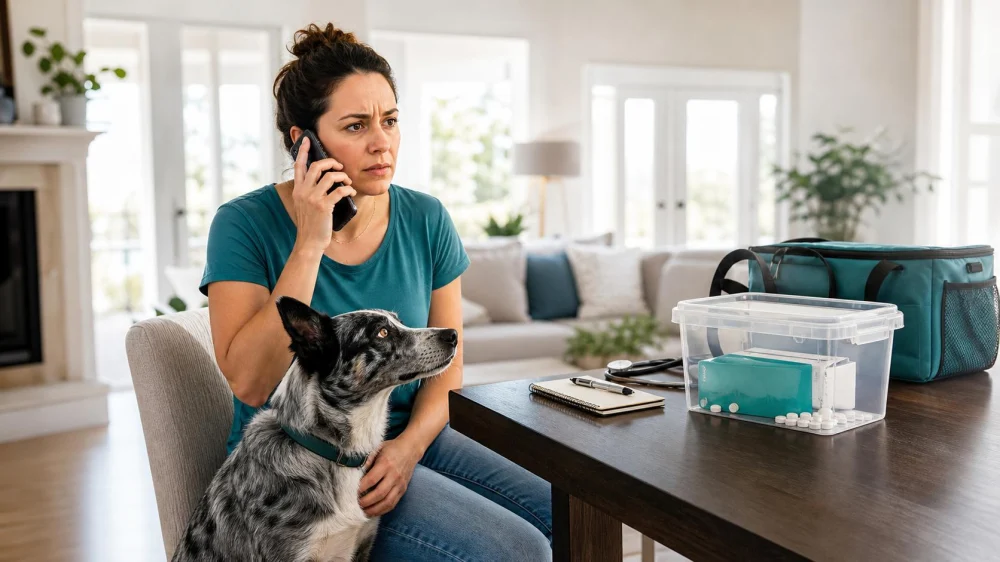
Pet Ate Something Potentially Toxic? Save the Evidence and Call Now
Quick answer: Remove your pet from the source without exposing yourself, check breathing and alertness, gather the package or plant sample, estimate the amount and time, and call a veterinarian or animal poison-control service immediately. Do not wait for symptoms and do not induce vomiting, give food, milk, salt, oil, charcoal, or medicine unless a veterinary professional specifically directs it for this pet and exposure.
1. Move the Pet Away and Secure the Source
Keep other pets and children out. Use gloves when the substance may harm people and ventilate only when safe. Do not reach into an animal's mouth if a bite is possible or handle an unknown chemical barehanded.

VCA Rossmoor-El Dorado Animal Hospital
Los AlamitosOrange CountyCalifornia
10832 Los Alamitos Blvd, Los Alamitos, CA 90720, USA
2. Go Directly for Breathing Trouble, Collapse, or Seizures
If the pet is unconscious, struggling to breathe, bleeding, repeatedly seizing, severely weak, or rapidly worsening, leave for the nearest emergency veterinary hospital and call while traveling. Do not put anything in a seizing animal's mouth.

Green Dog Dental and Veterinary Center
Los AngelesLos Angeles CountyCalifornia
13907 Ventura Blvd # 101, Sherman Oaks, CA 91423, USA
3. Save Packaging, Labels, Pills, Plants, and Photos
Bring the original container when safe. Photograph front, back, ingredients, strength, and remaining amount. For plants, take clear photos or a contained sample without delaying care. Keep vomited material away from people and pets and ask the clinic whether to bring it.
4. Note Species, Weight, Health, Amount, and Time
Poison specialists will ask breed or species, age, approximate weight, conditions, medicines, symptoms, product, concentration, possible amount, route, and earliest/latest exposure time. Say when the amount is unknown rather than guessing confidently.
5. Contact a Veterinarian or Animal Poison Control Immediately
ASPCA Poison Control operates 24/7 at (888) 426-4435 and may charge a fee. A veterinarian can also coordinate with toxicology. Save the case number and instructions for the treating clinic.
6. Never Make the Pet Vomit Without Direct Instruction
Vomiting can worsen corrosive, petroleum, sharp-object, or aspiration risks and may be unsafe for certain species or symptoms. ASPCA warns that at-home attempts can cause harm. Hydrogen peroxide is not safe for cats and should never be given without professional direction.
7. Ask Before Rinsing Skin, Fur, Eyes, or Mouth
Some exposures need prompt flushing, while others require protective equipment or special handling. Call while preventing licking. Do not apply solvents, household cleaners, or neutralizing chemicals.
8. Bring the Pet, Evidence, and Phone Instructions Safely
Use a carrier or restraint appropriate to the pet. Have another person drive when possible. Take the product, medication list, poison-control case number, and clinic route. Do not offer food or water unless directed.
9. Watch for Delayed Effects Under Veterinary Direction
A pet that looks normal may still need treatment because some toxins act later. Follow exact observation, medication, feeding, testing, and recheck instructions. Escalate any new vomiting, diarrhea, tremors, weakness, breathing change, or behavior change.
10. Lock Up the Source and Review the Whole Environment
After the emergency, secure medicines, foods, plants, pesticides, cleaners, batteries, nicotine, cannabis, antifreeze, and trash according to professional guidance. Check bags, counters, garages, and visitor belongings. Save the ASPCA Poison Control page with your veterinary emergency contacts.




 Eastfield Hospital For Animals4.0 (188 reviews)
 Chino Valley Equine Hospital4.0 (78 reviews)
 Eastvale Veterinary Hospital4.0 (303 reviews)
 PetVet Vaccination Clinic4.0 (1 reviews)
 Ridge Road Animal Hospital4.0 (221 reviews)
 Helping PAW4.0 (159 reviews)
 The Best Ways to Discipline a Kitten Without Fear or Stress
 The Best Dog Foods for Puppies with Sensitive Stomachs
 Why Do Cats Hate Water? The Evolutionary Reasons
 The Best Heated Water Bowls for Outdoor Cats in Winter
 Why Does My Kitten Have a Bald Spot?
 How to Stop a Kitten from Scratching the Walls - Tips & Solutions