
Pet Grooming Appointment: Share Health and Handling Notes
On this page
Quick answer
Before a pet grooming appointment, share the pet’s age, health conditions, medications, skin or ear concerns, recent procedures, mobility limits, bite history, fear triggers, and handling preferences. Ask what coat preparation is safe and what will happen if matting, pain, illness, or severe stress is found. Never give a sedative or extra medication unless the pet’s veterinarian prescribed it for that animal and visit.
This guide is for dog and cat owners in the United States arranging routine professional grooming. Species, breed, coat, age, behavior, and health needs differ. A groomer provides grooming services, while diagnosis, treatment, prescription medication, and medical sedation belong with a licensed veterinarian.

Information to share when booking
Do not wait until handoff to mention information that affects time, staffing, equipment, or safety. Provide:
- species, breed or mix if known, age, approximate size, and coat type;
- the requested services, such as bathing, brushing, clipping, nail care, ear-area cleaning, or sanitary trim;
- current matting, tangles, burrs, skin flakes, odor, or areas the pet guards;
- arthritis, weakness, seizure history, breathing or heart concerns, vision or hearing limits, and recent illness or surgery;
- medications and medical devices relevant to handling;
- allergies or known reactions to products;
- fear responses to dryers, water, clippers, nail tools, restraint, other animals, crates, or unfamiliar people;
- growling, snapping, biting, escape attempts, freezing, vocalizing, or prior unfinished grooming visits;
- the pet’s veterinarian and an emergency contact; and
- vaccination or health documentation required by the facility.
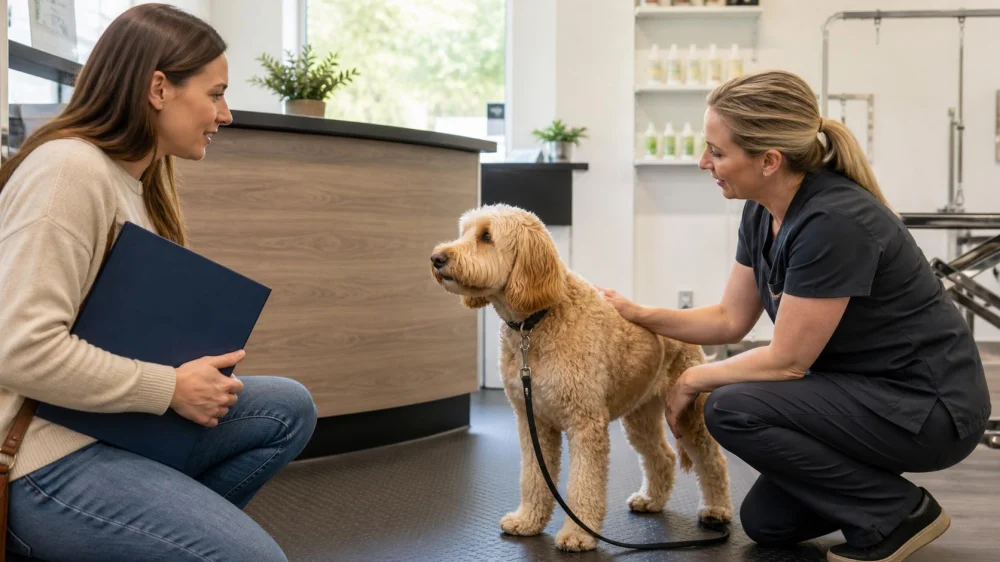
Describe behavior without minimizing or labeling the pet as “bad.” A concrete note such as “pulls the front paw away and has snapped during nail trimming” helps the groomer plan more than “doesn’t like nails.”
Ask the groomer what services it can provide, which conditions require veterinary grooming, and whether the appointment may be shortened or stopped for welfare and safety.

Pet Supplies Plus Appleton
AppletonOutagamie CountyWisconsin
702 W Northland Ave, Appleton, WI 54914, USA
Prepare the coat without causing pain
Follow the groomer’s pre-visit instructions. Some coats benefit from routine brushing before the visit, while tight mats, impacted undercoat, skin disease, or a painful area should not be pulled at home.
Do not cut mats with scissors. Skin can be drawn into a mat and become difficult to distinguish from fur. A small-looking cut can cause serious injury. Ask the groomer or veterinarian for the appropriate removal plan.
Do not bathe a tightly matted pet without guidance. Water can tighten some tangles and make the coat harder to evaluate or dry. If the pet is dirty or has a possible contaminant, call before using any product.
Use only pet-appropriate products. Do not apply human shampoo, essential oils, medicated products, flea products, dyes, adhesives, or home remedies unless the pet’s veterinarian has approved the exact use.
Inspect gently. From a calm position, look for redness, swelling, sores, lumps, parasites, discharge, broken nails, and painful reactions without squeezing or probing. Photograph a visible concern for the veterinarian, but do not delay care to finish a grooming appointment.
Keep the coat dry for arrival unless instructed otherwise. A wet pet may become chilled, hide skin condition, or require added drying time. Report any recent swimming, skunk exposure, chemical contact, or topical medication.
Build a low-stress handling plan
Good preparation focuses on predictability and the pet’s response, not forcing tolerance.
- Practice brief calm touch. If the pet already accepts it, touch shoulders, legs, paws, ears, and tail for a few seconds, then reward. Stop before distress escalates.
- Pair tools at a distance. Let the pet see a brush or hear a dryer recording at a low level only if that is part of an established positive plan. Do not corner the animal with new equipment.
- Use a secure carrier or leash. Cats should travel in a safe carrier; dogs should use well-fitted restraint. Follow facility rules for waiting areas.
- Bring approved rewards. Ask whether the groomer accepts treats and provide ingredient information for allergies or dietary restrictions.
- Share successful cues. Explain a familiar mat, pause word, handling position, or reward sequence that helps the pet settle.
- Set stop criteria. Agree on which stress or medical signs will end or modify the session and who authorizes a changed haircut or partial service.
- Plan timing. A quieter first or last appointment, shorter session, mobile service, or veterinary setting may suit some pets. Availability varies.
The American Animal Hospital Association supports humane, least-stress handling and warns against forceful restraint. Multiple people pinning a pet down to finish a nail trim is not a success. When fear or reactivity is intense, talk with the veterinarian about a broader behavior and care plan.
Never place an unfamiliar muzzle on a distressed pet immediately before drop-off without training and professional guidance. A properly conditioned basket muzzle can be useful for some animals, but fit, breathing, temperature, duration, and the service context matter.
When to contact a veterinarian first
Call the pet’s veterinarian before routine grooming for:
- new pain, limping, weakness, collapse, or difficulty standing;
- trouble breathing, repeated coughing, blue or very pale gums, or heat distress;
- fever, vomiting, diarrhea, marked lethargy, or poor appetite;
- open wounds, bleeding, pus, hot swelling, or a bad-smelling skin lesion;
- ear pain, discharge, head tilt, or sudden balance change;
- eye redness, squinting, discharge, cloudiness, or injury;
- possible contagious skin disease or parasites;
- a broken nail, embedded object, severe mat pulling on skin, or suspected foreign material; or
- recent surgery, stitches, bandages, drains, or activity restrictions.
Seek urgent veterinary care for severe breathing difficulty, collapse, uncontrolled bleeding, seizure emergency, suspected heatstroke, major trauma, or another life-threatening condition. Do not take an unstable pet to a nonmedical grooming salon first.
Medication for fear, pain, or sedation requires veterinary direction. Do not use a leftover prescription, another pet’s medication, human medication, cannabis product, or “calming” supplement without veterinary advice. Tell both the veterinarian and groomer exactly what was given and when.
Drop-off and pickup checklist
At drop-off:
- confirm the service list, coat length, face and feet preferences, and what “short” means;
- point out mats, lumps, scars, sensitive areas, and medical devices;
- confirm behavior notes, stop criteria, emergency contact, and veterinarian;
- authorize or decline defined add-ons before work begins;
- ask for the expected pickup window and communication method; and
- leave calmly rather than prolonging a stressful goodbye.
At pickup, ask what the groomer observed: skin changes, ear or eye concerns, nail condition, stress signals, incomplete services, and which handling approaches worked. A groomer’s observation is useful information but not a diagnosis.
Check the pet in good light without pulling at tender skin. Mild tiredness may follow a busy visit, but pain, bleeding, breathing changes, collapse, severe agitation, or a rapidly developing skin reaction needs prompt veterinary guidance.
Book the next interval based on coat needs, home care, health, and the groomer’s recommendation rather than waiting for severe matting. Regular low-stress visits may be easier than occasional long corrective sessions for some pets.
Evidence and service limits
This article reflects common veterinary behavior and grooming-safety principles: share medical and behavior information, use humane low-stress handling, stop forceful procedures, and involve a veterinarian for diagnosis, pain, illness, prescription drugs, or sedation.
Licensing and service rules for groomers vary by location. Ask about training, emergency procedures, supervision, animal separation, sanitation, drying, restraint, insurance, and veterinary referral. No preparation checklist guarantees that every pet can safely complete every service.
Frequently asked questions
Should I brush my pet before a grooming appointment?
Routine gentle brushing may help if the pet is comfortable and the coat is not tightly matted. Stop if brushing pulls skin, causes pain, or reveals sores. Ask the groomer or veterinarian for difficult coats.
Can a groomer remove severe mats?
Possibly, but close clipping can reveal hidden wounds and carries risk when skin is pulled into mats. Severe, painful, medically complicated, or behaviorally unsafe cases may need veterinary grooming.
Should I feed my pet before grooming?
Ask the groomer and veterinarian, especially if travel sickness, diabetes, medication, sedation, or a medical procedure is involved. Do not withhold food from a pet with medical needs without professional advice.
What if my pet has bitten during grooming?
Disclose the full history when booking. The groomer may change timing, staffing, service scope, or refer to a veterinary setting. Hiding bite history risks the pet and staff.
Can I give a calming medicine before the appointment?
Only give medication prescribed or approved by the pet’s veterinarian for that animal and visit. Follow the exact instructions and tell the groomer what was given.
Why might a groomer stop mid-appointment?
The pet may show severe fear, aggression, pain, breathing difficulty, skin injury, equipment intolerance, or another welfare concern. A partial safe service is better than forcing completion.
Next steps
Call the groomer before the visit, describe coat condition, health, medications, mobility, prior behavior, and handling preferences, then ask about stop criteria and veterinary referral. Prepare the coat only as advised, transport the pet securely, and confirm the service plan at drop-off. Contact a veterinarian first for pain, illness, wounds, parasites, recent procedures, or medication and sedation questions.



 Huron Veterinary Hospital4.0 (239 reviews)
 C.F. Exotics5.0 (8 reviews)
 Fur and Feathers Veterinary Care4.0 (323 reviews)
 Medford Pet Clinic3.0 (121 reviews)
 SF Aquatic4.0 (134 reviews)
 Petco4.0 (937 reviews)
 How to Tell if Your Kitten is a Maine Coon Mix
 How to Help a Kitten with a Broken Tail
 Understanding Kitten Vaccination: Side Effects to Watch For
 Understanding Kitten Spay: Laparoscopic vs. Traditional Procedures
 How to Introduce Your Kitten to a New Home Slowly
 How to Stop a Kitten from Bullying an Older Cat