
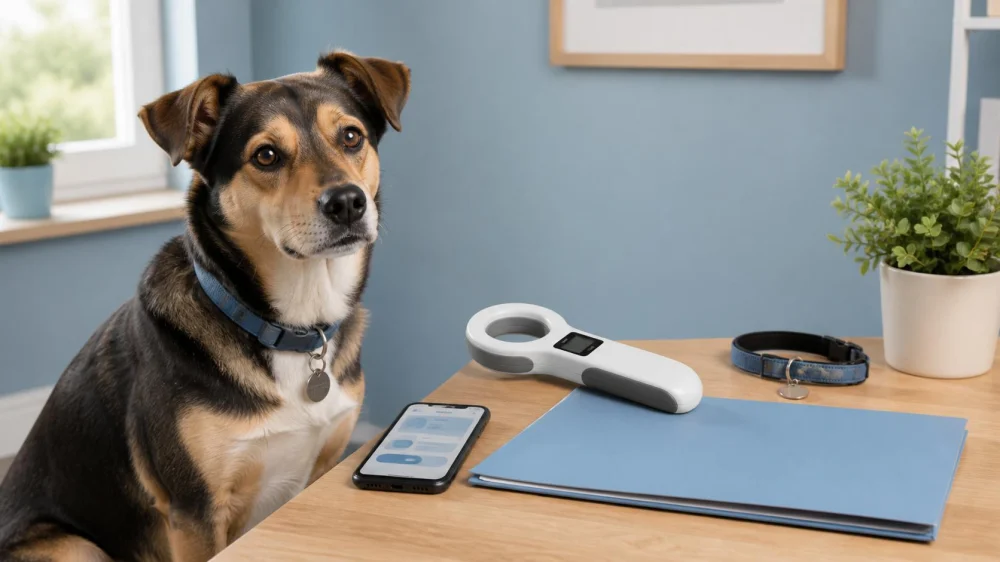
Pet Microchip Records: Verify Registration and Contacts
On this page
- Understand what a microchip does
- Find the chip number
- Identify the registry
- Verify owner contact details
- Add backup and veterinary contacts
- Update life and household changes
- Check the chip at routine visits
- Plan for travel and emergencies
- Handle adoption or transfer
- Avoid common registration mistakes
- Microchip record checklist
A pet microchip can help an animal shelter, veterinary clinic, or animal control agency connect a found pet with registered contact information. The chip itself does not usually track a pet's location. Its usefulness depends on a readable number, a registry record, and current contact details that someone can reach quickly.
Microchipping does not replace a secure collar, visible identification tag, safe enclosure, or local license. Treat it as one layer of identification. Keep the chip number and registry information with the pet's other records, and review them whenever your phone number, address, ownership, or emergency plan changes.

Understand what a microchip does
A microchip is a small identification device placed under the skin by a qualified professional. When a compatible scanner passes over the area, it displays an identification number. An authorized person can use that number to locate registry information and contact the registered keeper or owner.
The chip normally has no battery, GPS map, live cellular connection, or stored medical history. A scanner finding the number does not automatically reveal your details without a registry lookup. Exact systems, privacy rules, and legal requirements vary by jurisdiction and provider, so use official local guidance.
Find the chip number
Look for the number on an implantation certificate, adoption paperwork, veterinary record, travel document, license application, or registry confirmation. It is often a long string of digits. Copy it carefully and preserve leading zeros. Do not assume a tag number or veterinary patient number is the microchip number.
If paperwork is missing, ask a veterinary clinic or shelter to scan the pet. Scanning should cover the appropriate body area because some chips can move from the original site. A professional can record the displayed number and advise about a chip that is difficult to detect.
Identify the registry
The clinic that implanted the chip, breeder, rescue, or shelter may know where it was first registered. A recognized microchip lookup service may identify which registry should be contacted, though a lookup result may not show private owner details. Use official sites and verified phone numbers.
Do not post the full chip number publicly while seeking help. Avoid websites that imitate registries or demand unrelated personal data. If a company name has changed or a registry has transferred records, contact the implanting organization or local veterinary authority for the current route.
Verify owner contact details
Sign in through the registry's official portal or call its published support number. Confirm the primary name, phone, email, address, and preferred contact method. Check spelling, country codes, apartment numbers, voicemail availability, and whether messages from unknown callers can reach you.
Registration and implantation are separate steps. A chip can be present while its record remains blank, belongs to a previous keeper, or contains outdated details. Save dated confirmation that your current information is active, and learn how the registry authenticates future updates.
Add backup and veterinary contacts
If the registry allows it, add a trusted backup who can make decisions or reach you when your phone is unavailable. Ask that person first, explain the role, and keep their details current. Choose someone likely to answer rather than simply listing the nearest relative.
A veterinary clinic may also be useful, but confirm the clinic's policy and do not imply that it accepts responsibility without agreement. Keep medical conditions and medicine instructions in a separate veterinary record; a registry profile is not a substitute for clinical information or emergency consent planning.
Update life and household changes
Review the record after moving, changing phone carriers, changing an email address, adding an authorized caregiver, or altering a pet's name. Update it before a long trip, house move, evacuation season, or boarding stay. Remove contacts who no longer have permission to act.
Set a recurring calendar reminder to verify the record at least annually. Also check any visible identification tags and local license at the same time. One updated system does not automatically update the others, so treat each database and physical tag as a separate record.
Check the chip at routine visits
Ask the veterinary team whether it can scan the chip during a routine appointment and compare the number with the medical record. This confirms that the chip can be found and that the clinic has recorded the correct digits. Scanning should not replace registry verification.
Contact a veterinarian if the implantation area becomes painful, swollen, draining, or otherwise concerning. Do not press repeatedly, attempt to locate the chip with household devices, or try to implant, remove, or replace it yourself. A veterinarian can assess the pet and advise on any follow-up.
Plan for travel and emergencies
Keep the chip number, registry contact, recent pet photo, veterinary contact, vaccination record, medicine list, and local license in a secure digital and paper emergency file. Give an authorized caregiver only the information needed for the pet's care and identification.
International and interstate travel may require a compliant chip, specific timing, documents, or a matching number on health certificates. Requirements can change. Confirm them with official destination authorities and an accredited veterinarian well before departure rather than relying on a general registry profile.
Handle adoption or transfer
When adopting, ask for the scanned chip number, transfer instructions, and written ownership records. Complete the registry change promptly and verify acceptance. Do not assume the rescue, shelter, breeder, or former owner has completed the update on your behalf.
For a lawful rehoming, follow the registry's ownership transfer process and applicable local rules. Keep proof of the agreed transfer without retaining unnecessary access to the new keeper's private account. Disputed ownership requires appropriate legal or animal-control guidance; a registry entry alone may not decide every dispute.
Avoid common registration mistakes
Common problems include transposed digits, an inactive phone, a full voicemail box, an unmonitored email, an old address, and a registry fee scam. Another frequent error is creating a new profile without connecting it to the implanted number. Verify the final saved record.
If a pet is missing, contact the registry immediately to flag the record, then follow local shelter, animal control, veterinary, and neighborhood search guidance. Do not wait for the microchip to generate an alert by itself. It can assist only after the pet is found and scanned.
Microchip record checklist
Record the complete chip number, implanting organization, registry name, official website, phone number, account owner, primary contact, backup contact, last verification date, and transfer documents. Store the details securely and share them only with people who need them.
A chip is most useful when three things align: the device can be scanned, the number points to the correct registry, and the registry can reach a responsible person. A short annual review—and an update after every major change—keeps this quiet identification tool ready when a lost pet needs it most.






 Marlboro Village Veterinary Hospital of Marlboro and Aberdeen, "The Bark Park" Daycare4.0 (92 reviews)
 Four Paws Annex4.0 (14 reviews)
 Banfield Pet Hospital4.0 (147 reviews)
 TLC Animal Hospital Rehoboth4.0 (11 reviews)
 Banfield Pet Hospital3.0 (94 reviews)
 Paws Calls4.0 (19 reviews)
 The Best Litter Box for a Kitten with High Sides
 Why Is My Cat Afraid of Strangers? How to Socialize Them
 How to Tell if Your Kitten is Bonding with You
 How to Create a Safe Outdoor Enclosure for Your Cat – Tips and Ideas
 How to Tell if Your Kitten is a Mixed Breed (Complete Guide)
 How to Create a Safe Outdoor Enclosure for Your Cat