
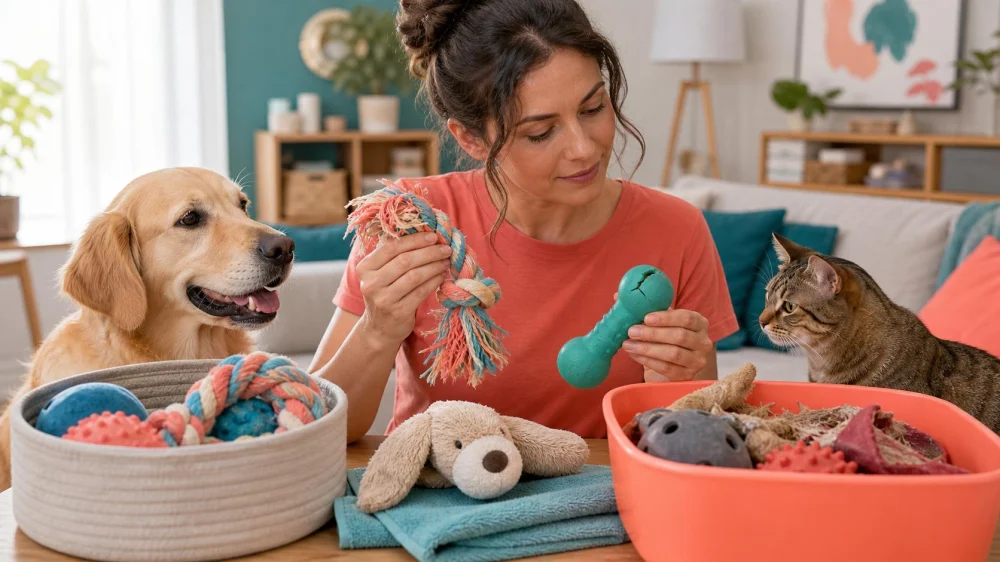
Pet Toy Inspection: Clean, Repair, or Retire It
Table of contents
Quick answer
Inspect each toy for pieces that can detach, exposed stuffing or squeakers, long loose strands, cracks, sharp edges, damaged seams, sticky residue, and a size that no longer fits the pet's play style. Clean it only as the maker directs and dry it completely. Retire toys with structural damage or missing pieces; do not hide damage with household glue, tape, staples, or improvised parts.
Vethouse Pet Care
ChinchillaLackawanna CountyPennsylvania
233 Northern Blvd Suite 6, South Abington Township, PA 18411, USA
Sort toys by pet, material, and use
Collect toys from beds, crates, yards, under furniture, and travel bags. Separate dog toys from cat toys and identify which pet actually uses each item. A toy suitable for one animal's size and behavior can be inappropriate for another that chews harder, swallows objects, or tears fabric quickly.
Group toys by function: fetch, tug, food dispensing, chewing, kicking, stalking, comfort, and interactive play. Note which require direct supervision and which the manufacturer allows for independent use. Save packaging, care instructions, model names, and receipts for newer products so recall or replacement questions are easier to answer.
Inspect before and after play
Use good light and dry hands. Compare the toy with a photo from when it was new if available. Look, bend gently, and feel for:
- a change in shape, size, flexibility, or surface texture;
- cracks, punctures, splits, sharp edges, or missing chunks;
- loose seams, stuffing, squeakers, bells, batteries, feathers, or fasteners;
- frayed rope, long threads, detached ribbons, or stretched elastic;
- mold-like spots, persistent odor, slime, or residue; and
- blood, a broken tooth fragment, or another sign the play was too hard.
Count removable parts when the design includes them. If something is missing, stop access and look for the piece without inducing vomiting or giving a home remedy unless a veterinarian specifically directs it.
Check common toy materials
Rubber and plastic: Retire items with deep cracks, sharp bite channels, brittleness, tackiness, or missing chunks. A hollow toy can hide damage around openings.
Rope and fabric: A fuzzy surface differs from long loose fibers that can detach. Check knots, handles, seams, stuffing, and internal squeakers. Remove a toy when the pet can reach the filling or hardware.
Balls and rolling toys: Confirm the size cannot become lodged in the animal's mouth or throat and that the surface has not compressed or split. Check valves and joined halves.
Electronic or battery toys: Inspect the battery door and fastener before use. Stop immediately if the compartment opens, the housing cracks, or a battery is missing. Keep batteries away from pets and contact a veterinarian or poison-control resource promptly about suspected exposure.
Clean only by the maker's method
Read the label before using a dishwasher, washing machine, hot water, bleach, disinfectant, or scented cleaner. Heat can deform plastic, loosen adhesive, shrink fabric, or damage electronics. A cleaning chemical left in porous material may be licked or swallowed.
Use separate tools from human food preparation when practical. Rinse as directed and allow the toy to dry fully, including seams and hollow interiors, before returning it. Cleaning does not restore structural strength; re-inspect once the toy is dry.
Decide whether to repair or retire
Repair only when the manufacturer provides a safe replacement part or repair method. Household glue, duct tape, wire, staples, zip ties, and sewn-on buttons can add ingestion, snagging, or sharp-object hazards. A cosmetic patch may also conceal a crack that continues beneath it.
Retire the toy when:
- a piece is missing or can now be pulled free;
- stuffing, a squeaker, battery, or internal mechanism is reachable;
- rope has long loose strands or fabric no longer contains the filling;
- the material is cracked, brittle, sharp, sticky, or permanently contaminated;
- the toy has become too small for the pet; or
- the pet repeatedly uses it in a way the design does not support.
Place discarded toys where the pet cannot retrieve them. Follow local waste rules for batteries and electronic components.
Rotate and store toys intentionally
Keep a small active group and store clean, dry toys in a pet-inaccessible container. Rotation makes inspection easier and prevents every toy from remaining on the floor indefinitely. Separate damp outdoor toys until they are cleaned and dried.
Observe how the pet plays when a toy returns. A puppy, kitten, senior pet, or animal with dental or vision changes may interact differently over time. Replace by suitability and condition, not by a fixed calendar alone.
Pet toy inspection checklist
- The toy still suits the pet's size, species, age, and play behavior.
- No chunk, part, squeaker, stuffing, battery, or fastener is missing.
- There are no cracks, sharp edges, loose seams, or long strands.
- The toy has no unexplained residue, strong odor, or mold-like growth.
- Cleaning follows the current manufacturer instructions.
- The item is completely dry before storage or play.
- No improvised glue, tape, wire, or household hardware has been added.
- Supervised-use toys return to secure storage after the session.
Limits and veterinary cautions
This article provides general pet-care information, not veterinary advice or a guarantee that a toy is safe. No toy is indestructible. Individual chewing force, swallowing behavior, dental health, species, body size, supervision, and product design change the risk.
Contact a veterinarian or animal poison-control service promptly when a piece, string, battery, stuffing, squeaker, chemical, or other object may have been swallowed. Seek urgent care for choking, trouble breathing, repeated vomiting or retching, collapse, marked pain, abdominal swelling, heavy drooling, bleeding, or severe lethargy. Do not pull a string protruding from the mouth or rectum without veterinary direction.
Frequently asked questions
Can I sew a plush toy closed?
Only if the manufacturer provides an approved repair method. New thread, knots, or hidden internal damage can create additional hazards. Retiring a breached plush toy is often the clearer choice.
Is a frayed rope toy still usable?
A minor fuzzy surface and long detachable strands are different. When fibers loosen, knots fail, or pieces can be swallowed, remove the toy and replace it.
How often should toys be inspected?
Check before and after active play and during routine cleaning. Destructive chewers and toys with small components need closer supervision than low-impact comfort toys.
Can dog and cat toys share one bin?
Separate storage is safer when size, components, medication residue, catnip, or play style makes a toy unsuitable for the other animal. Supervise shared-household play.
Veterinary and product sources
- U.S. Food and Drug Administration: Potentially Dangerous Items for Your Pet
- U.S. Food and Drug Administration: Keep Dogs and Cats Safe From Holiday Hazards
- U.S. Food and Drug Administration: Who to Call in a Pet Emergency
- The toy maker's size, supervision, cleaning, replacement, and recall information is the primary product source.
Conclusion and next steps
Turn toy cleanup into a real inspection: sort, examine every part, clean by the label, dry fully, and retire structural damage without improvising a patch. A smaller set of suitable, intact toys offers better play than a full bin of hidden cracks, loose strands, and missing pieces.




 Hollywood Feed5.0 (186 reviews)
 Urban Livestock & Equine Veterinary Services4.0 (81 reviews)
 GSVS Veterinary Emergency Care Toms River4.0 (72 reviews)
 Rena's Pet Supplies4.0 (454 reviews)
 Joes shrimp shack4.0 (196 reviews)
 Petco4.0 (945 reviews)
 Understanding Why Your Cat Is Hiding: Behavioral and Medical Causes
 Why Does My Cat Knead Me? The Surprising Reasons Behind This Behavior Explained
 Why Is My Kitten's Fur Changing Texture? Causes and Solutions for Pet Owners
 The Pros and Cons of Getting a Kitten for Christmas: A Holiday Pet Decision
 Pet Toy Inspection: Clean, Repair, or Retire It
 Why Do Cats Love Catnip? And Is It Safe?