
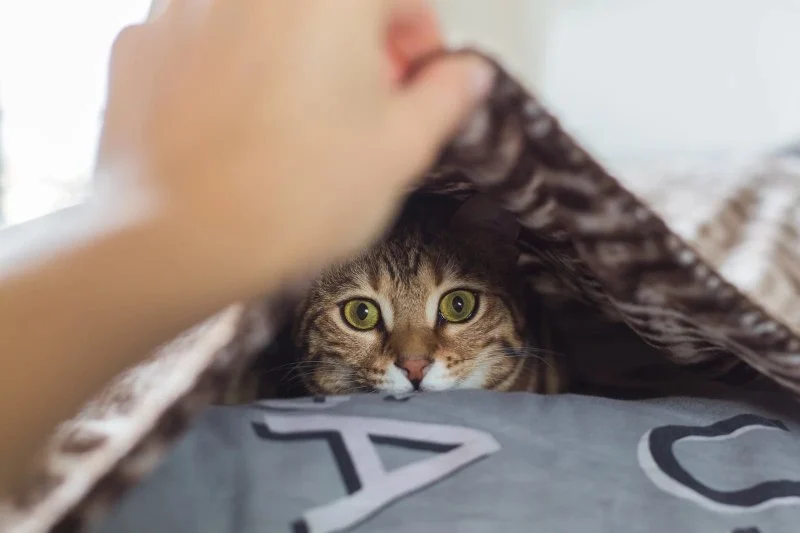
- behavioral-reasons-why-cats-hide - Behavioral triggers like stress, environment changes, and fear responses
- medical-reasons-cat-hiding - Health conditions, pain, and illness-related hiding behavior
- environmental-triggers-cats - Noise, visitors, moving homes, or new pets causing withdrawal
- when-to-worry-about-cat-hiding - Warning signs that indicate urgent veterinary attention
- how-to-help-hiding-cat - Practical steps to rebuild comfort and trust at home
Understanding Why Is My Cat Hiding: A Behavior That Shouldn’t Be Ignored
When a cat suddenly disappears under the bed, behind the sofa, or into a closet for hours or even days, it can feel unsettling for any pet owner. The question “why is my cat hiding” often comes up during moments of concern, especially when the behavior appears out of nowhere.
Hiding is not always a sign of something serious—but it is always communication. Cats don’t speak in words; they speak in behavior. And hiding is one of their clearest messages that something has changed in their world, either emotionally or physically.
To understand it properly, we need to look at both behavioral and medical causes, because the truth is that feline hiding behavior often sits somewhere in between the two.

Green Valley Veterinary Clinic
YucaipaSan Bernardino CountyCalifornia
35037 Ave B, Yucaipa, CA 92399, USA
Behavioral Reasons Behind Cat Hiding
Stress and Environmental Changes
One of the most common explanations for cat hiding behavior is stress. Cats are extremely sensitive to environmental shifts. Even changes that seem minor to humans—like rearranging furniture or introducing a new scent—can feel overwhelming to them.
A real-life example often seen in veterinary behavior clinics involves cats that start hiding after a move to a new apartment. One cat named “Milo” reportedly stayed under the bed for almost three days after his family relocated. Nothing was physically wrong—he simply needed time to process a completely new environment.
In such cases, the behavior is rooted in survival instinct. Cats retreat to small, enclosed spaces because it helps them feel protected when their surroundings feel unpredictable.

New People, Pets, or Loud Activity
Another common trigger is social disruption. Visitors, new pets, or even loud renovations can cause a cat to withdraw. Cats prefer controlled environments, and sudden changes can push them into hiding as a coping mechanism.
This is especially true for shy or previously traumatized cats. They often interpret unfamiliar movement or sound as a potential threat, even when no real danger exists.
Anxiety and Emotional Sensitivity
Some cats are naturally more anxious. These cats may hide even without a clear trigger. In behavioral studies, feline anxiety has been linked to early socialization experiences, meaning kittens that were not exposed to diverse environments may grow into more cautious adults.
This type of hiding tends to be repetitive. The cat may retreat to the same location each time something slightly stressful happens, such as a vacuum cleaner running or a doorbell ringing.
For pet owners trying to support sensitive cats, resources like Omnia Pet can be helpful for finding calming products and enrichment tools designed to reduce anxiety in home environments.
Medical Reasons That Should Not Be Overlooked
Pain or Physical Discomfort
While behavioral causes are common, medical reasons are equally important. Cats are masters at hiding pain. In the wild, showing weakness makes them vulnerable, so even domesticated cats retain this instinct.
If a cat suddenly starts hiding more than usual, especially if accompanied by reduced appetite or mobility changes, it may indicate pain. Conditions like dental disease, arthritis, or internal discomfort can all cause this behavior.
Illness and Infection
When cats feel sick, they often withdraw instinctively. This can include viral infections, gastrointestinal issues, or even fever-related fatigue. Hiding allows them to rest and conserve energy.
One widely discussed case involved a cat named “Luna,” who began hiding in a dark corner for several days. Her owners initially assumed she was stressed, but a veterinary check revealed a urinary tract infection. After treatment, her behavior returned to normal within 48 hours.
Neurological or Age-Related Conditions
Older cats may begin hiding due to cognitive decline or sensory loss. Confusion, reduced vision, or hearing changes can make familiar environments feel unfamiliar, leading to withdrawal behavior.
This type of hiding often appears gradual rather than sudden, which helps differentiate it from acute illness or stress.
Environmental Triggers That Often Go Unnoticed
Noise and Sensory Overload
Cats have highly sensitive hearing. Construction noise, fireworks, or even constant household appliances can push them into hiding. What feels like background noise to humans can feel overwhelming to a cat.
Changes in Routine
Cats rely heavily on predictability. Feeding time changes, altered work schedules, or inconsistent interaction patterns can create uncertainty. When routines break down, hiding becomes a way to regain emotional stability.
New Smells or Cleaning Products
Strong chemical smells or unfamiliar scents from cleaning products can also trigger avoidance behavior. Cats interpret scent as identity, so when their environment suddenly smells different, they may temporarily withdraw.
When Hiding Becomes a Concern
Not every hiding episode is dangerous, but certain patterns should raise attention. If a cat refuses food, shows changes in litter box habits, or avoids interaction for extended periods, it may indicate something beyond normal stress.
The key is observing consistency. Occasional hiding after a loud event is normal. Persistent isolation combined with physical symptoms is not.
Veterinarians often recommend monitoring behavior over 24–72 hours before deciding whether intervention is needed, unless symptoms are severe or sudden.
How to Support a Cat That Is Hiding
Creating a Safe Space
Instead of forcing a cat out, the better approach is to make their hiding area feel safe. Soft bedding, quiet surroundings, and access to food and water nearby can help reduce anxiety naturally.
Avoiding Forced Interaction
Trying to pull a cat out of hiding often increases stress. Allowing voluntary interaction builds trust and helps the cat feel in control of their environment again.
Rebuilding Confidence Through Routine
Consistency is one of the most effective tools. Regular feeding times, calm interaction, and predictable daily patterns help reduce uncertainty over time.
Using Enrichment and Calming Tools
Interactive toys, pheromone diffusers, and soft background sounds can help reduce stress levels. Platforms like Omnia Pet often highlight products designed specifically for emotional support and behavioral stability in cats.
Final Thoughts on Feline Hiding Behavior
Understanding why is my cat hiding requires patience and observation. It is rarely a random act—it is a response to something internal or external that the cat is trying to manage.
By paying attention to both behavioral and medical possibilities, pet owners can respond in a way that supports both emotional comfort and physical health. In most cases, small environmental adjustments and gentle reassurance can make a significant difference in helping a cat return to their normal behavior.




 Jules Pet Shop4.0 (742 reviews)
 Angel Vet5.0 (4 reviews)
 Westmont Exotic Pet Supplies3.0 (6 reviews)
 Old York Veterinary Hospital4.0 (148 reviews)
 Pet-Topia4.0 (1253 reviews)
 Family Pet Clinic4.0 (144 reviews)
 The Best Puzzle Feeders for Cats to Slow Down Eating
 : How to Train Your Kitten to Respond to Their Name - Omnia Pet
 How to Keep Your Cat Entertained While You're at Work
 The Best Dog Breeds for Seniors and Retirees Looking for Companionship
 The Best Cat Carriers for Stress-Free Vet Visits | Omnia Pet
 The Best Ways to Celebrate Your Cat's Birthday - Fun and Creative Ideas