
Cat Scratching Posts: Choose, Place, and Teach Use
On this page
Quick answer
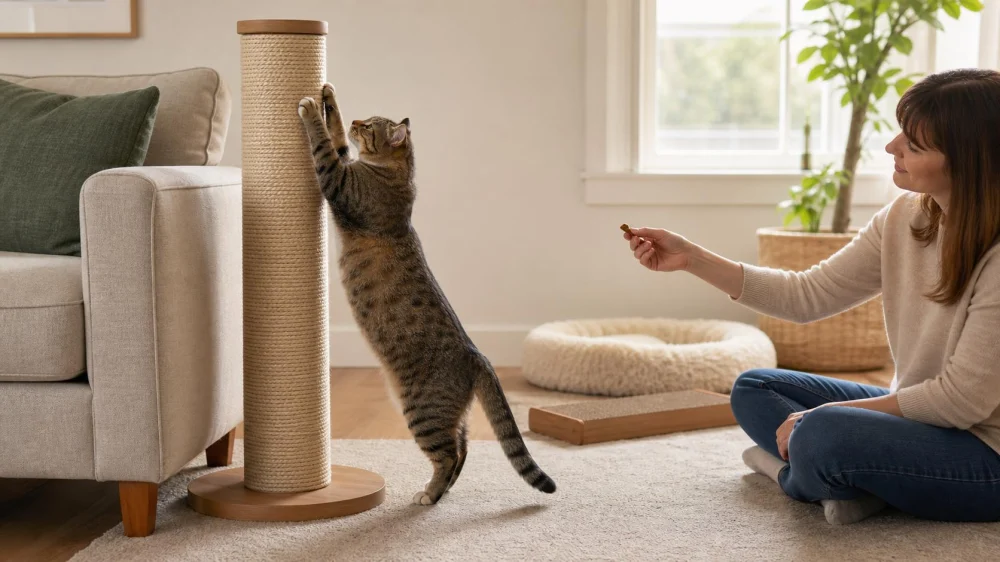
Choose a scratching surface that matches your cat's preferred direction and texture, make it tall or long enough for a full stretch, and ensure it cannot wobble or tip. Place it beside an existing scratch location, sleeping area or travel path—not hidden in a remote corner. Reward investigation and use, keep nails maintained as advised, and protect furniture temporarily. Do not punish scratching or force a cat's paws onto the post.

Vetco Vaccination Clinic
East WindsorMercer CountyNew Jersey
440 US-130 Ste 12A, East Windsor, NJ 08520, USA
Why cats scratch
Scratching is a normal feline behaviour used to stretch, maintain claws and leave visual and scent marks. The practical goal is not to eliminate it but to provide acceptable surfaces in locations that meet the same need.
Cats may scratch after waking, during excitement, near entrances or where household activity occurs. A sudden major change can also relate to stress, pain, mobility changes or conflict and deserves attention.

Choose a scratcher the cat can use confidently
- Direction: vertical, horizontal or angled based on observed preference.
- Size: enough usable area for a full-body stretch without reaching the end.
- Stability: a broad base or secure mounting that does not move under force.
- Texture: sisal, corrugated cardboard, wood or another pet-safe material the cat prefers.
- Condition: intact fasteners, no exposed staples, sharp wire or loose loops.
- Access: reachable for the cat's age, size and mobility.
Best choice: the surface the individual cat repeatedly selects, recreated safely. Not ideal: a short lightweight post for a large vertical scratcher or a slippery board that moves underfoot.
Place scratching options where behaviour happens
- Put the first scratcher directly beside the targeted furniture edge.
- Add one near a favourite sleeping place for post-nap stretching.
- Use another near an important entrance or social room.
- In multi-cat homes, distribute resources so one cat cannot guard all options.
- Keep a safe distance from breakables, cords, heaters and unstable furniture.
- Move successful scratchers only a few inches at a time if a different final location is needed.
A beautiful scratcher in an unused room may fail because scratching is partly about location and communication, not only texture.
Encourage use without force
- Reward looking, approaching and touching the scratcher.
- Use a wand toy to guide movement near the surface without wrapping string around it.
- Place a familiar scent item nearby rather than using strong fragrance.
- Offer a treat immediately after voluntary scratching.
- Keep sessions short and let the cat leave.
- Modeling with your fingers may attract attention, but never drag the cat's paws.
Catnip or silver vine may interest some cats when used safely, but responses vary and these products are not required. Check suitability with a veterinarian for kittens or cats with health concerns.
Protect furniture during the transition
- Clean the scratched area with a material-safe product to reduce residual cues.
- Cover the exact target temporarily with a tightly secured pet-safe protector.
- Place the preferred scratcher immediately beside it.
- Reward the new location consistently.
- Maintain appropriate nail care with veterinary or grooming guidance.
- Remove protection gradually only after the new habit is established.
Avoid loose plastic, sticky products that can contact fur, essential oils, pepper, shock mats and sprays that may be toxic or frightening. Test any furniture-safe covering where the cat cannot ingest it.
Troubleshooting common patterns
- Cat ignores the post: change location before buying many new textures.
- Post tips: stop using it until the base or mounting is secure.
- Cat scratches beside it: match height, angle and surface more closely.
- Only one cat uses it: add separated options and assess social blocking.
- Older cat stops stretching high: offer low horizontal and angled options and discuss pain or mobility with a veterinarian.
- Scratching suddenly increases: review household changes, outdoor-cat views, resources and medical signs.
Veterinary and safety notes
This article provides general feline behaviour and product-safety information. Sudden behaviour change, limping, torn claws, bleeding, overgrooming, urine marking or signs of pain warrant veterinary guidance.
Declawing is not a scratching-training method; it is a surgical amputation with welfare and medical implications and may be restricted by law or policy. Discuss humane options with a veterinarian and qualified feline behaviour professional.
Frequently asked questions
How many scratching posts does a cat need?
There is no fixed number. Provide options in important locations and additional separated resources for multiple cats.
When should I replace a scratcher?
Replace or repair it when unstable, sharp, contaminated or structurally worn. A visually shredded but safe surface may still be highly valued.
Is sisal better than cardboard?
Neither is universally better. Observe the cat's preferred texture and direction and provide safe versions.
Should I put a post next to the sofa?
Yes, initially. It competes with the exact established location. Move it gradually only after consistent use.
Why does my cat scratch after waking?
Scratching combines stretching, claw maintenance and marking, making post-sleep locations especially useful.
Next steps
Observe direction, texture and location for three days. Place one stable, correctly sized scratcher beside the main target and another near a sleeping area. Reward voluntary use, protect furniture safely and reassess health or household stress if scratching changes suddenly.





 Central Valley Koi4.0 (44 reviews)
 F.O.E Kennels0.0 (0 reviews)
 Vetco Vaccination Clinic4.0 (13 reviews)
 BluePearl Pet Hospital3.0 (610 reviews)
 Mes Amis Collars & Leashes5.0 (3 reviews)
 San Fernando Pet Hospital4.0 (395 reviews)
 How to Introduce Your Kitten to a New Bed | Tips for Comfort and Safety
 The Top 10 Most Trainable Dog Breeds
 How to Tell if Your Kitten is a Maine Coon Mix
 The Pros and Cons of Raw Food Diet for Cats
 How to Stop a Kitten from Overeating Dry Food: Tips and Solutions
 The Best Diet for Senior Dogs: Nutrition Tips for Aging Canines