
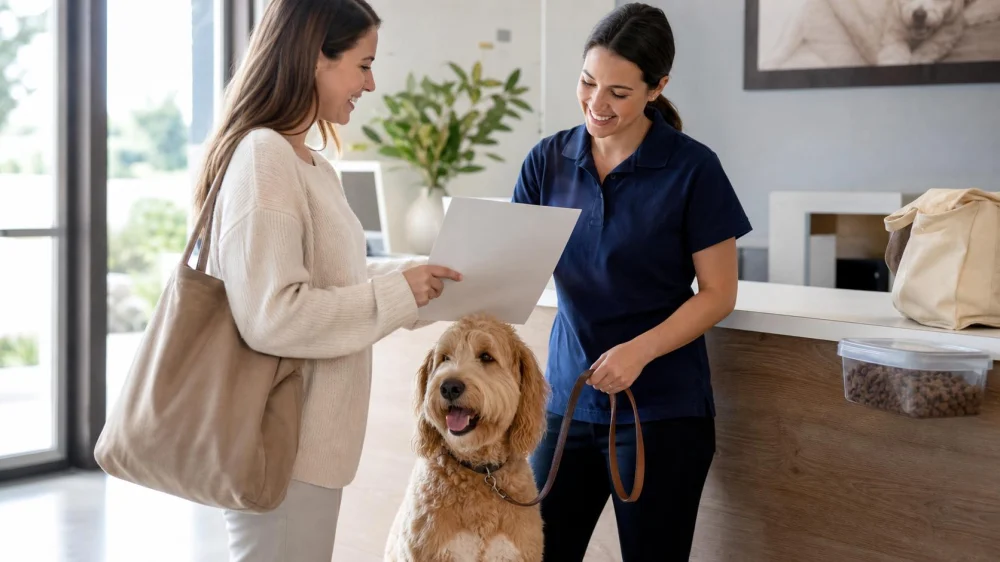
Pet Boarding Pickup: Review Meals, Medicine, and Behavior
On this page
Quick answer
At pet boarding pickup, ask what the pet ate and drank, bathroom patterns, sleep, activity, social interactions, stress, injuries, symptoms, incidents, treatments, and medicines given. Reconcile remaining food, medication, equipment, and personal items before leaving. Observe the pet safely, get written follow-up instructions, and contact a veterinarian promptly for concerning changes rather than assuming every sign is normal after boarding.

Adobe Veterinary Clinic
YucaipaSan Bernardino CountyCalifornia
31535 Dunlap Blvd, Yucaipa, CA 92399, USA
Ask for a structured report
“Everything was fine” is less useful than a short factual timeline. Ask staff to describe the stay using observable details: meals offered and eaten, water intake concerns, urine and stool, vomiting or coughing, rest, exercise, play groups, handling, appetite changes, fear, escape attempts, conflicts, wounds, and contact with veterinary care.
Record the last meal, bathroom break, medication, and notable event. Ask whether another staff member, shift log, camera, or veterinary record contains details that the person at reception does not know.
For any incident, collect date and time, location, people and animals involved, first aid or care provided, notifications made, current status, and recommended follow-up. Keep the discussion calm and separate immediate animal care from later billing or policy questions.

Reconcile medicines and belongings
Compare the original medication plan with the administration record. Confirm each dose given, refused, vomited, spilled, delayed, missed, or changed. Count remaining medication without handling it unsafely and retrieve refrigerated or controlled items through the facility's process.
Do not double a dose or alter the next schedule to compensate for a discrepancy unless the prescribing veterinarian gives instructions. Obtain the facility record and contact the veterinarian promptly when timing or amount is uncertain.
Check returned food, treats, containers, leash, collar, harness, carrier, bedding, toy, comfort item, and documents against the drop-off list. Note items that are wet, damaged, contaminated, missing, or belong to another pet before leaving.
Observe the pet calmly
Meet the pet in a controlled area with secure leash, harness, or carrier. Excitement can make handling harder near doors and vehicles. Check general alertness, breathing, walking, eyes, nose, coat, paws, collar area, and any bandage or reported injury without forcing a distressed animal.
Ask staff before feeding treats or offering a large drink at reception, especially if travel or medical instructions apply. Secure the pet in the vehicle with the usual appropriate restraint and go directly home unless veterinary evaluation is advised.
Photograph a visible injury or damaged belonging, but do not delay urgent care to complete documentation.
Plan the first day home
Provide a quiet, familiar area and resume the veterinarian- and facility-approved feeding and medication plan. Give access to fresh water and a safe bathroom opportunity. Reintroduce other pets calmly rather than creating a crowded reunion.
Use the written report as a baseline. Track appetite, water, urine, stool, vomiting, coughing, activity, sleep, pain, skin, and behaviour for changes. Avoid diagnosing stress, infection, or injury from one sign; ask a veterinarian when the change is concerning, persistent, or worsening.
Save the boarding report, medicine record, incident document, veterinary invoice, photos, and receipt. Send factual feedback after the pet's immediate needs are addressed.
Pickup checklist
- Meals, water, bathroom, rest, and activity reviewed.
- Symptoms, stress, injuries, and incidents documented.
- Last meal, medicine, and bathroom time recorded.
- Medication administration and remaining supply reconciled.
- Food, equipment, and personal items checked.
- Pet observed in a secure area.
- Follow-up and emergency instructions obtained.
- Quiet transport and first-day plan prepared.
- Records and receipts saved.
Limitations and urgent signs
This article is general care-handoff information, not veterinary diagnosis or treatment advice. Individual risks vary by species, age, health, medicine, and boarding events. Seek urgent veterinary care for breathing difficulty, collapse, repeated vomiting, severe diarrhoea, seizure, uncontrolled bleeding, major swelling, inability to walk, suspected toxin exposure, severe pain, or rapid deterioration.
FAQ
Is tiredness normal after boarding?
Activity can differ after a stay, but tiredness is not automatically harmless. Consider severity, duration, other signs, and veterinary advice.
What if a dose was missed?
Record the medicine, amount, scheduled time, and known event, then contact the prescribing veterinarian. Do not double it on your own.
Should I feed immediately at pickup?
Ask when and how much the pet last ate and follow the established care plan, travel needs, and veterinary guidance.
What if an item is missing?
Report it before leaving and provide the drop-off photo or inventory. Keep care concerns separate from the property issue.
Evidence notes
AAHA's boarding preparation guidance emphasises medication instructions, medical needs, routines, contacts, and identification; those same inputs provide a useful structure for pickup reconciliation. Its caregiver instruction guidance supports accessible records and emergency contacts.
Next steps
Before the pickup appointment, open the original packing and medicine list. At reception, record the last meal, bathroom break, and dose; reconcile every item; then take the pet home by the safest direct route or to veterinary care if staff report a concern.





 Neverland Ragdolls Cattery5.0 (2 reviews)
 Apple Tree Animal Hospital4.0 (141 reviews)
 PetVet Vaccination Clinic0.0 (0 reviews)
 Kumar Selva DVM5.0 (4 reviews)
 Bond Vet - Lynnfield4.0 (103 reviews)
 Petco4.0 (1323 reviews)
 The Best Disaster Relief Organizations for Pets: How They Help and How You Can Support Them
 The Best Volunteer Opportunities for Animal Lovers: Making a Difference
 The Best Cat Trees for Energetic Kittens to Climb
 How to Tell if Your Kitten is a Mixed Breed (Complete Guide)
 Why Do Kittens Have Whiskers on Their Legs? | Omnia Pet
 The Top 10 Most Talkative Kitten Breeds That Keep Owners Entertained