
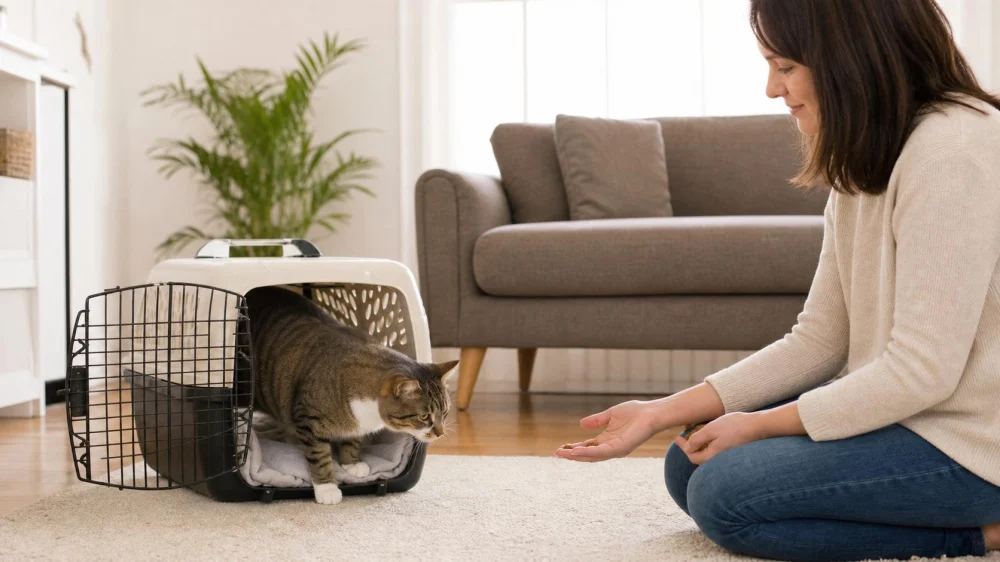
Cat Carrier Training: Build Comfort Before Vet Visits
On this page
Quick answer
Make the cat carrier part of the home instead of bringing it out only for stressful trips. Leave it open in a quiet area with familiar bedding, reward voluntary approaches, then progress to entering, briefly closing the door, lifting, walking and short car practice. Move only when the cat stays comfortable at the current step. For urgent illness or injury, use the safest available carrier and seek veterinary care rather than delaying for training.

Choose and set up a practical carrier
Carrier training is gradual positive exposure that teaches a cat to enter and remain in a secure transport enclosure without force whenever time allows.
- Choose a sturdy carrier large enough for the cat to stand, turn and lie normally.
- Use secure latches and ventilation that cannot catch claws or collar tags.
- A removable top can make veterinary handling easier for some cats.
- Check that the base remains level when lifted.
- Add a washable nonslip pad and familiar scent item.
- Remove dangling toys before travel so they cannot entangle the cat.
- Label contact information externally without blocking airflow.
Soft carriers may be convenient but must retain shape and close securely. A damaged zipper, cracked plastic shell or loose door needs repair or replacement before use.

Progress through small training stages
- Carrier in the room: place it open near a favourite resting area and ignore it.
- Approach: reward looking, sniffing or walking near it.
- Entry: place treats or a meal near the entrance, then gradually farther inside.
- Resting: allow the cat to nap inside without closing the door.
- Door movement: touch and move the door slightly, reward, then reopen.
- Brief closure: close for one second while the cat is calm, then build duration slowly.
- Lift: support the carrier level, lift briefly and set it down before stress rises.
Ready to progress: the cat eats, explores or rests with relaxed posture. Step back: crouching, freezing, rapid escape, persistent vocalization, panting, salivation, swatting or refusing valued food.
Practice household movement and car travel
- Carry the closed carrier a few steps while keeping it level.
- Walk to the door and return before adding outdoor noise.
- Practice sitting in a parked, climate-controlled car.
- Secure the carrier according to vehicle and carrier instructions so it cannot slide.
- Add a very short drive, then return home for a calm reward.
- Increase only one challenge—duration, sound or movement—at a time.
Never place a carrier in a truck bed, open cargo area, car trunk or front seat with an active airbag. Never leave a pet unattended in a parked vehicle.
A lower-stress visit-day checklist
- Prepare bedding, absorbent liner and paperwork before approaching the cat.
- Keep household activity calm and close escape routes.
- Use the trained cue and reward sequence when possible.
- Cover part of the carrier with a light breathable cloth if the cat prefers visual shelter.
- Keep the carrier level and away from unfamiliar animals in the waiting area.
- Tell veterinary staff about fear, motion sickness, elimination or prior escape attempts.
- Ask the veterinarian in advance about prescribed pre-visit medication when needed; never use human sedatives or unapproved products.
Troubleshooting common problems
- Cat avoids the carrier: move food back outside and reward smaller approaches.
- Door triggers escape: separate door movement from closure and shorten sessions.
- Cat enters only for food: that is a useful start; add resting opportunities gradually.
- Conflict in multi-cat homes: provide separate carriers and train individually.
- Car sickness: discuss timing, route and veterinary options before the next trip.
- Urgent departure: use a removable-top or safely towel-assisted approach recommended by veterinary staff; do not chase until the cat overheats or is injured.
Clean and store the carrier
After travel, remove bedding and clean urine, feces, vomit or clinic odours with a pet-safe product compatible with the material. Rinse as directed and dry fully. Avoid mixing cleaners, strong fragrances and residues the cat may lick.
Return the clean carrier to its normal open location with familiar bedding. Inspect fasteners, hinges, ventilation and base before the next use.
Veterinary and safety notes
This guide provides general behaviour and transport information. Fear can reflect pain, respiratory difficulty, prior trauma or another medical issue. A veterinarian or qualified feline behaviour professional can create an individualized plan.
Open-mouth breathing, collapse, severe injury, repeated vomiting, inability to urinate or other urgent symptoms require prompt veterinary guidance. Do not postpone emergency care to complete carrier training.
Frequently asked questions
How long does carrier training take?
It varies from days to weeks or longer. Progress depends on history, temperament, health and session size.
Should I feed every meal in the carrier?
It can help if the cat remains comfortable, but keep other resources accessible and follow medical feeding instructions.
Is a top-opening carrier better?
It can provide handling options, but security, size, ventilation and the individual cat matter more than one door style.
Can two cats share one carrier?
Separate secure carriers are usually safer because stress can change their interaction and shared weight may exceed design limits.
Should I hide the carrier after the visit?
No. Clean it and return it as an ordinary resting option so it does not predict only travel.
Next steps
Inspect the carrier, place it open with familiar bedding and reward one small voluntary interaction today. Build through door closure, lifting and travel in separate steps. Contact the veterinary team early if fear, illness or motion sickness requires a tailored plan.






 Central Valley Koi4.0 (44 reviews)
 F.O.E Kennels0.0 (0 reviews)
 Vetco Vaccination Clinic4.0 (13 reviews)
 BluePearl Pet Hospital3.0 (610 reviews)
 Mes Amis Collars & Leashes5.0 (3 reviews)
 San Fernando Pet Hospital4.0 (395 reviews)
 How to Introduce Your Kitten to a New Bed | Tips for Comfort and Safety
 The Top 10 Most Trainable Dog Breeds
 How to Tell if Your Kitten is a Maine Coon Mix
 The Pros and Cons of Raw Food Diet for Cats
 How to Stop a Kitten from Overeating Dry Food: Tips and Solutions
 The Best Diet for Senior Dogs: Nutrition Tips for Aging Canines